
 中文
中文

A New Era of AI Server Cooling: In-Depth Analysis of 30 Leading Liquid Cooling Module Companies
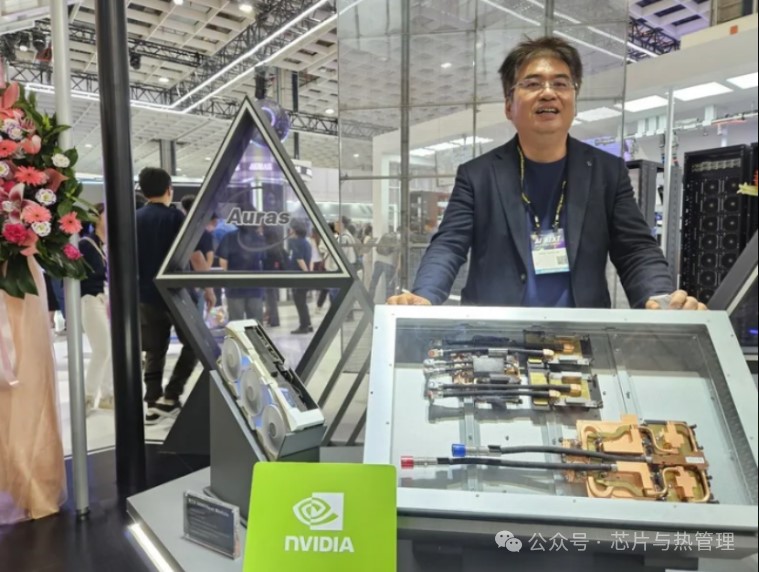
As AI computing power surges, the power consumption of a single GPU has exceeded 1200W (NVIDIA Blackwell architecture), with a heat flux density as high as 1000W/cm². Traditional air cooling has reached its physical limit. Serving as the central hub of thermal management directly attached to the GPU/CPU, liquid cooling modules use a liquid medium (with a thermal conductivity about 25 times that of air) to establish an efficient heat transfer path, reducing the data center PUE (Power Usage Effectiveness) from over 1.5 in air-cooled systems to below 1.1, making it a core component for supporting kilowatt-level chips. This module is located in the core area of the server motherboard, with a cold plate directly covering the GPU/CPU chip surface, exchanging heat with the coolant through micro-channels. The heat pipe/vapor chamber is embedded between the chip and the cold plate to achieve three-dimensional heat diffusion.
Analysis of Liquid Cooling Module Architecture
Heat Pipes and Vapor Chambers
As heat diffusion engines, heat pipes, and vapor chambers aim to spread point-like high heat flux density (>500W/cm²) into an area form (<50W/cm²), effectively preventing local overheating. With the increasing heat flux density of chips like GPUs, traditional cooling methods can hardly meet the demand. Innovations in cooling technology have emerged to address this challenge. Copper-based vapor chamber technology is most representative, using a design combining internal capillary copper mesh and pure water to achieve thermal conductivity up to 10,000 W/m·K, 25 times higher than pure copper. Another breakthrough design is the micro-channel vapor chamber (e.g., Furukawa's solution), which through flow path optimization, achieves a heat flux capacity of 400W/cm² and enhances area utilization by 5 times. These innovative designs, through different technological paths, collectively solve the cooling problems of high-power density chips. Copper-based vapor chambers focus on enhancing thermal conductivity, while micro-channel designs emphasize optimizing heat flow distribution and space utilization. Their combined application allows modern cooling modules to better meet the growing cooling demands.
Cold Plate Components
As the component with the highest value proportion (45%-60%) and the strongest technical barriers in the module, the cold plate directly determines the cooling efficiency ceiling:
|
Cold Plate Type |
Thermal Conductivity (W/m·K) |
Thermal Resistance (°C/W) |
Application Scenarios |
|
Pure Copper Cold Plate |
401 |
0.03-0.05 |
1200W+ GPU |
|
Aluminum Alloy Cold Plate |
237 |
0.08-0.12 |
≤800W Medium Power Chips |
Copper cold plate core advantages: Thermal expansion coefficient (17ppm/K) matches better with silicon chips (2.6ppm/K), reducing thermal stress deformation; naturally resistant to alkaline corrosion, suitable for deionized water coolant.
Coolant Circulation System
The coolant circulation system is the core power of liquid cooling, its performance directly impacts cooling efficiency and reliability. Currently, mainstream cooling media include deionized water and fluorinated liquids, each with unique characteristics.
-
Deionized water, with a high specific heat capacity of 4.18 kJ/kg·K, is the first choice for cold plate liquid cooling but requires maintaining a resistance of >1MΩ·cm and adding corrosion inhibitors. Alibaba Cloud, through strict water quality control, keeps the annual corrosion rate below 0.05mm.
-
Fluorinated liquids (e.g., 3M Novec 7100) are the mainstream for immersion liquid cooling due to their excellent insulation (>35kV/mm) and non-flammability (flash point >200℃). Solvay's next-generation products reduce corrosion rates by 70%, significantly enhancing reliability.
Magnetic levitation pump technology achieves a major breakthrough: non-contact design extends lifespan to 100,000 hours and reduces power consumption by 60%. For example, the EBARA MAGdrive series with noise<35dB and response speed at the millisecond level. Intelligent control systems using PPO algorithms monitor more than 10 parameters in real-time to predict heat load changes, with flow adjustment precision within ±2%. Google's actual tests show a 43% reduction in pump system energy consumption during TensorFlow training.
To ensure stable operation, the system uses 316L stainless steel pipelines and FFKM seals, equipped with electrochemical sensors for real-time monitoring. Tencent's Tianjin data center achieves zero-leak operation for 5 years through dual-seal designs.
With technological advances, cooling systems are moving towards higher efficiency and intelligence, providing reliable protection for high-power chips.
Thermal Interface Materials
|
Material Type |
Thermal Conductivity (W/m·K) |
Application Effect |
|
Traditional Thermal Grease |
3-5 |
High interface thermal resistance, prone to aging and cracking |
|
Liquid Metal |
80+ |
Reduces thermal resistance by 60%, suitable for 3D chip packaging |
|
Brazing Alloys |
200+ |
Permanently sealed, no aging issues |
Innovative Technologies in Liquid Cooling Modules: From 3D Printing to Bionic Design
Additive Manufacturing Technology Brings Precision Revolution to Copper Cold Plates
Green laser 3D printing uses the high absorption rate (40%) of copper to the 532nm wavelength laser to achieve precision forming of 0.2mm micro-channels. Through the TPMS (triply periodic minimal surfaces) structure design, the effective heat dissipation area can be expanded by 900%, enhancing overall thermal performance by 48%. Electron beam additive manufacturing processes in a vacuum environment, supporting the integrated formation of lattice structures and conformal flow channels, with adjustable porosity from 10-90% and pore size accuracy controlled within 1-3mm.
Bionic Fluid Design Significantly Improves Cooling Efficiency
Oblique fin technology enhances turbulent effects by breaking the laminar boundary layer, improving heat transfer efficiency by 30%. The micro-grid structure with capillary vessel bionic design ensures the continuous efficient renewal of coolant, strictly controlling the temperature difference of GPU chips within ±0.5℃ to ensure uniform temperature distribution.
Intelligent Thermal Management System Achieves Dynamic Precision Regulation
The digital twin system based on the LSTM model can predict the corrosion rate of the coolant, providing a 30-day early warning of potential failure risks. In immersion liquid cooling, two-phase flow temperature control technology uses the phase-change heat absorption characteristics of the coolant, enhancing cooling efficiency by 50 times compared to the single-phase mode, offering a more efficient dynamic thermal management solution for high-power chips.
Global 30+ Liquid Cooling Module Companies and Products
|
Company |
Cooling Modules and Related Products |
|
Delta Electronics |
Power management and cooling solutions; liquid cooling infrastructure (cold plate liquid cooling, immersion liquid cooling, cold plate, liquid cooling components, etc.) |
|
Sunon |
CPU coolers, heat sinks, fans, laptop cooling modules, graphite, heat pipes, 3D VC modules, and liquid cooling systems |
|
Auras |
NB cooling modules, server cooling modules, etc. |
|
Nidec |
Heat sinks with IoT functionality, heat pipes, vapor chambers (vapor chambers), thermal modules, and liquid cooling systems |
|
Cooler Master |
Liquid cooling plates, manifolds, CDU, and other AI cooling products |
|
WiPoC |
Single-phase liquid cooling plates, direct refrigerant plates, PTC heaters, HP/VC cooling modules, etc. |
|
FEIRONGDA |
Electromagnetic shielding, thermal management, and lightweight solutions |
|
Zhongshan Technology |
Graphite materials, thermal interface materials, EMI materials; thermal modules (VC, liquid cooling modules, etc.) |
|
PowerLeader |
3D VC development and manufacturing; extensive product line (small aluminum extrusions to equipment-level heat dissipation solutions) |
|
Jentech Precision |
Water-cooled heat dissipation modules |
|
Luxshare Precision |
Consumer electronics, automotive, enterprise communication products thermal modules |
|
LingMingDa |
Heat sinks, heat sinks, cooling modules |
|
Lingyi Precision |
Precision functional parts, structural parts, modules, etc. |
|
Jiangsu Kingson |
Precision structural parts, automotive plastic parts, power, thermal energy, ODM and intelligent manufacturing |
|
Suzhou Tianmai |
Heat pipes, vapor chambers, thermal interface materials, graphite films, etc. |
|
Weihan Technology |
Liquid cooling, air cooling, two-phase heat transfer technology products, and thermal management systems |
|
Reilight Thermocontroller |
Liquid cooling plates, single-phase/two-phase fluid circuit systems, VC, phase change plates, etc. |
|
Yingfan Technology |
High-end customized cooling solutions |
|
DongJi Cooling |
Water-cooled plates, high-power heat pipe heat sinks, LED heat sinks, etc. |
|
DATU Thermocontroller |
Liquid cooling plates, manifolds, quick connectors, pipelines, leak detection lines |
|
HuaChuang Thermocontroller |
Cooling modules, liquid cooling plates, vapor chambers, and pulsating heat pipes, etc. |
|
AiKeMai |
System thermal control solution design, core thermal control component development, etc. |
|
Shenzhen LeiShi |
Graphite heat dissipation films, heat dissipation analysis/design/testing/consulting services |
|
Dragonfly Technology |
Heat pipes, vapor chambers (conventional/thin/3D VC) |
|
ShengYiXing |
Heat pipes, VC, modules (mobile phone pipes, ultra-thin VCs, etc.) |
|
AnMinRui |
Liquid cooling plates, integrated liquid cooling systems; air-cooled heat sinks, fans, etc. |
|
TongYu Technology |
Network/consumer, PC/server, energy, vehicle heat dissipation design and manufacturing |
|
GuangZuan |
Heat pipes, thermal plates, thermal columns, 3D VC, water cooling heads |
|
Envicool |
Precision temperature control energy-saving solutions and products; liquid cooling core components (water cooling plates, quick connectors, etc.) |
|
Hauli Electromechanical |
Liquid cooling plates, liquid cooling systems |
Note: This article summarizes over 30 representative companies and products in the global liquid cooling module industry, but the technology iterates rapidly, and new companies are constantly emerging. If you know of other companies with unique technology or market impact, or if you find information in the article that needs to be updated or corrected, please feel free to supplement and correct. We will continuously improve the content to jointly promote the construction of industry knowledge bases.
The "Three-Stage Evolution" of Liquid Cooling Modules
Liquid cooling modules are undergoing a paradigm shift from functional components to computing power bases:
-
Material Innovation: The thermal conductivity gene of copper + additive manufacturing releases design freedom, supporting heat flux density towards 1500W/cm²;
-
Intelligent Upgrade: AI dynamic control reduces the cooling power consumption ratio from 30% (air-cooled) to below 5%;
-
Ecological Reconstruction: Standardization of cold plates (such as OCP Open Rack V3) drives liquid cooling modules from "custom luxury" to "server standard."
When the penetration rate of liquid cooling exceeds 45% in 2025, this heat dissipation revolution, driven by the tandem of copper materials and fluid mechanics, will become the key to unlocking Zettascale-level computing power.
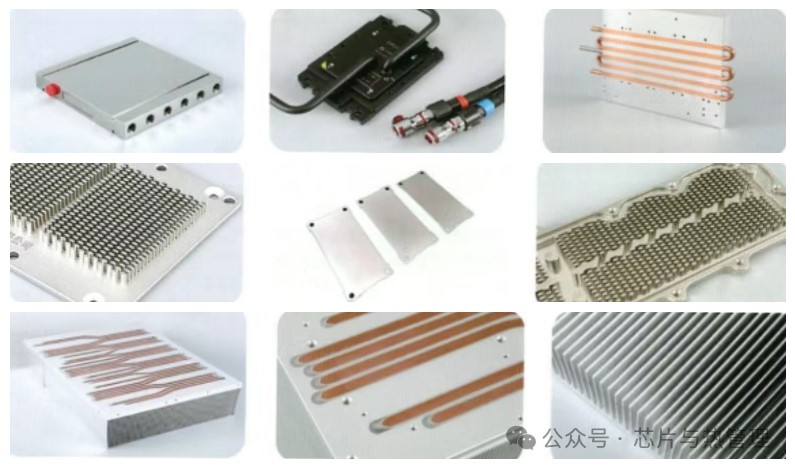
-
Tel:
-
E-mail:
-
Address:
No.1 Chengxi West Road, Cicheng, Ningbo, China
-

Ms.Yu
-

Ms.Sun