
 中文
中文

Grade Name
|
Item |
Specification |
|
UNS Number |
C68800 |
|
Common Name |
Nickel-Aluminum Brass, High-Strength Brass |
|
Chinese Designation |
HAl77-2 (GB/T 5231) |
|
European Standard |
CuZn21Al4Ni (DIN 17660) |
|
Primary Standards |
ASTM B592, SAE J463, DIN 17672-1 |
Product Features
-
Exceptional Corrosion Resistance: Resists dezincification in seawater/chloride environments (salt spray >720 hrs with coating).
-
High Strength & Wear Resistance: Tensile strength ≥600 MPa (hard temper), hardness ≥260 HB.
-
Superior Workability: Hot working range 750–870°C; cold elongation ≥35%.
-
Spark-Resistant: Safe for explosive environments (ISO 80079 compliant).
-
Thermal Stability: Thermal conductivity 58.6–120 W/m·K; service temp ≤400°C.
Common Product Forms & Dimensions
|
Form |
Thickness/Dia. (mm) |
Width/Length (mm) |
Special Specifications |
|
Bar |
Φ3–200 |
Cut-to-length: 0.5–6m |
Hex/Square/Forged rounds |
|
Plate |
0.5–500 |
Width: 200–2000 |
Max. single plate: 5 tons |
|
Strip |
0.08–2.5 |
Coil width: 10–600 |
Slitting tolerance ±0.1mm |
|
Tube |
Wall: 0.5–50 |
OD: 6–530 |
Seamless/Welded |
|
Wire |
Φ0.1–12.0 |
Coil |
Precision grade (±0.01mm) |
Note: Custom shapes available (MOQ: 500kg).
Chemical Composition
|
Element |
Standard Range (wt%) |
Typical (wt%) |
Impurities ≤ (wt%) |
|
Cu |
Balance |
64.0–67.0 |
– |
|
Zn |
21.3–24.1 |
Balance |
Sn 0.50 |
|
Al |
3.0–3.8 |
3.5 |
Ni 0.50 |
|
Co |
0.25–0.55 |
0.4 |
Si 0.25 |
|
Pb |
≤0.05 |
0.03 |
Fe 0.15 |
|
Total Impurities |
≤0.3 |
– |
– |
*Standard: ASTM B592 (Co/Ni substitution allowed).*
Physical Properties
|
Property |
Value Range |
Test Condition |
|
Density (g/cm³) |
7.4–8.5 |
20°C |
|
Melting Point (°C) |
900–1000 |
– |
|
Thermal Conductivity (W/m·K) |
58.6–120 |
20°C |
|
Electrical Conductivity (%IACS) |
24–29.5 |
Annealed |
|
Thermal Expansion (×10⁻⁶/K) |
17.6–20.7 |
20–300°C |
Note: Thermal conductivity decreases with higher Al content.
Mechanical Properties
|
Condition |
Tensile Strength (MPa) |
Yield Strength (MPa) |
Elongation (%) |
Hardness |
|
Annealed (O) |
294–360 |
110–140 |
35–45 |
70–90 HRB |
|
¼ Hard (H02) |
400–460 |
250–310 |
18–25 |
100–125 HV |
|
Hard (H04) |
≥490 |
≥390 |
≥5 |
≥150 HV |
|
Hot Rolled |
450–550 |
350–400 |
10–20 |
120–150 HV |
Data per ASTM E8 (thickness ≤15mm).
Core Advantages
1. Corrosion Resistance Leader: Dezincification rate <0.1 mm/year in seawater.
2. Multi-Process Compatibility: Hot forging yield >95%; cold forming LDR ≥2.0.
3. Intrinsic Safety: Spark-free properties certified to ISO 80079.
4. Cost Efficiency: 20–30% lower cost than stainless steel/bronze alternatives.
Product Applications
-
Marine Engineering: Seawater valves, propeller shafts, condenser tubes.
-
Automotive: Fuel injector housings, sensor components (machining tolerance ±0.01mm).
-
Aerospace: Bearing bushings, hydraulic flanges (high-cycle fatigue resistance).
-
Electrical: Relay springs, deep-drawn contacts (conductivity ≥24% IACS).
-
Construction: Corrosion-resistant fasteners for coastal structures.
Processing Guidelines
|
Process |
Key Parameters |
Risk Control |
|
Hot Working |
750–870°C (finish >550°C) |
Control O₂ at 0.5–1.5% to prevent Zn loss |
|
Welding |
TIG: 80–120A |
Argon purity ≥99.99% + preheat 150°C |
|
Annealing |
600–650°C (full)/300°C (stress relief) |
N₂ atmosphere anti-oxidation |
|
Surface Treatment |
Electroless Ni ≥15μm + Cr 0.3μm |
Mandatory for seawater exposure |
|
Machining |
Speed: 200–300 m/min |
K10 carbide tools + coolant |
Key Application Scenarios
-
Ship Propulsion Systems: 100k DWT vessel seawater pump valves (Ni-Cr coated).
-
EV Thermal Management: Battery cooling seals (brazing compatible).
-
Aviation Hydraulics: Landing gear bushings (>500k impact cycles).
-
Chemical Processing: Acid-resistant agitators in pickling tanks.
FAQs
Q1: Is it RoHS compliant for electronics?
A: Yes (Pb ≤0.05%), but not suitable for potable water systems. Use C26800 instead.
Q2: How to prevent porosity during welding?
A: Increase argon purity to 99.99%, preheat to 150–200°C, post-weld stress relieve at 260°C×1h.
Q3: Corrosion protection for seawater?
A: Electroless Ni (≥15μm) + chromium (0.3μm) coating required. Unprotected dezincification >0.5 mm/year.
Q4: Hot cracking prevention?
A: Limit heating time ≤2h with slightly oxidizing atmosphere (O₂: 0.5–1.5%).
Standard References
|
Standard System |
Code |
Scope |
|
US Standard |
ASTM B592 |
Extruded Al-Brass Bars/Shapes |
|
International |
SAE J463 |
Mechanical Properties of Wrought Cu Alloys |
|
European |
DIN 17672-1 |
Tolerances for Forged Cu Alloys |
|
Chinese |
GB/T 5231 |
Wrought Brass Specifications |
|
Japanese |
JIS H3250 |
Cu/Cu-Alloy Rods General Requirements |
Technical Note
1. Data based on ASTM standard specimens. Actual properties subject to mill test certificates (MTC).
2. Critical applications require validation testing (e.g., ISO 9227 salt spray, ASME welding qualifications).
Document Version: V2.1
Revision Date: 29 May 2025
Disclaimer: This document does not replace material test reports. FMEA analysis required for high-risk projects.
"C68800 achieves the golden balance of strength and corrosion resistance in marine/aerospace engineering – a benchmark for industrial brass."
— Advanced Copper Alloy Design Handbook, 2024 Edition
UNS Grades
-
C10100 Copper
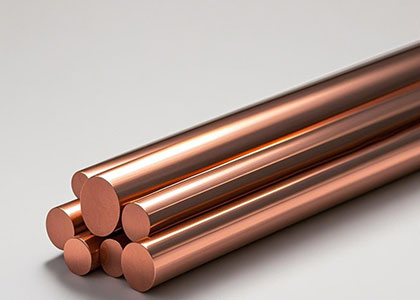 Copper
 -
C10300 Copper
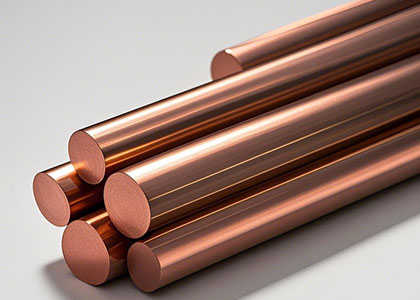 Copper
 -
C11000 Copper
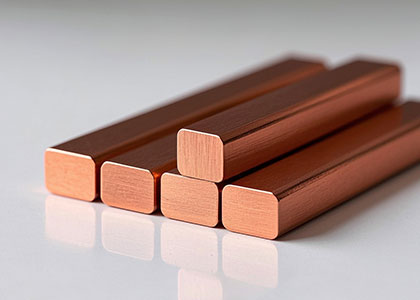 Copper