 中文
中文
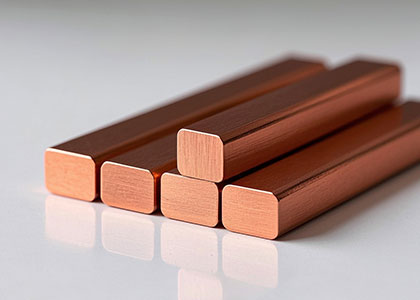
Grade Name
C11000 (UNS C11000, ASTM B152/B187, ISO CW004A)
Also known as phosphorized copper or ETP copper (Electrolytic Tough Pitch), with a minimum copper content of 99.90% and trace oxygen (≤0.06%).
Product Features
-
Exceptional electrical conductivity (~100% IACS), ideal for electrical applications.
-
High thermal conductivity (394 W/m·K), suitable for heat exchangers and cooling systems.
-
Excellent ductility and formability, enabling cold working and complex shaping.
-
Good corrosion resistance in atmospheric and aqueous environments.
-
Susceptible to "hydrogen embrittlement" in high-temperature (>370°C) reducing atmospheres.
Common Product Forms & Dimensions
|
Product Form |
Thickness/Diameter (mm) |
Width (mm) |
Length (mm) |
|
Sheet/Strip |
0.08 – 6.0 |
8.5 – 600 |
Custom |
|
Rod |
3.0 – 50.0 |
– |
1000 – 6000 |
|
Wire |
0.5 – 12.0 |
– |
Custom |
|
Tube |
OD: 5.0 – 100.0 |
– |
Custom |
|
Custom dimensions available based on application requirements. |
|||
Copper C11000 Chemical Composition
|
Element |
Cu + Ag |
O |
Sn |
Zn |
Pb |
Fe |
Others |
|
Content |
≥99.90% |
≤0.06% |
≤0.002% |
≤0.005% |
≤0.005% |
≤0.005% |
≤0.10% |
|
Impurities (e.g., Bi, Sb, S) are strictly controlled to maintain conductivity and workability39. |
|||||||
C11000 Copper Specification
Physical Properties
|
Property |
Value |
|
Density (g/cm³) |
8.9 |
|
Melting Point (°C) |
1083 |
|
Thermal Conductivity (W/m·K) |
394 |
|
Electrical Conductivity (% IACS) |
100 |
|
Coefficient of Thermal Expansion (10⁻⁶/°C) |
17.0 (20–300°C) |
|
High purity ensures minimal resistance to electrical and thermal transfer. |
|
Mechanical Properties
|
Condition |
Tensile Strength (MPa) |
Yield Strength (MPa) |
Elongation (%) |
Hardness (HRB) |
|
Annealed (Soft) |
220 – 275 |
180 |
45 – 50 |
35 – 45 |
|
Cold Worked (Hard) |
275 – 345 |
250 – 300 |
5 – 10 |
60 – 80 |
|
Mechanical properties vary with processing methods (e.g., annealing or cold working). |
||||
C11000 Material Core Advantages
-
Ultra-high conductivity for electrical and thermal systems.
-
Superior formability for intricate designs in electronics and machinery.
-
Cost-effective alternative to silver in conductive applications.
-
Resistance to atmospheric corrosion for long-term durability.
Product Applications
-
Electrical: Wiring, busbars, connectors, transformers.
-
Thermal Management: Heat exchangers, radiators, solar heating components.
-
Industrial: Pipes, fasteners, stamped parts.
-
Aerospace: Conductive components and heat dissipation systems.
Processing Guidelines
-
Machining: Use sharp tools with low cutting speeds and lubrication to prevent overheating.
-
Welding: Avoid high-temperature reducing environments (e.g., hydrogen-rich) to prevent hydrogen embrittlement.
-
Annealing: Perform at 500–700°C to restore ductility after cold working.
-
Forming: Suitable for cold rolling, bending, and stamping due to high ductility.
Key Application Scenarios
-
High-current electrical transmission systems (e.g., power grids).
-
Precision electronic connectors in consumer devices.
-
Corrosion-resistant plumbing and marine fittings.
FAQs
Q1: Why is C11000 prone to hydrogen embrittlement?
A: Trace oxygen reacts with hydrogen in reducing atmospheres, forming water vapor that causes micro-cracks.
Q2: How does material C11000 compare to oxygen-free copper (OFHC)?
A: C11000 has slightly lower conductivity (~100% IACS vs. 101% for OFHC) but is more cost-effective for general applications.
Q3: Can C11000 be used for welding?
A: Yes, but avoid processes involving hydrogen (e.g., gas welding). Soldering or brazing is preferred.
Standards & References
-
ASTM: B152 (sheet/strip), B187 (rod/bar).
-
ISO: CW004A (wrought copper designation).
-
GB/T: 4423-1992 (Chinese standard for processing).
Note: Properties may vary slightly based on manufacturing processes. Always verify specifications with certified test reports.
UNS Grades
-
C10100 Copper
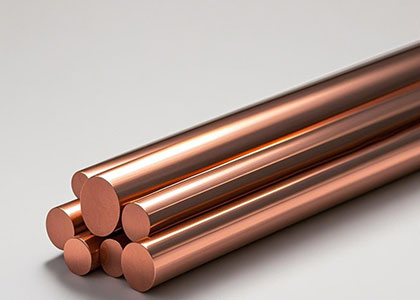 Copper
 -
C10300 Copper
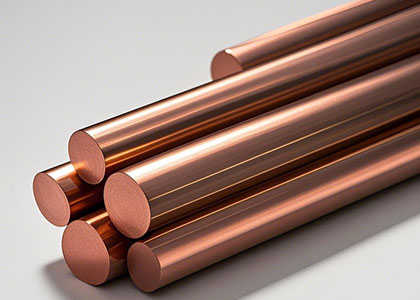 Copper
 -
C12000 Copper
 Copper