
 中文
中文
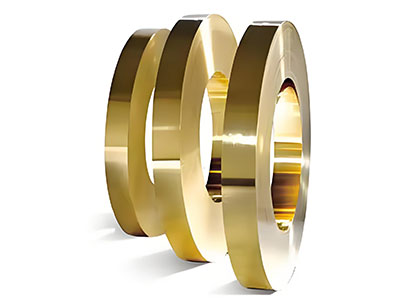
Grade Name
|
Item |
Specification |
|
UNS Number |
C68700 |
|
Chinese Designation |
HAl77-2 (YS/T 649-2018) |
|
European Standard |
CuZn20Al2 (DIN 17660) |
|
Common Name |
Arsenical Aluminum Brass, Naval Aluminum Brass |
|
Primary Standards |
ASTM B111M, YS/T 649-2018, DIN 17672 |
Product Features
-
Exceptional Corrosion Resistance: Arsenic (As) inhibits dezincification (salt spray >720 hours with coating).
-
High Strength-Ductility Balance: Annealed tensile strength ≥360 MPa, elongation ≥50%; hardened strength up to 600 MPa.
-
Optimized Cold Workability: Cold deformation rate ≤80%, suitable for deep drawing/flaring.
-
Thermal Conductivity: 109 W/(m·K), electrical conductivity 28% IACS, ideal for heat exchange systems.
-
Environmental Safety: As ≤0.10%, compliant with REACH industrial exemptions for cooling water systems.
Common Product Forms & Dimensions
|
Form |
Thickness/Dia. (mm) |
Width/Length (mm) |
Special Specifications |
|
Tube |
Wall: 0.15–10.0 |
OD: 3.0–260 |
Seamless/Welded condenser tubes (0.5–25m) |
|
Bar |
Φ3–200 |
Cut-to-length: 0.5–6m |
Hex/Square/Forged rounds |
|
Plate |
0.5–80 |
1000–6000 (L) ×500–3000 (W) |
Max. single plate: 5 tons |
|
Strip |
0.08–2.5 |
Coil width: 10–600 |
Slitting tolerance ±0.1mm |
Note: Custom profiles available (MOQ: 500kg).
Chemical Composition
|
Element |
Standard Range (wt%) |
Typical (wt%) |
Function |
|
Cu |
76.0–79.0 |
77.5 |
Matrix, ensures conductivity |
|
Al |
1.8–2.5 |
2.2 |
Enhances strength & atmospheric corrosion resistance |
|
As |
0.02–0.10 |
0.06 |
Suppresses dezincification |
|
Zn |
Balance |
20.0 |
Improves fluidity, reduces cost |
|
Fe |
≤0.06 |
0.03 |
Refines grain structure |
|
Pb |
≤0.07 |
0.02 |
Enhances machinability |
|
Total Impurities |
≤0.30 |
0.15 |
Sn≤0.05%, Sb≤0.005% strictly controlled |
Physical Properties
|
Property |
Value |
Test Condition |
|
Density (g/cm³) |
8.40 |
20°C |
|
Melting Point (°C) |
900–930 |
– |
|
Thermal Conductivity (W/(m·K)) |
109 |
20°C |
|
Electrical Conductivity (%IACS) |
28 |
Annealed |
|
Thermal Expansion (×10⁻⁶/K) |
20.2 |
20–300°C |
|
Elastic Modulus (GPa) |
117 |
– |
*Data per ASTM B193/E1225; values vary with processing.*
Mechanical Properties
|
Condition |
Tensile Strength (MPa) |
Yield Strength (MPa) |
Elongation (%) |
Hardness (HRB) |
|
Annealed (O) |
360 [340–380] |
80 [70–90] |
50 [45–55] |
60 [55–65] |
|
¼ Hard (H02) |
450 [430–480] |
250 [230–270] |
25 [20–30] |
100 [90–110] |
|
Hard (H04) |
600 [580–620] |
540 [520–560] |
10 [8–12] |
175 [170–180] |
|
Hot Rolled |
550 [530–570] |
350 [330–370] |
20 [15–25] |
120 [110–130] |
Tube properties per ASTM B111 (min. wall thickness 0.5mm).
Core Advantages
1. Marine Corrosion Benchmark: Dezincification rate <0.1 mm/year (ASTM G48 seawater), service life >15 years.
2. Heat Exchange Efficiency: Condenser tube heat transfer coefficient ≥5200 W/m²·K, 30% higher than stainless steel.
3. Forming Adaptability: Cold bending radius ≥2× wall thickness; compatible with Ag/Cu-P brazing.
4. Cost Efficiency: 40% lower cost than titanium/cupronickel alternatives.
Product Applications
-
Marine Engineering: Ship condenser tubes, desalination pipelines, subsea valves.
-
Energy & Power: Thermal power plant condensers, nuclear cooling systems, refinery heat exchangers.
-
HVAC: Central AC evaporator tubes, chlorinated hot water pipes.
-
Industrial Components: Corrosion-resistant bearing bushings, deep-drawn sealing rings.
Processing Guidelines
|
Process |
Key Parameters |
Risk Control |
|
Hot Working |
750–830°C (finish >550°C) |
Control O₂ at 0.5–1.5% (prevents Zn volatilization) |
|
Welding |
TIG: 80–120A |
Argon purity ≥99.99% + preheat 150°C (prevents As porosity) |
|
Annealing |
Stress relief: 260–270°C×1h |
N₂ atmosphere anti-oxidation |
|
Cold Working |
Deformation ≤80% |
Intermediate annealing at 520–650°C |
|
Surface Treatment |
Pickling (HNO₃-H₂SO₄) + tinning |
Essential for seawater exposure |
Key Application Scenarios
-
Mega Vessels: 200k DWT ship condenser tube bundles (seamless, wall 1.5mm).
-
Nuclear Plants: AP1000 coolant pipes (chloride resistance design).
-
Coastal Power Stations: Seawater cooling valves (forged + Ni-Cr coated).
-
Premium HVAC: Central AC evaporator tubes (brazing integrity required).
FAQs
Q1: Is it suitable for potable water systems?
A: Restricted! Arsenic leaching risk. Use only in industrial cooling water systems.
Q2: How to resolve welding porosity?
A: Caused by As/Zn volatilization. Use ≥99.99% argon, preheat 150–200°C, post-weld stress relieve at 260°C×1h.
Q3: How to prevent hot cracking?
A: Control slightly oxidizing atmosphere (O₂: 0.5–1.5%), limit heating time ≤2h.
Q4: How to select vs. C44300 tin brass?
A: C68700 offers superior seawater resistance & 15% cost reduction; C44300 is arsenic-free for civilian applications.
Standard References
|
Standard System |
Code |
Scope |
|
US Standard |
ASTM B111M |
Seamless Condenser & Heat Exchanger Tubes |
|
Chinese |
YS/T 649-2018 |
Extruded Copper/Copper-Alloy Bars |
|
European |
DIN 17672-1 |
Tolerances for Forged Cu Alloys |
|
International |
SAE J463 |
Mechanical Properties of Wrought Cu Alloys |
|
General |
ASTM B858 |
Dezincification Test Method |
Technical Note
1. Data based on ASTM standard specimens. Actual properties subject to mill test certificates (MTC).
2. Critical applications require validation testing (e.g., ISO 9227 salt spray, ASME B96 brazing qualification).
Document Version: V2.1
Revision Date: 30 May 2025
Disclaimer: This document does not replace material test reports. FMEA analysis required for high-risk projects.
"The aluminum-arsenic synergy in C68700 establishes it as the premier choice for marine heat exchange systems."
— Copper Alloys in Marine Engineering White Paper, 2024 Edition
UNS Grades
-
C10100 Copper
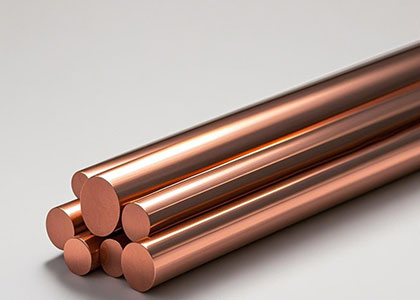 Copper
 -
C10300 Copper
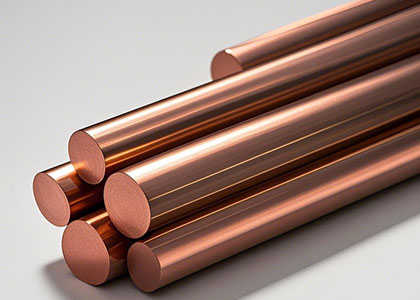 Copper
 -
C11000 Copper
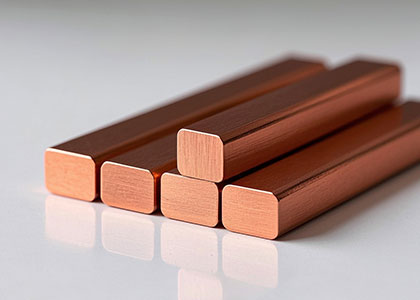 Copper