
 中文
中文
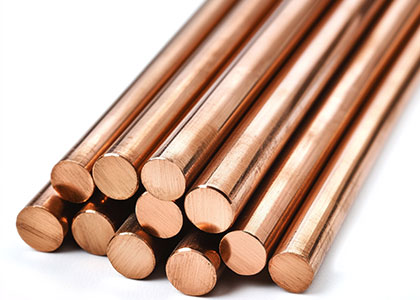
Grade Name
C51000 (UNS C51000, ASTM B103/139/159, ISO CuSn5)
Commonly known as phosphor bronze alloy 510, containing 5% tin and a trace of phosphorus.
Product Features
-
High strength, excellent fatigue resistance, and corrosion resistance.
-
Superior electrical and thermal conductivity.
-
Good formability and spring properties.
-
Resistant to wear and stress relaxation.
-
Suitable for precision machining and cold working.
Common Product Forms & Dimensions
|
Product Form |
Thickness/Diameter (mm) |
Width (mm) |
Length (mm) |
|
Sheet/Strip |
0.1 – 6.0 |
10 – 600 |
Custom |
|
Rod |
3.0 – 50.0 |
– |
1000 – 6000 |
|
Wire |
0.5 – 12.0 |
– |
Custom |
|
Tube |
OD: 5.0 – 100.0 |
– |
Custom |
C51000 Chemical Composition
|
Element |
Cu |
Sn |
P |
Zn |
Pb |
Fe |
Others |
|
Content |
Bal. |
4.2–5.8 |
0.03–0.35 |
≤0.30 |
≤0.05 |
≤0.10 |
≤0.15 |
C51000 Phosphor Bronze Properties
Physical Properties
|
Property |
Value |
|
Density (g/cm³) |
8.86 |
|
Melting Range (°C) |
1010 – 1045 |
|
Thermal Conductivity (W/m·K) |
75 |
|
Electrical Conductivity (% IACS) |
15 |
|
Coefficient of Thermal Expansion (10⁻⁶/°C) |
18.2 (20–300°C) |
Mechanical Properties
|
Condition |
Tensile Strength (MPa) |
Yield Strength (MPa) |
Elongation (%) |
Hardness (HV) |
|
Annealed (O) |
325 – 380 |
125 – 180 |
45 – 60 |
70 – 90 |
|
Cold Worked (H04) |
520 – 620 |
450 – 550 |
10 – 20 |
150 – 180 |
Core Advantages
-
Retains mechanical properties under cyclic loads.
-
Excellent resistance to corrosion in marine/chemical environments.
-
Ideal for high-stress, high-flex applications.
-
Low friction coefficient and anti-galling properties.
Product Applications
-
Electronics: Connectors, terminals, relay springs.
-
Automotive: Bushings, bearings, clutch components.
-
Industrial: Bellows, diaphragms, fasteners.
-
Marine: Corrosion-resistant fittings and valves.
Processing Guidelines
-
Machining: Use sharp tools with slow speeds and adequate lubrication.
-
Forming: Anneal before severe cold working to prevent cracking.
-
Welding: Not recommended due to phosphorus content; use soldering/brazing instead.
-
Heat Treatment: Stress-relieving at 200–300°C for 1–2 hours.
Key Application Scenarios
-
High-reliability electrical contacts in aerospace systems.
-
Precision springs in medical devices.
-
Corrosion-resistant marine hardware.
FAQs
Q1: Can C51000 be used in high-temperature environments?
A: Limited to ≤150°C; prolonged exposure reduces strength.
Q2: How does C51000 compare to brass in conductivity?
A: Lower conductivity (~15% IACS) than brass (~28% IACS) but superior mechanical properties.
Q3: Is C51000 suitable for seawater applications?
A: Yes, due to excellent corrosion resistance.
Standards & References
-
ASTM: B103 (springs), B139 (rod), B159 (wire).
-
ISO: 427 (wrought copper-tin alloys).
-
EN: CW450K (European designation).
Note: Values are typical and may vary based on processing. Confirm specifications with material test reports.
UNS Grades
-
C10100 Copper
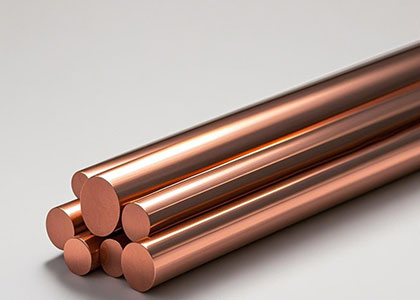 Copper
 -
C10300 Copper
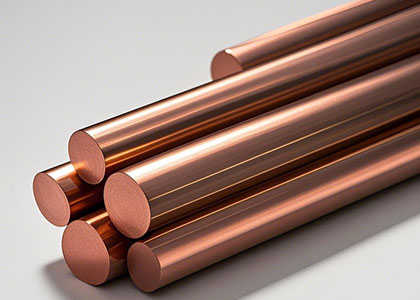 Copper
 -
C11000 Copper
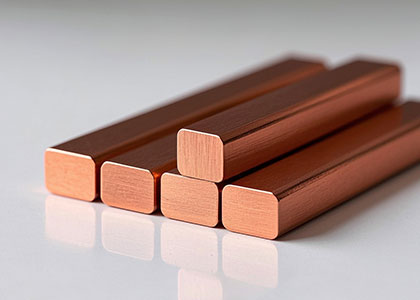 Copper

