
 中文
中文
Leaded Brass Rods: Excellent Performance, Wide Application
Leaded brass rod is a type of brass rod containing lead, with main components being copper (Cu), zinc (Zn), and lead (Pb). The addition of lead can improve the material's machinability, making it more suitable for mechanical processing. Generally, the lead content is between 1.8% and 3.7%. Leaded brass has good corrosion resistance, wear resistance, and high strength.
-
Copper (Cu): Provides mechanical strength, corrosion resistance, and electrical conductivity
-
Zinc (Zn): Enhances hardness, wear resistance, and structural stability
-
Lead (Pb): Improves machinability by acting as a solid lubricant during cutting
The controlled distribution of lead within the alloy allows for smooth chip formation, reduced cutting forces, and improved surface finishes. This optimized composition makes leaded brass rod one of the easiest metals to machine, particularly in CNC and automatic lathe operations. Understanding the leaded brass composition allows manufacturers to make informed material selections that balance performance, compliance, and cost.
Common leaded brass grades include C36000 (Free-Cutting Brass) and equivalent EN standards such as CW614N, which are widely recognized for their balance of strength, corrosion resistance, and processing efficiency.
Characteristics of Leaded Brass Rod
First of all, the leaded brass rod has very high strength. The addition of lead can enhance the alloy's machinability and lubrication properties, making it easier to form chips during processing and reducing processing difficulty. Brass provides good strength and hardness, giving the alloy excellent mechanical properties and wear resistance. Therefore, leaded brass rods are widely used in manufacturing bearings, gears, threads, and other mechanical parts.
Additionally, the leaded brass rod has excellent corrosion resistance. The lead in the alloy can improve copper's corrosion resistance and wear resistance, allowing leaded brass rods to maintain good performance in humid and corrosive environments and avoid damage due to corrosion. This makes leaded brass rods widely used in marine engineering and chemical equipment manufacturing.
Moreover, leaded brass rods also possess good electrical and thermal conductivity. This makes leaded brass rods widely used in the fields of electrical equipment and heat transfer equipment. The alloy has good electrical conductivity and can be used as raw materials for manufacturing cable connectors, electrical contact materials, and electrical wires and connections. At the same time, the leaded brass rod's excellent thermal conductivity also makes it a good heat transfer material, suitable for manufacturing heat exchangers and radiators.
Application Areas of Leaded Brass Rod
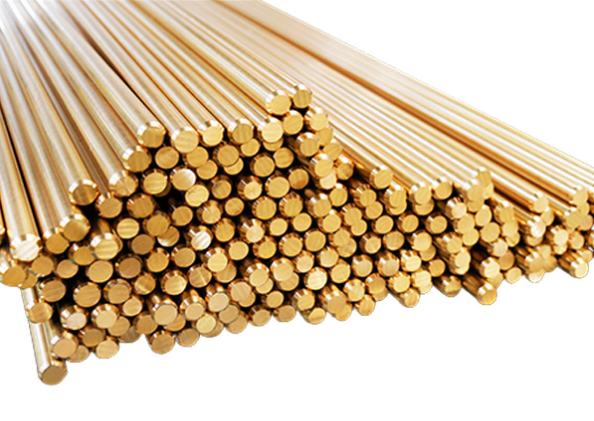
Due to the extremely high strength of leaded brass rods, along with excellent machinability, corrosion resistance, electrical and thermal conductivity, they are widely used in the manufacturing of ships, mechanical equipment, and electronic devices. Specifically, leaded brass rods are used for manufacturing machine parts such as bearings, connection plates, transmission wheels, and propellers; they are also used in the production of electronic devices and musical instruments.
Leaded brass rod is a copper alloy material with excellent characteristics, widely used and effectively applied. In actual production and use, appropriate processing methods and maintenance should be selected according to the material's characteristics and processing requirements to ensure product quality and service life.
When Should You Choose Leaded Brass Rod?
Leaded brass rods are the right material choice when:
-
Maximum machining efficiency is required
-
High precision and surface quality are critical
-
Components are used in non-regulated environments
-
Cost-effective mass production is a priority
Environmental and Regulatory Considerations
Although leaded brass rod performs exceptionally well in machining applications, the presence of lead introduces regulatory limitations. Leaded brass is not suitable for potable water systems, food-contact components, or medical applications. Many regions restrict its use under regulations such as RoHS, REACH, and NSF/ANSI 372. Manufacturers must carefully evaluate compliance requirements before selecting leaded brass for specific projects.
Overall, the leaded brass rod, as a lead brass alloy material, has a wide range of applications in industrial production and manufacturing. It has good machinability, corrosion resistance, electrical, and thermal conductivity, meeting the needs of various industrial fields. With the continuous advancement of industrial technology, the application range of leaded brass rods will continue to expand, providing more convenience and possibilities for industrial production and manufacturing.
FAQs of Leaded Brass Rod
What is leaded brass used for?
Leaded brass is primarily used in precision machining and industrial applications where excellent machinability and production efficiency are required:
-
Bearings, bushings, and gears
-
Valves, fittings, and threaded components
-
Electrical connectors and terminals
-
Automotive and industrial machine parts
-
Decorative hardware and musical instruments
Is leaded brass safe?
Leaded brass is safe when used in appropriate, non-regulated applications, such as industrial machinery or mechanical components that do not come into contact with drinking water, food, or medical systems. However, because it contains lead, it is not considered safe for potable water, food-contact, or medical applications. Many regions restrict or regulate leaded brass under standards.
What is the difference between Lead-free and leaded brass?
Leaded brass contains a small percentage of lead, typically 1.8%–3.7%, which significantly improves machinability and reduces manufacturing costs but limits its use in regulated applications; lead-free brass replaces lead with alternative elements such as bismuth, silicon, or tin, making it compliant with health and environmental regulations while still offering good mechanical performance.
-
Tel:
-
E-mail:
-
Address:
No.1 Chengxi West Road, Cicheng, Ningbo, China
-

Ms.Yu
-

Ms.Sun