
 中文
中文

A Deep Dive into One Industrial Chain a Day: Copper Alloy Materials
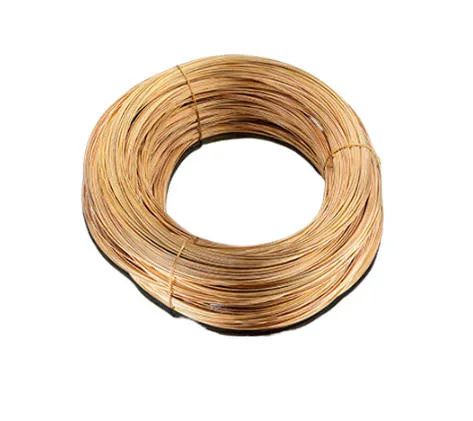
Copper alloys are alloy materials formed by adding elements such as zinc, tin, nickel, and aluminum to a pure copper base. Compared with pure copper, copper alloys offer higher strength, better wear resistance, improved corrosion resistance, and unique electrical properties. They are among the most widely used basic alloy materials in modern industrial systems.
1. Upstream: Raw Material Supply with Significant Resource Constraints
The upstream segment focuses on raw material supply, mainly including cathode copper, zinc, tin, nickel, and other base metals. Among these, cathode copper accounts for more than 70% of the production cost of copper alloys, making it the most critical raw material. Copper raw material supply consists of two major systems: primary copper and recycled copper, each with distinct industry characteristics. Primary copper comes from copper mining, beneficiation, and smelting. China faces significant resource constraints in this area. Although China possesses only around 4% of global copper ore reserves, it supports nearly 50% of global refined copper production capacity. As of 2025, China’s dependence on imported copper concentrates reached 83%, with annual imports of approximately 12 million tons. Major import sources include copper-rich countries such as Chile, Peru, and the Democratic Republic of the Congo. More than 94% of imported copper concentrates come from geopolitically sensitive regions, making supply highly vulnerable to fluctuations in international copper prices, geopolitical risks, and shipping policies. Changes in raw material prices can quickly transmit through the entire supply chain and affect downstream processing costs.
Recycled copper serves as a key supplement to the copper supply system. It is produced by recovering and refining waste electrical wires, industrial copper scraps, and discarded equipment. Compared with primary copper, recycled copper offers advantages such as lower costs and lower energy consumption. In 2025, recycled copper accounted for approximately 28% of China’s copper raw material supply. Over the past five years, recycled copper production has maintained a compound annual growth rate of 8.19%, effectively reducing dependence on imported resources and easing supply pressure. The upstream profit model is relatively straightforward and strongly resource-driven. Profitability mainly depends on resource premiums, while commodity price fluctuations remain the core variable affecting earnings. Leading resource companies hold dominant positions due to their mining reserves and stable supply channels, whereas smaller upstream companies have limited pricing power and experience significant profit volatility throughout commodity cycles.
2. Midstream: Processing and Manufacturing with Clear Industry Segmentation
The midstream sector represents the core of the copper alloy industry chain. It processes upstream raw materials through melting, rolling, extrusion, heat treatment, and precision machining to produce various copper alloy products.
The main categories include different types of copper alloy, such as brass, bronze, and cupronickel, each designed for different performance requirements and application scenarios.
-
Brass, primarily composed of copper and zinc, features low cost and excellent machinability. It is widely used in general hardware products, pipe fittings, and low-voltage electrical components.
-
Bronze, including copper-tin and copper-aluminum alloys, provides excellent wear resistance and corrosion resistance, making it suitable for bearings, valves, and precision castings.
-
Cupronickel, a copper-nickel alloy, offers outstanding corrosion resistance and stable electrical performance, making it essential for electronics, instrumentation, and marine engineering applications.
China’s copper alloy processing industry demonstrates a clear two-tier structure with significant differentiation. In the low-end market, excessive capacity and homogeneous competition are major issues. Industry research indicates that more than 60% of small and medium-sized copper alloy enterprises focus on ordinary brass products and basic copper profile processing. Due to low entry barriers and intense competition, many companies rely mainly on processing fees, with average net profit margins generally below 3%. The high-end market, however, features strong technical barriers. Products such as high-precision copper alloy strip, ultra-thin copper foils, high-strength wear-resistant alloys, and special corrosion-resistant copper alloys require proprietary formulations and micron-level precision manufacturing capabilities. Currently, China’s self-sufficiency rate for high-end special copper alloys remains below 45%, leaving significant room for import substitution. These products typically achieve gross profit margins of 15%-30%, benefiting from strong pricing advantages. Leading companies are increasingly shifting toward high-end and specialized manufacturing, expanding production capacity for copper alloys used in new energy applications and advanced electronics while optimizing their product portfolios.
3. Downstream: Broad Applications with New Energy Driving Growth
Copper alloys are widely used across major sectors of the national economy. Traditional applications remain stable, while emerging industries provide new growth momentum. In traditional markets, the power and electrical sector represents the largest application area, accounting for more than 40% of total copper alloy consumption. Due to their excellent electrical conductivity, copper alloys are extensively used in power transmission equipment, switchgear components, and electrical connectors. Construction hardware, household appliances, and machinery manufacturing represent another approximately 35% of demand. These sectors provide stable and essential market support for the copper alloy industry.
New energy and advanced manufacturing have become the primary growth engines for the industry. In the electric vehicle sector, lightweight and highly conductive copper alloys for electric vehicles have become essential materials. Compared with traditional fuel vehicles, new energy vehicles use more copper alloy materials, with consumption per vehicle increasing by more than 40%. For high-voltage platform models, the increase exceeds 60%. Copper alloys are mainly applied in motor stators, battery connectors, and high-voltage wiring components. In photovoltaic and wind power industries, corrosion-resistant copper alloys are widely used in photovoltaic inverters and wind power conversion equipment due to their ability to withstand complex outdoor environments. Copper alloy consumption in the photovoltaic sector has maintained annual growth rates exceeding 15%. Meanwhile, emerging high-end fields such as 5G communications, aerospace, marine engineering, and precision instruments are generating rapidly increasing demand for ultra-high-precision and highly stable special copper alloys. Overall, downstream demand demonstrates a clear pattern: traditional industries provide stability, emerging industries drive growth, and high-end applications enhance value.
4. Industry Landscape and Future Development Trends
China’s copper alloy industry has become the world’s largest in production capacity, accounting for more than 55% of global output. However, structural challenges remain, with overcapacity in low-end products and insufficient supply of high-end materials being the primary issues. The industry remains highly fragmented, with the CR10 concentration ratio below 20%. Numerous small and medium-sized processors compete in low-end markets, leading to severe price competition and weak profitability. Meanwhile, leading companies are leveraging their advantages in technology, production capacity, and customer resources to expand into high-end markets and accelerate import substitution. At the same time, the recycled copper industry is becoming increasingly standardized and scaled. By 2025, environmentally compliant recycled copper production capacity accounted for approximately 75% of the sector. Low-carbon processing technologies are gradually becoming mainstream and are emerging as a key direction for industrial upgrading.
Future development trends of the copper alloy industry are expected to focus on four major areas:
1. High-end specialization
Companies will focus on developing special copper alloys for new energy, semiconductors, and advanced equipment industries, while improving proprietary alloy formulations and precision manufacturing technologies.
2. Green and low-carbon development
The proportion of recycled copper usage will continue to increase, and energy-saving, emission-reduction manufacturing processes will become standard across the industry.
3. Accelerated domestic substitution
China will continue reducing dependence on imported high-end copper alloy materials, strengthening supply chain security and achieving greater independence in critical materials.
4. Integrated industry development
Leading enterprises will increasingly integrate upstream and downstream resources by securing raw material supplies and establishing partnerships with high-end customers, improving supply chain resilience and overall profitability.
-
Tel:
-
E-mail:
-
Address:
No.1 Chengxi West Road, Cicheng, Ningbo, China
-

Ms.Yu
-

Ms.Sun