
 中文
中文
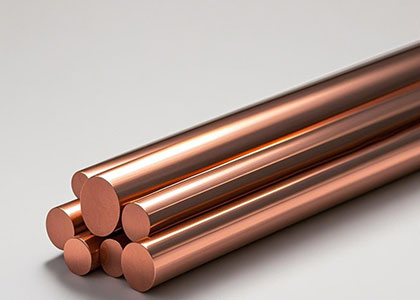
Grade Name
C10100 (ASTM Standard), also known as Oxygen-Free Copper (OFC). Purity ≥99.99%, Oxygen Content ≤0.0005%.
Product Features
-
Ultra-High Electrical Conductivity (≥101% IACS) and Thermal Conductivity.
-
Extremely Low Oxygen Content, eliminating hydrogen embrittlement risk, suitable for high-temperature reducing environments.
-
Excellent Cold/Hot Workability with strong ductility.
-
Superior Corrosion Resistance, especially in vacuum or inert atmospheres.
Common Product Forms & Dimensions
|
Product Form |
Thickness (mm) |
Width/Diameter (mm) |
Length (mm) |
|
Plate |
0.1~50 |
50~600 |
500~6000 |
|
Strip |
0.05~3.0 |
10~300 |
Coil (Customized) |
|
Wire |
– |
Φ0.1~20 |
Coil / Straight |
|
Tube |
Wall: 0.5~10 |
Φ5~200 |
1000~6000 |
Chemical Composition (%)
|
Cu |
O |
Other Impurities (Total) |
|
≥99.99 |
≤0.0005 |
≤0.001 |
Copper C10100 Material Properties
Physical Properties
|
Density (g/cm³) |
Melting Point (°C) |
Conductivity (%IACS) |
Thermal Conductivity (W/m·K) |
|
8.94 |
1083 |
101~103 |
398 |
Mechanical Properties
|
Condition |
Tensile Strength (MPa) |
Yield Strength (MPa) |
Elongation (%) |
|
Annealed (O) |
200~220 |
50~70 |
≥45 |
|
Hard Temper (H) |
300~350 |
280~320 |
3~8 |
Core Advantages
-
Purity Benchmark: Ultra-low oxygen content reduces grain boundary embrittlement, extending service life at high temperatures.
-
Energy Efficiency Optimization: Higher conductivity than standard pure copper (C11000), minimizing energy transmission loss.
-
Adaptability for Precision Machining: Suitable for complex processes like stamping, deep drawing, and welding.
Product Applications
-
Electronics: Semiconductor lead frames, high-frequency coaxial cables.
-
Energy Equipment: Vacuum tube anodes, fusion reactor liners.
-
High-End Manufacturing: Superconducting magnet windings, laser cavity cooling components.
Processing Notes
-
Annealing: Perform under hydrogen or nitrogen atmosphere (400~600°C) to prevent oxidation.
-
Cold Working: Recommended deformation per pass ≤30% to avoid stress concentration and cracking.
-
Welding: TIG welding preferred; argon purity ≥99.995%.
Key Application Scenarios (Expanded & Detailed)
① High-Frequency Communication & Electronics
Millimeter Wave Radar Antennas: For 5G base stations & automotive radar, utilizing low signal loss characteristics.
High-Frequency Circuit Substrates: Microstrip line/coplanar waveguide substrates in satellite communication equipment, ensuring high-frequency stability.
② New Energy Vehicles & Charging Infrastructure
Power Battery Tabs/Connectors: High conductivity reduces resistive heating, improving charge/discharge efficiency.
Fast Charger Internal Conductors: Supports high-current transmission, minimizing energy waste.
③ Precision Instruments & Sensors
High-Accuracy Temperature Probes: Thermocouple protection sheaths, resistant to high temperature with uniform thermal conductivity.
MEMS (Micro-Electro-Mechanical Systems) Wiring: Ultra-fine wires (Φ<0.1mm) for micro-sensor interconnects.
④ Renewable Energy Equipment
Photovoltaic Ribbon: Interconnects solar cells, low resistance enhances photovoltaic conversion efficiency.
Wind Power Converter Heat Sink Baseplates: Optimizes thermal management through high thermal conductivity, extending equipment life.
⑤ High-End Consumer Electronics
Hi-Fi Audio Cables: OFC reduces audio signal distortion, enhancing sound purity.
Ultra-Thin Foldable Screen Hinges: High ductility supports precision stamping.
⑥ Special Industrial Equipment
EDM (Electrical Discharge Machining) Electrodes: High purity ensures uniform discharge, achieving surface finishes up to Ra 0.2μm.
Vacuum Deposition Evaporation Sources: Resistant to high-temperature sublimation, enabling high film deposition consistency.
⑦ Emerging Technology Fields
Quantum Computer Superconducting Coils: Maintains stable conductivity in cryogenic environments (-269°C).
3D Printing Metal Powder: Used in Electron Beam Melting (EBM) for printing complex high-thermal-conductivity parts.
Supplemental Note:
The above scenarios leverage the combined "Purity + Conductivity + Workability" advantages of C10100, making it particularly suitable for applications demanding high material reliability, energy efficiency, or precision manufacturing.
Frequently Asked Questions (FAQ)
Q1: What is the difference between C10100 and C10200?
A: C10200 has an oxygen content ≤0.001%, slightly lower conductivity (100% IACS), and lower cost.
Q2: How to store to prevent oxidation?
A: Vacuum packing or nitrogen-filled storage is recommended, with humidity ≤40%RH.
Q3: Is plating supported?
A: Silver/nickel/tin plating is possible; acid cleaning (e.g., 5% sulfuric acid solution) is required first to remove surface oxides.
Standards Reference
-
ASTM: B152/B152M (Plate/Strip)
-
EN: CW008A (EU Oxygen-Free Copper Standard)
-
GB/T: T1 (China Highest Purity Pure Copper Grade)
Note: Specific parameters may vary based on production processes; refer to the factory test report for definitive values.
UNS Grades
-
C10300 Copper
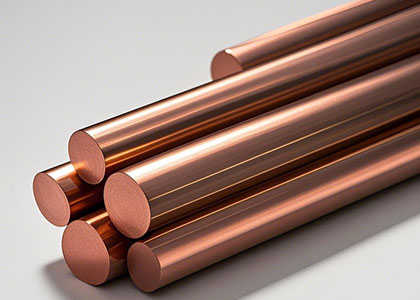 Copper
 -
C11000 Copper
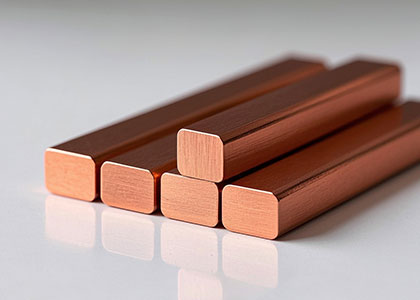 Copper
 -
C12000 Copper
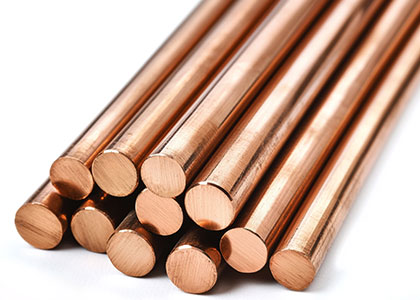 Copper

