
 中文
中文
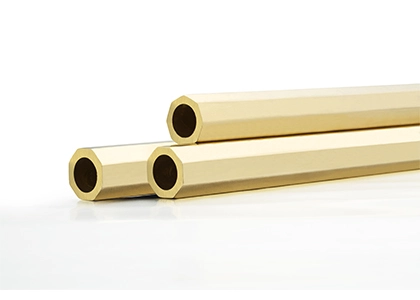
Designation and Standards
-
Standard Designation: H62 (Common Brass)
-
International/National Standards: GB/T 5231-2012 (Wrought Brass), GB/T 4423-2007 (Bars)
-
Corresponding International Designations: ASTM C27400, JIS C2801
-
Material Category: Copper-Zinc Binary Alloy (Cu-Zn), Copper content 60.5%-63.5%, Zinc as the remainder.
Product Features
1. High Strength and Plasticity Balance:
Tensile strength ≥ 330 MPa, elongation ≥ 10% (in the hard state), excellent cold/hot working performance.
Suitable for processes such as stamping, drawing, forging, etc.
2. High Cost-Effectiveness: Low cost, one of the most widely used common brasses.
3. Corrosion Resistance: Good corrosion resistance in freshwater and atmospheric conditions, but prone to stress corrosion cracking in seawater or ammonia-containing environments.
4. Wide Processing Adaptability: Supports cold rolling, hot rolling, welding, but annealing is required after cold processing to avoid stress concentration.
H62 Brass Datasheet
H62 Brass Chemical Composition
|
Element |
Cu |
Zn |
Pb |
Fe |
Total Impurities |
|
Content (%) |
60.5-63.5 |
Remainder (approx. 36.5%-39.5%) |
≤0.08 |
≤0.15 |
≤0.5 |
Physical Properties
|
Property Parameter |
Value |
Remarks |
|
Density |
8.43-8.47 g/cm³ |
Lightweight design advantage |
|
Conductivity |
Approx. 22% IACS |
Meets general conductivity requirements |
|
Thermal Conductivity |
115-120 W/(m·K) |
Suitable for heat dissipation components |
|
Linear Expansion Coefficient |
20.6×10⁻⁶/℃(20-300℃) |
Good thermal stability |
|
Melting Point |
905-930℃ |
Good casting fluidity |
Mechanical Properties
|
Property Parameter |
Value |
Testing Conditions |
|
Tensile Strength (σb) |
330-600 MPa |
Significant variation depending on the processing state (M/Y) |
|
Elongation (δ10) |
≥10% (hard state) |
Can reach 45% in soft state |
|
Hardness (HB) |
80-110 |
Higher hardness in the hard state |
|
Annealing Temperature |
550-650℃ (normal annealing) |
To eliminate work hardening |
Common Product Forms and Specifications
|
Product Form |
H62 Brass Specification Range |
Standard/Condition |
|
Plate |
Thickness 0.2-100mm, Width 305-1000mm |
Hot rolled (R), Soft (M), Hard (Y) |
|
Strip |
Thickness 0.1-3.0mm |
M, Y₂, Y, etc. |
|
Pipe |
Outer diameter 6-530mm, Wall thickness 0.5-50mm |
Cold worked or semi-hard state |
|
Bar |
Diameter 5-200mm, Length 2500-6000mm |
Drawn round, black surface round |
|
Wire |
Diameter 0.5-12.7mm |
Coiled or straight bars |
Core Application Fields
-
Building Hardware: Door and window fittings, locks, plumbing fittings.
-
Electronics and Electrical Appliances: Heat exchangers, conductive terminals, switch contacts.
-
Mechanical Manufacturing: Screws, rivets, washers, stamped parts.
-
Decorative Materials: Metal mesh, decorative strips, crafts.
-
Industrial Equipment: Condenser tubes, heat exchangers (must be protected from seawater corrosion).
Processing Considerations
-
Annealing Process: Requires annealing at 550-650℃ after cold working to eliminate internal stress and prevent cracking.
-
Welding Requirements: Preferably use argon arc welding to reduce the zinc evaporation and pore defects.
-
Corrosion Protection: Avoid direct exposure to seawater or ammonia environments; it is recommended to add a coating or plating.
Frequently Asked Questions
Q: What is the difference between H62 brass and H59 brass?
A: H62 has a higher copper content (60.5%-63.5% vs. H59's 57%-60%), offering better plasticity, making it suitable for complex processing. H59 has slightly lower strength but is more cost-effective.
Q: Is H62 material suitable for seawater environments?
A: It is not recommended for direct use, as the corrosion rate is relatively high (around 0.1-0.15 mm/a). It is recommended to add a coating or use a corrosion-resistant alloy (such as HSn62-1 tin brass).
Standard References
-
Chemical Composition and Processing Specifications: GB/T 5231-2012, GB/T 4423-2007 (Bars).
-
Mechanical Property Testing: GB/T 228.1 (Metal Tensile Testing).
-
International Standards: ASTM B36 (Plate), JIS H3250 (Japanese Standard).
Note: The above data is compiled from various industrial standards and technical documents. Actual parameters may vary slightly due to production processes. Please refer to the supplier's test report for specific details.
GB Grades
-
BZn12-24 Copper
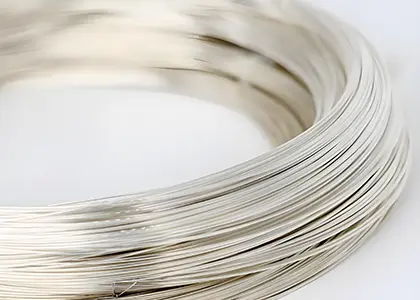 Copper
 -
BZn12-26 Copper
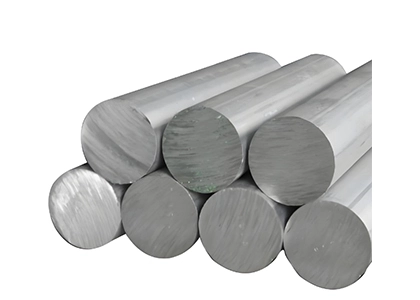 Copper
 -
BZn18-18 Copper
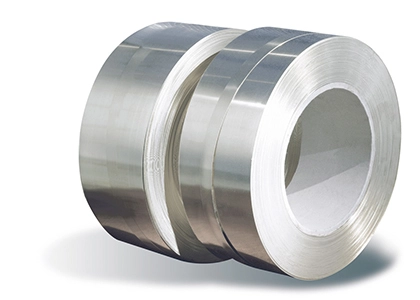 Copper

