
 中文
中文
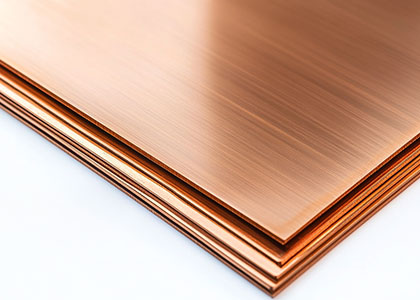
Grade Name
-
UNS Number: C21000
-
Common Name: Phosphorus-Deoxidized Copper (High-Strength Brass)
-
Corresponding Standards: ASTM B36/B36M, GB/T 5231-2012.
Product Features
-
High Corrosion Resistance: Particularly suitable for marine and industrial environments.
-
Excellent Electrical & Thermal Conductivity: Ideal for electrical and heat exchange applications.
-
Superior Machinability: Supports cold/hot rolling, forging, and welding.
-
Eco-Friendly: Low lead content (≤0.05%) meets environmental standards.
-
High Strength & Ductility: Balances tensile strength and elongation in annealed or cold-worked states.
Common Product Forms & Dimensions
|
Form |
Thickness (mm) |
Width (mm) |
Length (mm) |
Diameter (mm) |
|
Sheet/Strip |
0.5 – 10 |
100 – 600 |
Custom |
– |
|
Rod/Bar |
– |
– |
Custom |
5 – 50 |
|
Wire |
– |
– |
Custom |
0.5 – 10 |
|
Tube |
1 – 20 (wall) |
– |
Custom |
10 – 200 (OD) |
|
Note: Custom dimensions are available based on requirements. |
||||
Chemical Composition
|
Element |
Cu |
Zn |
Pb |
Fe |
P |
Others |
|
Weight % |
94–96 |
Balance |
≤0.05 |
≤0.05 |
≤0.01 |
≤0.1 |
|
Data per ASTM B36 and GB/T 5231 standards. |
||||||
Physical Properties
|
Property |
Value |
|
Density (g/cm³) |
8.86–8.94 |
|
Melting Point (°C) |
1049 |
|
Electrical Conductivity (%IACS) |
80–85 (Annealed) |
|
Thermal Conductivity (W/m·K) |
120–391 (at 20°C) |
|
Values vary with processing conditions. |
|
Mechanical Properties
|
Condition |
Tensile Strength (MPa) |
Yield Strength (MPa) |
Elongation (%) |
Hardness (HV) |
|
Annealed |
220–290 |
69–100 |
35–45 |
40–60 |
|
Cold Worked (H01) |
255–325 |
200–250 |
20–30 |
50–70 |
|
Cold Worked (H04) |
345–405 |
300–350 |
10–15 |
80–100 |
|
Data covers varying thicknesses and processing states. |
||||
Core Advantages
1. Marine-Grade Durability: Resists seawater corrosion and stress cracking.
2. Versatile Fabrication: Compatible with TIG welding, cold/hot forming, and machining.
3. Cost-Effective: High performance-to-cost ratio for industrial applications.
Product Applications
-
Electrical Systems: Connectors, busbars, semiconductor components.
-
Marine Engineering: Heat exchangers, seawater pipes, ship fittings.
-
Mechanical Components: Valves, bearings, rivets.
-
Chemical Equipment: Corrosion-resistant tanks, pumps, and pipelines.
Processing Considerations
-
Hot Working: Recommended temperature range: 730–850°C; avoid edge cracking.
-
Annealing: 540–600°C to restore ductility.
-
Welding: Use TIG with inert gas shielding; control heat input to prevent brittleness.
Key Application Scenarios
-
Power distribution systems in marine vessels.
-
Renewable energy infrastructure (e.g., offshore wind turbines).
-
Automotive electrical connectors and cooling systems.
-
Chemical processing plants with corrosive environments.
FAQs
Q1: Is C21000 suitable for seawater environments?
A: Yes, its corrosion resistance makes it ideal for marine applications, but regular maintenance is advised.
Q2: How does cold working affect mechanical properties?
A: Cold working increases tensile strength and hardness but reduces elongation.
Q3: Does C21000 comply with environmental regulations?
A: Yes, low lead content (≤0.05%) meets RoHS and drinking water standards.
Standard References
|
Standard |
Description |
|
ASTM B36/B36M |
Specifications for brass sheet, strip, and rolled bar. |
|
ASTM B134 |
Standard for brass wire. |
|
SAE J463 |
Mechanical property standards for wrought copper alloys. |
Note: Specifications may vary slightly depending on manufacturer and processing methods. Always consult technical datasheets for critical applications.
UNS Grades
-
C10100 Copper
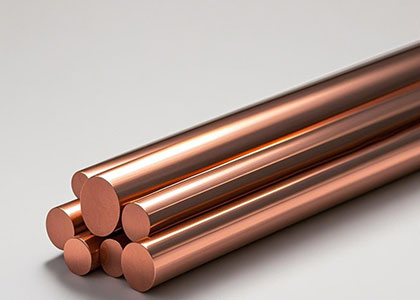 Copper
 -
C10300 Copper
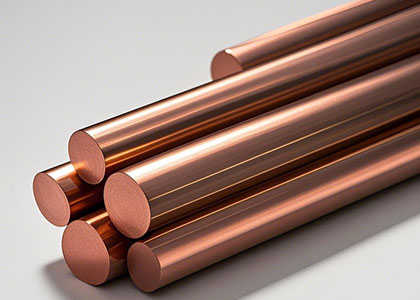 Copper
 -
C11000 Copper
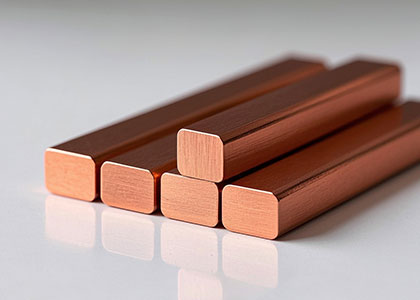 Copper

