
 中文
中文
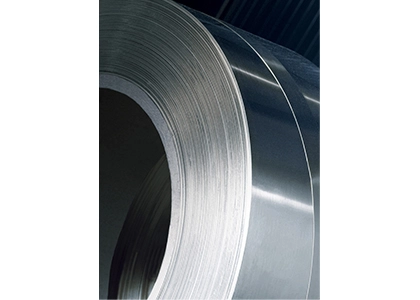
Designation
-
Name: High-Nickel Zinc Cupronickel CuNi18Zn27
-
International Designation: CW410J (European Standard), DIN 2.0540, C77000
-
Standards: DIN 17665, EN 12164, ISO 1635.
Key Features
1. Superior Corrosion Resistance: Excellent resistance to seawater, salt spray, and strong acids.
2. High Strength & Ductility: Balanced tensile strength (up to 600MPa) and cold-forming capability.
3. Anti-Biofouling: Smooth surface minimizes marine organism adhesion.
4. Conductivity: Ideal for precision electronics and thermal management.
5. Aesthetic Value: Silver-white luster for luxury applications.
Common Forms & Dimensions
|
Form |
Dimensions |
|
Round Bar |
Diameter: Φ5.0mm–350mm |
|
Plate |
Thickness: 0.5–150mm |
|
Tube |
Seamless tubes per EN 12449 (Wall ≤20mm) |
|
Wire |
Diameter: 0.2mm–6.0mm |
|
Forged Parts |
Custom shapes (e.g., marine fittings, valves) |
|
Note: Confirm feasibility for non-standard sizes. |
|
Chemical Composition (wt%)
|
Element |
Cu |
Ni |
Zn |
Pb |
Fe |
Mn |
Impurities |
|
Range |
53–58 |
17–19 |
25–28 |
≤0.3 |
≤0.5 |
≤0.5 |
≤0.5 |
|
Data based on DIN 17665. |
|||||||
Physical Properties
|
Property |
Value/Description |
|
Density |
8.9 g/cm³ |
|
Thermal Conductivity |
25 W/m·K (at 20°C) |
|
Electrical Resistivity |
0.35 μΩ·m (at 20°C) |
|
Conductivity |
~12% IACS |
|
Magnetism |
Slightly magnetic (Ni influence) |
Mechanical Properties
|
Property |
Range/Typical Value |
|
Tensile Strength (Rm) |
450–650 MPa (varies by temper) |
|
Yield Strength (Rp0.2) |
200–400 MPa |
|
Elongation (A) |
15–35% |
|
Brinell Hardness (HB) |
120–200 |
|
Note: Hard temper (H) offers higher tensile strength. |
|
Core Advantages
-
Extreme Environment Adaptability: Suitable for deep-sea and harsh chemical environments.
-
Versatile Processing: Compatible with cold rolling, stamping, welding, and casting.
-
Low Maintenance: Anti-fouling and wear-resistant properties extend service life.
Applications
-
Marine Engineering: Deep-sea valves, condensers, pump components.
-
Energy & Chemical: Acid-resistant pipelines, refinery heat exchangers.
-
Electronics: High-precision connectors, resistor substrates.
-
Luxury Goods: Watch cases, jewelry accessories.
Processing Guidelines
1. Cold Working: Limit deformation to ≤30% per pass; anneal at 700–800°C.
2. Welding: Use TIG welding; post-weld passivation required.
3. Machining: Carbide tools with low speed and lubricants.
4. Surface Treatment: Electro-polishing or rhodium plating for enhanced finish.
Key Application Scenarios
-
Deep-Sea Equipment: High-pressure corrosion-resistant valves.
-
Nuclear Power Plants: Chloride-resistant heat transfer tubes.
-
Luxury Watchmaking: Sweat-resistant watch bands.
FAQs
Q1: How does CuNi18Zn27 differ from CuNi12Zn24?
A: CuNi18Zn27 has higher Ni content (17–19%) for enhanced corrosion resistance and strength.
Q2: Suitable for high-temperature/pressure environments?
A: Long-term use ≤180°C; short-term tolerance up to 250°C (pressure-dependent).
Q3: How to prevent cracking during processing?
A: Control cold deformation rate and anneal promptly.
Standards Reference
-
DIN 17665: Chemical and mechanical specifications.
-
EN 12164: Plate and strip processing standards.
-
ISO 1635: Corrosion resistance testing.
DIN Grades
-
CuNi10Fe1Mn Copper
 Copper
 -
CuNi12Zn24 Copper
 Copper
 -
CuNi18Zn20 Copper
 Copper

