
 中文
中文
Designation
-
Name: Iron-Manganese Cupronickel CuNi10Fe1Mn
-
International Designation: CW354H (European Standard), C70600 (US), DIN 2.0872
-
Standards: DIN 17664, EN 12163, ISO 1634.
Key Features
1. Corrosion Resistance: Excellent in seawater, salt spray, and weak acids.
2. High Strength & Toughness: Enhanced by Fe and Mn, suitable for cold/hot forming.
3. Anti-Biofouling: Smooth surface reduces marine organism adhesion.
4. Conductivity: Moderate electrical/thermal conductivity for industrial use.
5. Weldability: Compatible with TIG, laser welding, and brazing.
Common Forms & Dimensions
|
Form |
Dimensions |
|
Round Bar |
Diameter: Φ5.0mm–300mm |
|
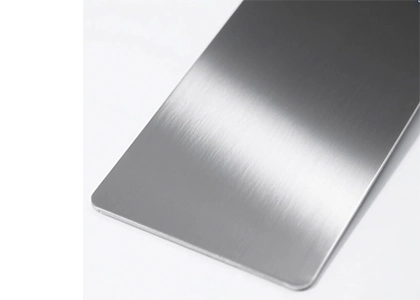
Plate |
Thickness: 0.5–100mm |
|
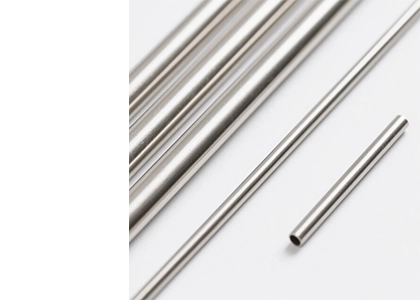
Tube |
Seamless tubes per EN 12449 (Wall ≤15mm) |
|
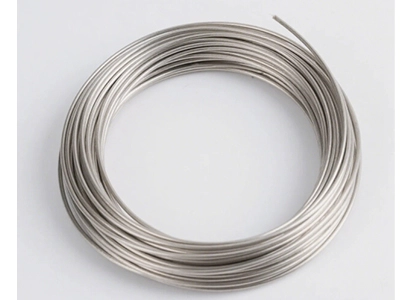
Wire |
Diameter: 0.5mm–6.0mm |
|
Forged Parts |
Custom shapes (e.g., flanges, valve parts) |
|
Note: Confirm feasibility for non-standard sizes. |
|
Chemical Composition (wt%)
|
Element |
Cu |
Ni |
Fe |
Mn |
Pb |
Impurities |
|
Range |
84–88 |
9–11 |
0.8–1.2 |
0.5–1.0 |
≤0.05 |
≤0.3 |
|
Data based on DIN 17664. |
||||||
Physical Properties
|
Property |
Value/Description |
|
Density |
8.8 g/cm³ |
|
Thermal Conductivity |
40 W/m·K (at 20°C) |
|
Electrical Resistivity |
0.25 μΩ·m (at 20°C) |
|
Conductivity |
~30% IACS |
|
Magnetism |
Slightly magnetic (Fe influence) |
Mechanical Properties
|
Property |
Range/Typical Value |
|
Tensile Strength (Rm) |
400–550 MPa (varies by temper) |
|
Yield Strength (Rp0.2) |
180–320 MPa |
|
Elongation (A) |
25–40% |
|
Brinell Hardness (HB) |
100–160 |
|
Note: Hard temper (H) offers higher tensile strength. |
|
Core Advantages
-
Marine Adaptability: Superior seawater corrosion resistance.
-
Balanced Performance: Combines strength, ductility, and processability.
-
Eco-Friendly: ROHS-compliant, lead-free options available.
Applications
-
Marine Engineering: Seawater pumps, ship condensers, submarine cable sheaths.
-
Chemical Industry: Acid-resistant pipelines, heat exchanger plates.
-
Power Systems: Medium-voltage terminals, grounding components.
-
Automotive: Corrosion-resistant bolts, radiator brackets.
Processing Guidelines
1. Cold Working: Limit deformation to ≤20% per pass; anneal at 600–700°C.
2. Welding: Use TIG welding with inert gas shielding.
3. Machining: High-speed steel tools with coolant.
4. Surface Treatment: Tin or nickel plating for corrosion resistance.
Key Application Scenarios
-
Desalination Plants: Chloride-resistant heat transfer tubes.
-
Shipbuilding: Salt spray-resistant valve components.
-
Power Transmission: Medium-voltage electrical connectors.
FAQs
Q1: How does CuNi10Fe1Mn differ from B10 cupronickel?
A: B10 lacks Fe/Mn, offering lower strength and corrosion resistance.
Q2: Suitable for sulfur-rich environments?
A: Not recommended for long-term exposure to high-sulfur media.
Q3: How to avoid oxidation during processing?
A: Use inert gas shielding in welding and anti-oxidant coolants in machining.
Standards Reference
-
DIN 17664: Cupronickel chemical and mechanical standards.
-
EN 12163: Rod processing specifications.
-
ISO 1634: Corrosion resistance testing methods.
DIN Grades
-
CuNi12Zn24 Copper
 Copper
 -
CuNi18Zn20 Copper
 Copper
 -
CuNi18Zn27 Copper
 Copper

