
 中文
中文
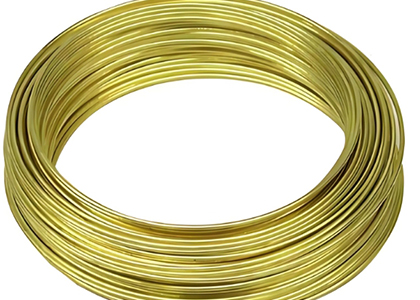
Grade Name
C2300 Copper Alloy (Medium-Zinc Brass)
Key Features
-
Balanced Properties: Moderate copper content (83–85%) with excellent cold workability.
-
High Ductility: Elongation ≥30% after annealing, ideal for complex shaping.
-
Corrosion Resistance: Stable in dry and neutral environments.
-
Eco-Friendly: Compliant with RoHS and REACH regulations (Pb ≤0.05%).
Product Forms & Dimensions
|
Form |
Size Range |
Standards |
|
Rod |
Diameter 2–300mm, Length 1–12m |
JIS H 3250-1992 |
|
Plate |
Thickness 0.5–60mm, Width 100–2000mm |
ASTM B36/B36M |
|
Wire |
Diameter 0.2–12mm, Coil ≥3kg |
JIS H 3300-2018 |
|
Tube |
OD 5–300mm, Wall Thickness 0.5–30mm |
EN 12449: 1999 |
|
Strip |
Thickness 0.1–2.5mm, Width ≤250mm |
ASTM B134 |
Chemical Composition
|
Element |
Content (%) |
Standard Range |
|
Cu |
83.0–85.0 |
Main Component (JIS H 3100) |
|
Zn |
Balance |
Balance |
|
Pb |
≤0.05 |
RoHS Limit |
|
Fe |
≤0.05 |
|
|
Impurities |
≤0.3 |
Physical Properties
|
Property |
Value/Description |
|
Density |
8.75 g/cm³ |
|
Melting Point |
930–980℃ |
|
Electrical Conductivity |
25% IACS (20℃) |
|
Thermal Conductivity |
115 W/(m·K) |
|
Thermal Expansion |
20×10⁻⁶/℃ (20–300℃) |
Mechanical Properties
|
Condition |
Tensile Strength (MPa) |
Elongation (%) |
Hardness (HRB) |
|
Annealed (O) |
235–345 |
≥30 |
50–65 HRB |
|
Half-Hard (H02) |
345–440 |
≥20 |
70–80 HRB |
|
Hard (H04) |
≥440 |
≤10 |
≥85 HRB |
Core Advantages
-
Cost Efficiency: Lower cost than high-copper brass alloys (e.g., C2200).
-
Cold Workability: Optimized for stamping, drawing, and forging.
-
Surface Versatility: Compatible with plating, painting, and polishing.
Applications
-
Architectural Hardware: Locks, hinges, and handles.
-
Electronics: Low-current terminals and shielding components.
-
Industrial Stamping: Gaskets, springs, and metal meshes.
-
Decorative Items: Lighting frames, furniture trims, medals.
Processing Guidelines
-
Prioritize Cold Working: Avoid processing at 200–600℃ to prevent brittleness.
-
Annealing: 600–700℃ to relieve stress and restore ductility.
-
Surface Protection: Apply nickel plating or passivation for corrosion resistance.
FAQs
Q1: Key differences between C2300 and C2200?
A: C2300 has lower Cu (83–85% vs. 89–91%), higher Zn, lower cost, and slightly reduced strength than C2200.
Q2: Is C2300 suitable for humid environments?
A: Short-term exposure is acceptable; long-term use requires protective coatings.
Standards
-
JIS H 3100-2018: Copper and copper alloy sheets/plates.
-
ASTM B36/B36M: Brass plates and strips.
-
EN 12449: 1999: Seamless copper tubes for general purposes.
JIS Grades
-
C1011 Copper
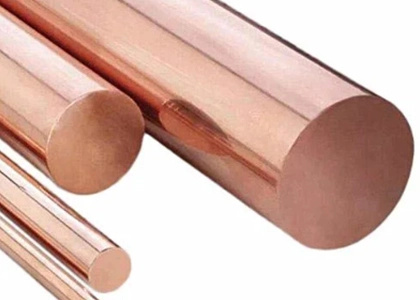 Copper
 -
C1100 Copper
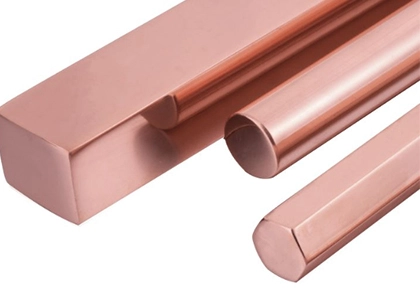 Copper
 -
C1201 Copper
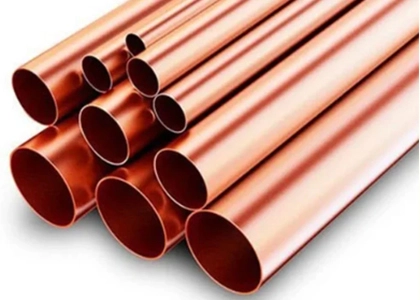 Copper

