
 中文
中文
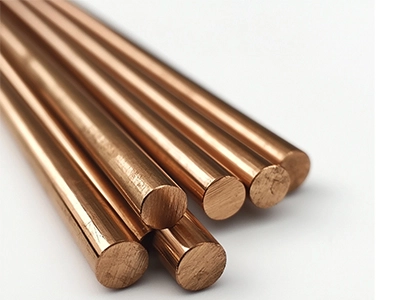
Designation & Standards
-
Standard Designation: CuSn4 (Tin-Phosphor Bronze)
-
International Equivalents: ASTM C51000 (USA), EN CW453K (Europe), JIS C5101 (Japan)
-
Applicable Standards: GB/T 5231-2012 (Wrought Copper Alloys), ASTM B103 (US Strip), EN 12163 (European Standard)
Key Features
1. High Elasticity & Wear Resistance: Excellent fatigue resistance, ideal for springs, contacts, and high-frequency moving parts.
2. Superior Corrosion Resistance: Resists atmospheric, freshwater, and seawater corrosion (rate ≤0.01 mm/a); no stress corrosion cracking.
3. Good Workability: Suitable for cold/hot working, stamping, and welding; annealing required post-cold working.
4. Balanced Conductivity & Thermal Properties: Electrical conductivity ~15% IACS, thermal conductivity 75–85 W/(m·K), ideal for conductive and wear-resistant applications.
Product Forms & Specifications
|
Form |
Specifications |
Delivery Condition |
|
Strip |
Thickness: 0.1–2.0mm; Width: ≤600mm |
Soft (M), Hard (H) |
|
Rod |
Diameter: 5–150mm; Length: 2000–6000mm |
Drawn, Hot-rolled |
|
Wire |
Diameter: 0.1–12.0mm |
Coiled or Straight |
|
Tube |
OD: 3–200mm; Wall Thickness: 0.5–20mm |
Soft, Half-hard |
Chemical Composition
|
Element |
Cu |
Sn |
P |
Pb |
Total Impurities |
|
Content (%) |
Balance (≥95.3) |
3.5–4.5 |
0.1–0.35 |
≤0.02 |
≤0.2 |
CuSn4 Material Properties
Physical Properties
|
Property |
Value |
Remarks |
|
Density |
8.8–8.9 g/cm³ |
High compactness for precision parts |
|
Electrical Conductivity |
~15% IACS |
Meets industrial conductivity needs |
|
Thermal Conductivity |
75–85 W/(m·K) |
Moderate heat dissipation |
|
Thermal Expansion Coefficient |
18.5×10⁻⁶/°C (20–200°C) |
Excellent thermal stability |
|
Melting Point |
1000–1020°C |
Moderate casting fluidity |
Mechanical Properties
|
Property |
Soft (M) |
Hard (H04) |
|
Tensile Strength (σb) |
350–450 MPa |
550–700 MPa |
|
Elongation (δ10) |
≥40% |
≥3% |
|
Hardness (HV) |
80–150 |
160–220 |
|
Elastic Modulus |
≥105 GPa |
Critical for spring applications |
Core Advantages
1. Superior Comprehensive Performance: Balances strength, elasticity, and corrosion resistance for demanding industrial use.
2. Long Service Life & Reliability: Exceptional fatigue resistance with over 1 million cycles.
3. Surface Treatment Compatibility: Supports nickel/silver plating, passivation, and functional coatings.
Applications
1. Electronics: Relay spring contacts, connector terminals, sensor reeds.
2. Machinery: Bearing bushings, gears, wear-resistant spacers.
3. Marine Engineering: Seawater valves, pump seals (with protective coatings).
4. Automotive: Fuel injection springs, brake system seals.
Processing Guidelines
1. Annealing: Post-cold working, anneal at 600–700°C to restore plasticity.
2. Welding: Use TIG welding or brazing; avoid tin oxidation-induced brittleness.
3. Machining: Cutting speed ≤60 m/min; use carbide tools and sulfur-based coolant.
4. Surface Treatment: Clean thoroughly before coating to ensure adhesion.
FAQ
Q1: How does CuSn4 differ from brass (e.g., H62)?
A1: CuSn4 offers superior corrosion resistance, elasticity, and wear resistance but at a higher cost.
Q2: Is CuSn4 suitable for seawater environments?
A2: Corrosion rate ≤0.01 mm/a in direct exposure, but long-term use requires nickel plating or coatings.
Q3: How to prevent edge cracking in cold-rolled strips?
A3: Limit rolling reduction (single-pass ≤20%), stress-relieve before annealing, and ensure smooth rollers.
Standards Reference
-
Chemical Composition: GB/T 5231-2012, ASTM B103
-
Mechanical Properties: EN 12163, JIS H3270 (Japanese rods)
-
Processing: ISO 426-2 (International manufacturing standards)
Note: Data based on national standards and industry documentation. Actual parameters may vary slightly due to production processes. Refer to supplier test reports for exact specifications.
EN Grades
-
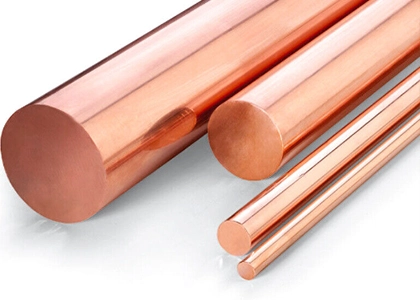
Cu-DHP Copper
-
Cu-DLP Brass
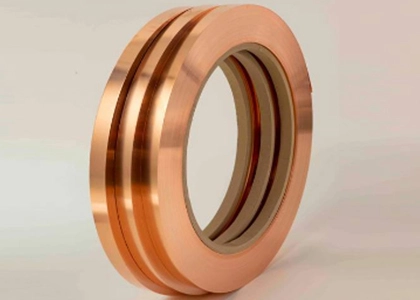 Brass
Brass -
Cu-ETP Copper
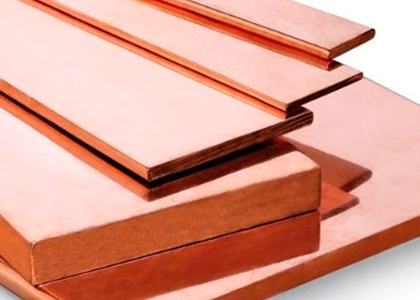 Copper

