
 中文
中文
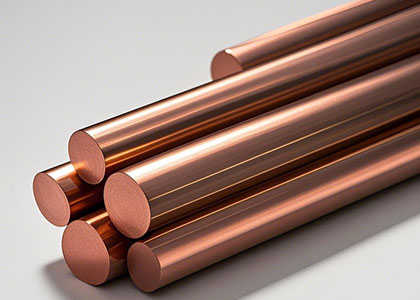
Designation
-
International Standard: C10300 (ASTM B152)
-
Chinese Designation: TU1 (GB/T 5231)
-
Alias: Oxygen-Free High Conductivity Copper (OFHC)
Key Features
-
High Purity: Copper content ≥99.99%, oxygen content ≤0.0003%.
-
Exceptional Conductivity: Electrical conductivity ≥101% IACS (International Annealed Copper Standard).
-
Superior Thermal Conductivity: Ideal for heat dissipation applications.
-
Low Gas Content: Excellent vacuum sealing performance for high-temperature oxygen-free environments.
-
Outstanding Workability: High ductility for deep drawing, wire drawing, and forging.
Common Product Forms & Dimensions
|
Product Form |
Dimensions |
Delivery Conditions |
|
Rods |
Diameter: Φ5mm–Φ200mm, Length: 1–6m |
Hard (H), Half-Hard (1/2H), Annealed (O) |
|
Wires |
Diameter: Φ0.1mm–Φ10mm |
Straight or coiled |
|
Sheets/Plates |
Thickness: 0.1mm–50mm, Width: ≤1200mm |
Cold-rolled, Hot-rolled, Annealed |
|
Tubes |
OD: Φ3mm–Φ150mm, Wall Thickness: 0.2–10mm |
Seamless or welded |
Chemical Composition (wt%)
|
Element |
Cu |
O |
Other Impurities (Total) |
|
Content |
≥99.99 |
≤0.0003 |
≤0.007 |
Physical Properties
|
Property |
Value |
Test Standard |
|
Density (20°C) |
8.94 g/cm³ |
ASTM B193 |
|
Melting Point |
1083°C |
ASTM E3 |
|
Thermal Conductivity (20°C) |
391 W/(m·K) |
ASTM E1225 |
|
Electrical Resistivity (20°C) |
1.673×10⁻⁸ Ω·m |
ASTM B193 |
|
Thermal Expansion (20–300°C) |
16.5×10⁻⁶/°C |
ASTM E228 |
Mechanical Properties
|
Condition |
Tensile Strength (MPa) |
Yield Strength (MPa) |
Elongation (%) |
Hardness (HV) |
|
Annealed (O) |
200–250 |
60–80 |
≥45 |
40–60 |
|
Hard (H) |
350–450 |
300–380 |
5–15 |
100–120 |
Core Advantages
-
Ultra-High Purity: Minimizes impurities for optimal conductivity/thermal performance.
-
Vacuum Compatibility: Low oxygen content prevents hydrogen embrittlement in high-temperature vacuum environments.
-
Superior Ductility: Suitable for precision machining (e.g., semiconductor lead frames).
-
Corrosion Resistance: Stable in non-oxidizing acids and alcohol-based media.
Applications
-
Electronics & Electrical: High-frequency conductors, vacuum tubes, magnetron components.
-
Energy Sector: Solar cell conductive layers, liners for nuclear fusion devices.
-
Cryogenics: Ultra-low-temperature pipelines (liquid nitrogen/helium transfer).
-
Advanced Manufacturing: 3D printing metal powders, sputtering targets.
Processing Guidelines
-
Annealing: Perform under hydrogen or inert gas atmosphere (400–600°C).
-
Cold Working: Intermediate annealing required for deformation exceeding 80%.
-
Welding: Use TIG welding or electron beam welding to avoid oxidation.
-
Storage: Seal packaging to prevent oxidation; avoid contact with sulfides.
Frequently Asked Questions (FAQ)
|
Question |
Answer |
|
How does C10300 differ from regular copper (e.g., T2)? |
Lower oxygen content (T2: ≤0.06% O), higher conductivity, and suitability for vacuum environments. |
|
Is it suitable for high-frequency signal transmission? |
Yes, high purity minimizes skin effect losses at high frequencies. |
|
How to prevent oxidation during processing? |
Use inert gas shielding or vacuum furnaces; clean surfaces post-processing. |
|
Can it be electroplated? |
Yes, but requires thorough degreasing and surface activation. |
Reference Standards
-
ASTM: B152 (Sheet/Strip), B187 (Rods), B272 (Wires)
-
GB/T: 5231-2012 (Oxygen-Free Copper), 8888-2021 (Copper Alloy Tubes)
-
JIS: H0500 (OFHC Analysis Methods)
-
EN: 13601 (General Standards for Copper Alloy Profiles)
Note: Data based on standard annealed (O) condition; actual properties may vary slightly with processing. Refer to factory test reports for specifics.
Date of Preparation: October 2023
Version: V2.1
Let me know if further adjustments are needed!
UNS Grades
-
C10100 Copper
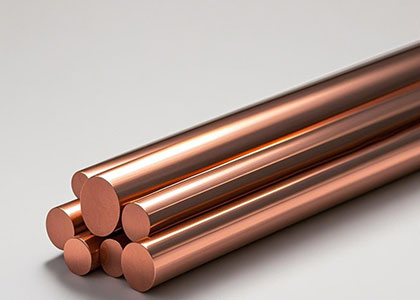 Copper
 -
C11000 Copper
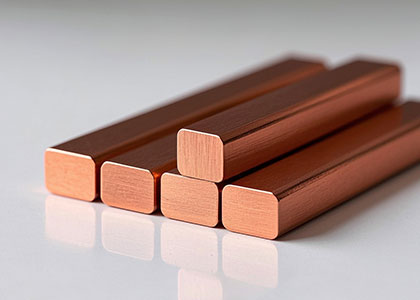 Copper
 -
C12000 Copper
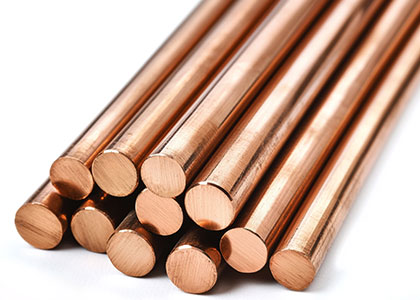 Copper

