
 中文
中文
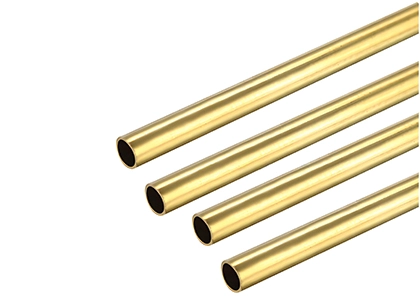
Designation and Standards
-
Standard Designation: HPb63-3 (Leaded Brass)
-
Implementing Standard: GB/T 5231-2012 (Wrought Brass)
-
International Equivalent Grades: ASTM C27200, JIS C2720
-
Material Category: Copper-Zinc-Lead Alloy (Cu-Zn-Pb), Copper content 62.0%-65.0%, Lead content 2.4%-3.0%, Zinc balance.
Product Characteristics
-
Excellent Machinability:
The addition of lead significantly improves cutting performance, resulting in a high surface finish, suitable for precision part machining.
Good ductility, supports cold stamping, deep drawing, and other processes, but not suitable for hot working.
-
Balanced Mechanical Properties:
Tensile strength range: 350-580 MPa, offering a combination of strength and plasticity.
Excellent anti-friction properties, suitable for wear-resistant parts such as bearings and gears.
-
Corrosion Resistance and Electrical Conductivity: Good corrosion resistance in fresh water and atmospheric environments, but susceptible to corrosion and cracking in seawater or high-stress environments.
-
Electrical conductivity: Approximately 23% IACS, with thermal conductivity close to pure copper, making it suitable for electrical components.
-
Environmental Restrictions: Lead content is high, and attention should be given to environmental regulations and waste disposal.
Chemical Composition
|
Element |
Cu |
Pb |
Zn |
Fe |
Total Impurities |
|
Content (%) |
62.0-65.0 |
2.4-3.0 |
Remainder (approximately 33.5%-37.5%) |
≤0.10 |
≤0.75 |
Physical Properties
|
Property |
Value |
Remarks |
|
Density |
8.4-8.5 g/cm³ |
Lightweight design advantage |
|
Melting Point |
880-940°C |
Good casting fluidity |
|
Electrical Conductivity |
Approximately 23% IACS |
Suitable for general electrical requirements |
|
Coefficient of Linear Expansion |
20.6×10⁻⁶/°C (20-300°C) |
Excellent thermal stability |
Mechanical Properties
|
Property |
Value |
Test Conditions |
|
Tensile Strength (σb) |
350-580 MPa |
Varies significantly with processing state |
|
Elongation (δ10) |
5%-55% |
Higher plasticity (M) |
|
Hardness (HB) |
70-95 |
Higher Hardness (Y) |
|
Elastic Modulus |
105 GPa |
Material rigidity index |
Common Product Forms and Specifications
|
Product Form |
Specification Range |
Standard/Condition |
|
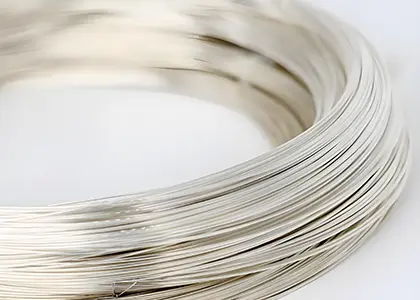
Wire |
Diameter 0.5-6.0mm |
GB/T 14954, M/Y₂/Y/T |
|
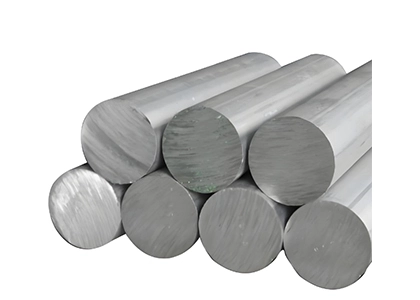
Rod |
Diameter 5-60mm, Length 3-75mm |
GB/T 4423, Y₂/Y |
|
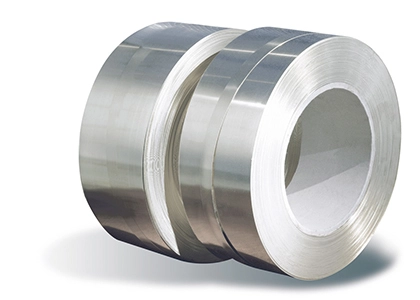
Plate |
Thickness 0.2-100mm, Width 305-1000mm |
Hot Rolling (R), Annealed (M) |
|
Tube |
Outer Diameter 6-530mm, Wall Thickness 0.5-50mm |
Cold Working or 1/2 Hard |
Core Application Fields
-
Mechanical Manufacturing: Sliding bearings, gears, valves, bolts (excellent wear resistance and anti-friction properties).
-
Electronics and Electrical Appliances: Electrical connectors, heat sinks, switch contacts (both electrical conductivity and thermal conductivity).
-
Automotive Industry: Transmission parts, cooling system components (corrosion resistance and processing suitability).
-
Construction and Decoration: Faucets, door/window hardware (corrosion resistance and aesthetics).
-
Marine Engineering: Seawater equipment components (requires protective coatings).
Processing Considerations
-
Annealing Treatment: Cold working requires annealing at 620-650°C to eliminate internal stress and prevent stress corrosion cracking.
-
Welding Process: Argon protected welding or soldering and brazing is recommended, avoid lead evaporation to prevent pore defects.
-
Environmental Protection: Lead-containing materials must comply with waste disposal regulations to avoid environmental contamination.
Frequently Asked Questions
Q: What is the difference between HPb63-3 and common brass H63?
A: HPb63-3 contains 2.4%-3.0% lead, significantly enhancing cutting and anti-friction properties, but it isn’t suitable for hot working; H63 is Copper-Zinc Alloy with higher plasticity.
Q: Is it suitable for seawater environments?
A: Direct exposure results in a higher corrosion rate (approximately 0.1 mm/a), and protective coatings or Arsenical Brass (e.g., H68A) are recommended.
Q: How can typical processing defects be avoided?
A: Control cold working deformation, ensure adequate annealing, and use low-melting solder to minimize thermal impact during welding.
Standards References
-
Chemical Composition and Processing Specifications: GB/T 5231-2012, GB/T 4423 (Bars).
-
Mechanical Property Testing: GB/T 228.1 (Tensile Test).
-
International Standards: ASTM B36 (Plates), JIS H3100 (Japanese Standard).
Note: The data above is compiled from multiple industrial standards and technical documents. Actual parameters may vary slightly due to production processes, and specific values should be verified with the supplier's test report.
GB Grades
-
BZn12-24 Copper
 Copper
 -
BZn12-26 Copper
 Copper
 -
BZn18-18 Copper
 Copper

