
 中文
中文
Difference Between Type L and Type M Copper Pipe: Which One Should You Choose?
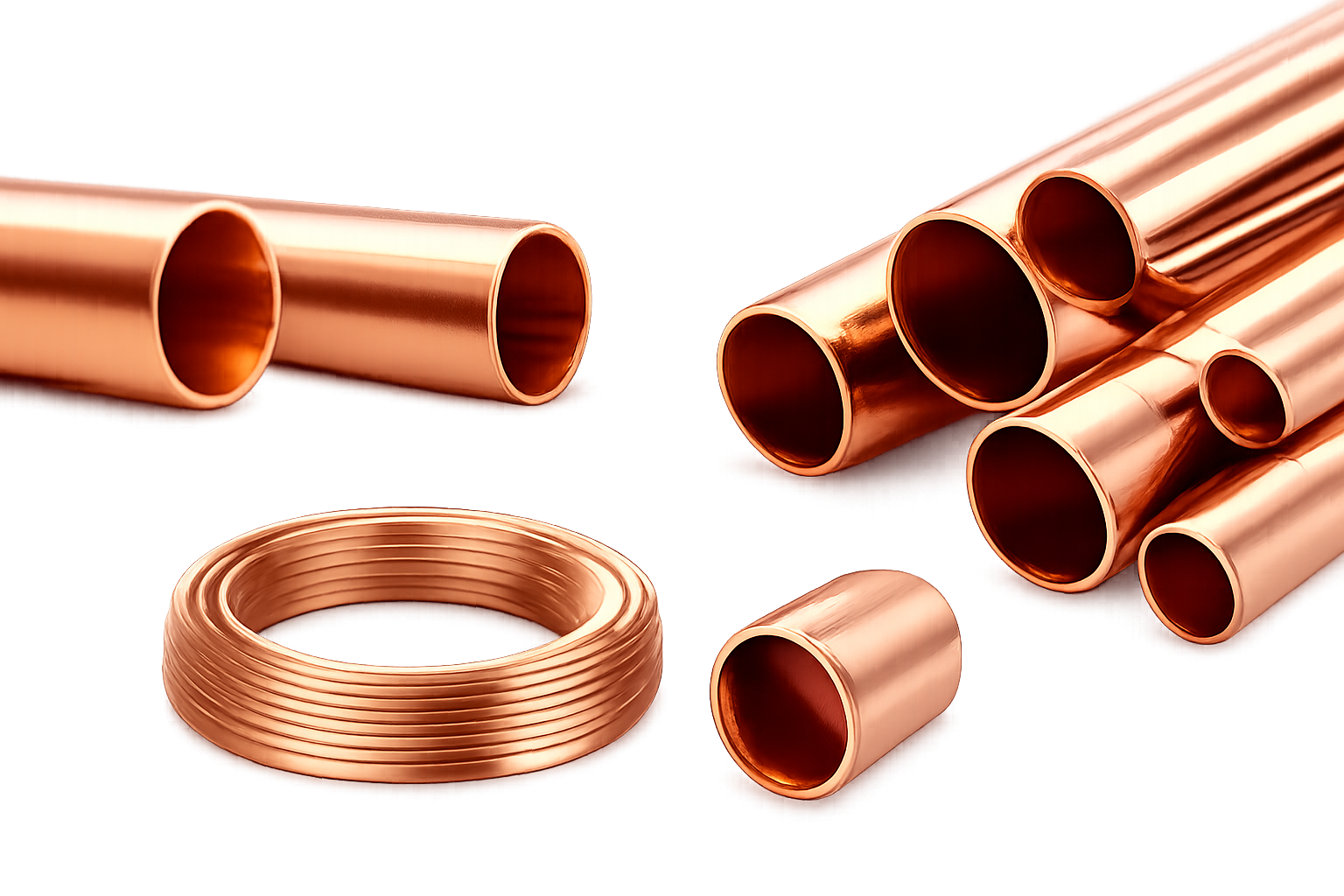
Copper pipes have remained one of the most trusted materials for plumbing, HVAC, and refrigeration systems for decades. Their excellent corrosion resistance, thermal conductivity, durability, and long service life make them a preferred choice for residential, commercial, and industrial applications.
When selecting copper piping, one of the most common questions is the difference between Type L and Type M copper pipe. While both types are manufactured from high-quality copper and are widely used across the construction industry, they are designed for different performance requirements. Understanding their differences can help contractors, engineers, distributors, and project owners choose the most suitable option for their specific applications.
What Are Type L and Type M Copper Pipes?
Type L and Type M are two commonly used grades of seamless copper pipe classified by wall thickness, mainly complying with ASTM B88 and other US standard systems. Type L copper pipe can be used to transport various pressurized fluids such as water, refrigerants, and hydraulic oil. Type M copper pipe is only suitable for low-pressure residential cold and hot water supply and must not be used in high-pressure scenarios such as refrigerant and hydraulic systems.
These copper pipes share several advantages:
-
Excellent corrosion resistance
-
Superior thermal conductivity
-
Long service life
-
Easy installation and fabrication
-
Recyclability and environmental sustainability
The primary distinction between them lies in wall thickness. Type L copper pipe has thicker walls, while Type M copper pipe features thinner walls. This difference directly affects strength, pressure ratings, and overall performance.
Manufacturers such as Jintian supply a wide range of copper tube solutions for plumbing, refrigeration, HVAC, and industrial applications, helping customers select the appropriate copper products for different project requirements.
Understanding Copper Pipe Classification Standards
Copper pipes are commonly classified according to wall thickness and intended application. The most widely recognized types include:
-
Copper Pipe K: Thickest wall, commonly used for underground service lines and heavy-duty industrial applications.
-
Type L: Medium-thick wall, suitable for residential, commercial, HVAC, and refrigeration systems.
-
Type M: Thinner wall, often used in residential plumbing applications where lower pressure requirements exist.
-
DWV (Drain, Waste, and Vent): Designed for non-pressurized drainage systems.
Among these classifications, Type L and Type M are the most frequently compared because they cover the majority of plumbing and building service applications.
How Are Type L and Type M Copper Pipes Different?
Type L vs. Type M Copper Pipe Quick Comparison
| Comparison Factor | Type L Copper Pipe | Type M Copper Pipe |
|---|---|---|
| Wall Thickness | Thicker wall | Thinner wall |
| Pressure Resistance | Suitable for higher-pressure applications | Suitable for lower-pressure applications |
| Weight | Heavier due to higher copper content | Lighter due to lower copper content |
| Material Cost | Generally higher | Generally lower |
| Durability | Better suited to demanding environments | Reliable for standard residential applications |
| Common Applications | Residential and commercial plumbing, HVAC, refrigeration, and industrial systems | Residential hot and cold water supply systems |
| Mechanical Strength | Greater impact resistance and structural strength | Sufficient strength for less demanding conditions |
Wall Thickness
The most significant difference between Type L and Type M copper pipe is wall thickness.
For the same nominal pipe size, Type L always has a thicker wall than Type M. Under the same nominal pipe size, same material, and same operating temperature, this additional thickness provides greater structural strength and allows the pipe to handle higher operating pressures.
The thicker construction of Type L offers several advantages:
-
Improved durability
-
Better impact resistance
-
Increased pressure tolerance
-
Longer service life in demanding environments
Type M uses less copper material, making it lighter and more economical while still providing reliable performance for many standard applications.
Pressure Rating
Wall thickness directly influences a pipe’s pressure-handling capability.
Because Type L copper pipe has thicker walls, it can safely withstand higher internal pressures than Type M. This makes it a preferred choice for installations where system reliability is critical.
Type M copper pipe is generally suitable for lower-pressure plumbing systems and residential applications where operating conditions are less demanding.
Weight and Material Consumption
Since Type L contains more copper, it is naturally heavier than Type M.
This additional copper content contributes to:
-
Higher mechanical strength
-
Better durability
-
Increased material cost
By contrast, Type M’s lighter construction can reduce transportation and installation costs, making it an attractive option for budget-conscious projects.
Type L vs. Type M Copper Pipe: Application Comparison
Residential Water Supply Systems
Type M copper pipe is frequently used in residential plumbing systems because it offers a cost-effective solution for standard water distribution.
Common applications include:
-
Hot water supply lines
-
Cold water systems
-
Residential renovations
-
Single-family homes
Its lower material cost makes it a popular choice among contractors and homeowners.
Commercial Plumbing Systems
Commercial buildings often require piping systems that can withstand higher pressures and more demanding operating conditions.
For these projects, Type L copper pipe is typically preferred because of its:
-
Greater strength
-
Higher pressure rating
-
Improved longevity
-
Enhanced reliability
Many commercial facilities, including office buildings, schools, hotels, and healthcare facilities, rely on Type L copper piping.
HVAC and Refrigeration Systems
Copper tubing plays a critical role in HVAC and refrigeration systems, where efficient heat transfer and long-term reliability are essential.
In refrigeration and air-conditioning applications, thicker copper tubing is often favored for improved durability and performance. Products such as copper pancake and inner grooved copper tubes are specifically designed to meet the requirements of modern cooling systems.
As a professional copper manufacturer, Jintian supplies copper tubes and related products used in HVAC, refrigeration, and heat-exchange applications worldwide.
Which Copper Pipe Offers Better Durability?
When durability is the primary concern, Type L generally has an advantage.
The thicker walls of Type L provide greater protection against:
-
Mechanical damage
-
Pressure fluctuations
-
Wear over time
-
Harsh installation environments
This makes Type L particularly suitable for commercial and industrial systems where long-term reliability is critical.
Type M also offers excellent service life when installed correctly and used within its intended operating range. For many residential systems, it provides years of dependable performance.
However, in demanding conditions, Type L’s added strength often results in a longer lifespan.
How to Choose Between Type L and Type M Copper Pipe
Choose Type M If:
-
You are installing a residential plumbing system.
-
Budget is a primary consideration.
-
System pressure requirements are moderate.
-
Local regulations permit its use.
Choose Type L If:
-
Higher pressure resistance is required.
-
The installation is commercial or industrial.
-
Long-term durability is a priority.
-
The system involves HVAC or refrigeration applications.
-
Additional mechanical strength is needed.
Consulting with experienced copper suppliers can help ensure that the selected material meets both performance and regulatory requirements.
Understanding the difference between Type L and Type M copper pipe is essential for choosing the right solution for plumbing, HVAC, and refrigeration applications. While Type M copper pipe is a cost-effective option for many residential systems, Type L copper pipe offers greater strength, higher pressure resistance, and improved durability for more demanding environments.
The ideal choice depends on factors such as operating conditions, budget, and long-term performance requirements. As one of the trusted copper coil manufacturers, Jintian provides high-quality copper tubes and related copper solutions to support reliable and efficient projects worldwide.
FAQ
Is Type L copper pipe stronger than Type M?
Yes. Type L copper pipe has thicker walls than Type M copper pipe, which allows it to withstand higher pressures and provides greater resistance to physical damage. This makes Type L a preferred choice for commercial, HVAC, and other demanding applications.
Can Type M copper pipe be used for residential plumbing?
Yes. Type M copper pipe is widely used in residential plumbing systems due to its lower cost and sufficient performance for many household water supply applications. However, local building codes should always be checked before installation.
Which copper pipe is better for HVAC and refrigeration systems?
Type L copper pipe is generally preferred for HVAC and refrigeration systems because its thicker walls offer improved durability and pressure resistance. Specialized products such as ACR copper tubing are also commonly used in air-conditioning and refrigeration applications.
How can you identify Type L and Type M copper pipes?
Type L and Type M copper pipes are often identified by color-coded markings. In markets following ASTM standards, Type L copper pipe is marked with blue lettering, while Type M copper pipe is marked with red lettering. Always verify product specifications and local standards before use.
-
Tel:
-
E-mail:
-
Address:
No.1 Chengxi West Road, Cicheng, Ningbo, China
-

Ms.Yu
-

Ms.Sun