
 中文
中文
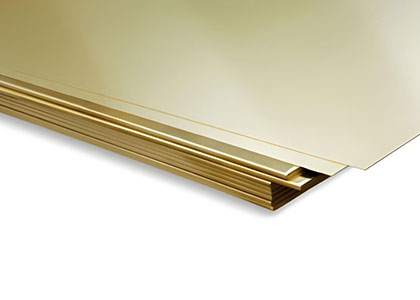
Grade Name
-
UNS Number: C34000
-
Common Name: Leaded Brass (CuZn37Pb)
-
Corresponding Standards: ASTM B453, ASTM B121, DIN 17671-1.
Product Features
-
Excellent Machinability: Lead (0.8–1.4%) enhances chip-breaking and reduces tool wear.
-
High Corrosion Resistance: Performs well in atmospheric, freshwater, and marine environments.
-
Superior Cold/Hot Workability: Suitable for stamping, deep drawing, and forging.
-
Balanced Strength-Ductility: Tensile strength up to 520 MPa with elongation up to 60%.
-
Cost-Effective: Lower copper content (62–66.5%) reduces material costs.
Common Product Forms & Dimensions
|
Form |
Thickness (mm) |
Width (mm) |
Length (mm) |
Diameter (mm) |
|
Sheet/Strip |
0.2 – 6.0 |
50 – 600 |
Custom |
– |
|
Rod/Bar |
– |
– |
Custom |
3 – 50 |
|
Wire |
– |
– |
Custom |
0.3 – 12 |
|
Tube |
1 – 12 (wall) |
– |
Custom |
10 – 150 (OD) |
|
Note: Custom dimensions are available upon request. |
||||
Chemical Composition
|
Element |
Cu |
Zn |
Pb |
Fe |
Others |
|
Weight % |
62.5–66.5 |
Balance |
0.8–1.4 |
≤0.10 |
≤0.5 (total) |
|
Data per ASTM B453 and DIN 17671 standards. |
|||||
Physical Properties
|
Property |
Value |
|
Density (g/cm³) |
8.47 |
|
Melting Point (°C) |
905 |
|
Electrical Conductivity (%IACS) |
24–28 (Annealed) |
|
Thermal Conductivity (W/m·K) |
115 (at 20°C) |
|
Values vary with processing conditions. |
|
Mechanical Properties
|
Condition |
Tensile Strength (MPa) |
Yield Strength (MPa) |
Elongation (%) |
Hardness (HV) |
|
Annealed |
380–520 |
103–414 |
40–60 |
70–95 |
|
Cold Worked (H02) |
440–540 |
340–470 |
12–27 |
110–160 |
|
Hard (H04) |
≥540 |
≥470 |
≥6 |
≥160 |
|
Data applies to standard thicknesses and processing states. |
||||
Core Advantages
1. Machinability: Free-machining due to lead lubrication.
2. Corrosion Resistance: Ideal for marine and industrial applications.
3. Formability: Excellent cold/hot workability for complex shapes.
4. Cost Efficiency: Lower copper content reduces expenses.
Product Applications
-
Marine Engineering: Seawater valves, heat exchangers.
-
Electronics: Connectors, terminals, shielding components.
-
Aerospace: Fasteners, engine parts.
-
Construction: Decorative hardware, plumbing fittings.
-
Industrial: Stamped parts, bushings, gears.
Processing Considerations
-
Annealing: 540–600°C to restore ductility after cold working.
-
Machining: Use sharp tools and lubricants to avoid galling.
-
Welding: Compatible with TIG and resistance welding; avoid overheating to prevent lead vaporization.
-
Surface Treatment: Electroplating or lacquering recommended for decorative uses.
Key Application Scenarios
-
Shipbuilding components exposed to seawater.
-
Precision automotive stamped parts.
-
Architectural fixtures in humid environments.
-
High-volume industrial fasteners.
FAQs
Q1: Is C34000 suitable for saltwater environments?
A: Yes, but prolonged exposure requires protective coatings due to potential lead leaching.
Q2: How does C34000 compare to C36000 brass?
A: C34000 has lower lead content (1.4% max vs. 3.7% in C36000), offering better environmental compliance but slightly reduced machinability.
Q3: Can C34000 be recycled?
A: Yes, but lead content requires specialized recycling processes to minimize environmental impact.
Standard References
|
Standard |
Description |
|
ASTM B453 |
Leaded brass rod, bar, and shapes. |
|
DIN 17671-1 |
Specifications for wrought copper alloy tubes. |
|
ASTM B121 |
Leaded brass sheet and strip. |
Note: Specifications may vary slightly depending on manufacturer and processing methods. Always consult technical datasheets for critical applications.
UNS Grades
-
C10100 Copper
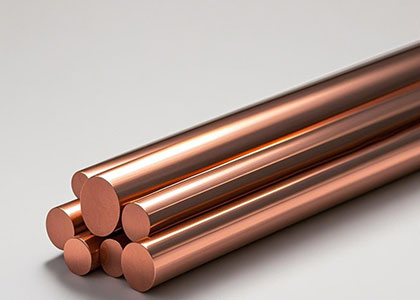 Copper
 -
C10300 Copper
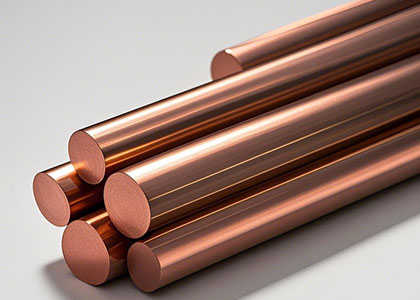 Copper
 -
C11000 Copper
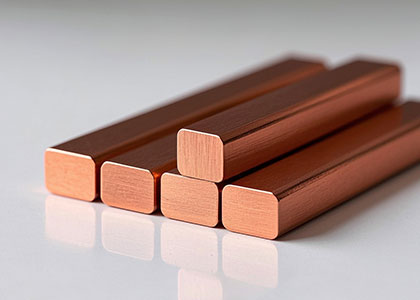 Copper

