
 中文
中文
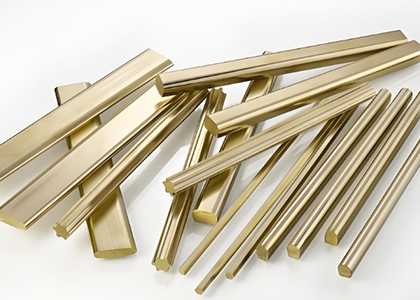
Grade Name
C6870 Aluminum Brass (Corrosion-Resistant Brass)
Key Features
-
Superior Corrosion Resistance: Aluminum (1.8–2.5%) and arsenic (0.02–0.10%) prevent dezincification, ideal for seawater environments.
-
High Strength & Workability: Tensile strength ≥380 MPa (annealed), adaptable to cold/hot working and welding.
-
Thermal Conductivity: 100 W/(m·K), suitable for heat exchangers.
-
Eco-Compliance: RoHS-compliant (Pb ≤0.05%), meets ASTM B111 standards.
Product Forms & Dimensions
|
Form |
Size Range |
Standards |
|
Rod |
Diameter 5–300mm, Length 1–12m |
ASTM B124M |
|
Plate |
Thickness 1.0–50mm, Width 200–2000mm |
JIS H3300 |
|
Tube |
OD 10–300mm, Wall Thickness 1.0–30mm |
EN 12449:1999 |
|
Strip |
Thickness 0.2–3.0mm, Width ≤300mm |
ASTM B134 |
|
Wire |
Diameter 0.5–12mm, Coil ≥5kg |
DIN 17660 |
Chemical Composition
|
Element |
Content (%) |
Standard Range |
|
Cu |
76.0–79.0 |
Main Component (ASTM B111) |
|
Al |
1.8–2.5 |
Corrosion Resistance |
|
As |
0.02–0.10 |
Dezincification Inhibitor |
|
Zn |
Balance |
Balancing Component |
|
Pb |
≤0.05 |
RoHS Limit |
|
Fe+Sn |
≤0.5 |
Impurity Control |
|
Impurities |
≤0.5 |
Total Limit |
Physical Properties
|
Property |
Value/Description |
|
Density |
8.40 g/cm³ |
|
Electrical Conductivity |
28% IACS (20℃) |
|
Thermal Conductivity |
100 W/(m·K) |
|
Thermal Expansion |
19.5×10⁻⁶/℃ (20–300℃) |
Mechanical Properties
|
Condition |
Tensile Strength (MPa) |
Elongation (%) |
Hardness (HV) |
|
Annealed (O) |
380–450 |
≥25 |
80–100 HV |
|
Half-Hard (H02) |
450–550 |
≥15 |
120–150 HV |
|
Hard (H) |
≥550 |
≥8 |
≥160 HV |
Core Advantages
1. Marine-Grade Durability: 3–5x longer service life in seawater vs. standard brass.
2. Efficient Heat Dissipation: Ideal for high thermal load applications.
3. Processing Flexibility: Compatible with cold rolling, hot forging, and welding.
Applications
-
Marine Engineering: Ship condenser tubes, desalination equipment.
-
Energy Systems: Heat exchangers in power plants.
-
Chemical Industry: Corrosive fluid pipelines, valve liners.
-
Electronics: Heat sinks for high-power devices.
Processing Guidelines
-
Hot Working: 700–750℃, avoid 300–600℃ brittleness zone.
-
Post-Cold Working: Low-temperature annealing (250–350℃) to prevent stress corrosion.
-
Welding: Use TIG/MIG welding, followed by acid cleaning.
FAQs
Q1: Differences between C6870 and C4430?
A: C4430 (tin brass) has lower strength; C6870 offers higher strength and thermal conductivity.
Q2: Suitability for seawater exposure?
A: Yes, but monitor surface condition and limit flow velocity ≤2 m/s.
Standards
-
ASTM B111M: U.S. condenser and heat exchanger tube standard.
-
JIS H3300-2018: Japanese copper alloy tube standard.
-
DIN 17660: European copper alloy composition standard.
JIS Grades
-
C1011 Copper
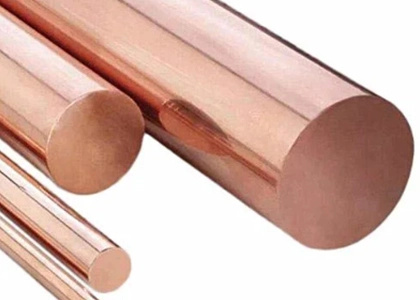 Copper
 -
C1100 Copper
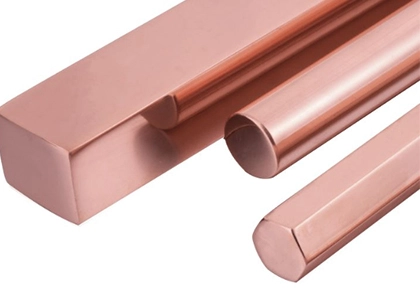 Copper
 -
C1201 Copper
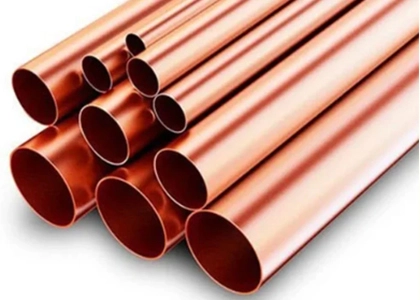 Copper

