
 中文
中文
Designation
-
Name: Iron-Manganese Cupronickel CuNi30Mn1Fe
-
International Designation: CW354H (EN), C71500 (US), BFe30-1-1 (GB), DIN 2.0882
-
Standards: DIN 17664, EN 1652, ISO 1634, GB/T 5231-2012.
Key Features
1. Superior Corrosion Resistance: Resists seawater, salt spray, acids, and alkalis with high stability.
2. High Strength & Ductility: Tensile strength up to 520 MPa, elongation 14–40%.
3. Excellent Machinability: Compatible with cold/hot forming, welding (TIG/laser).
4. Conductivity: ~4.8% IACS electrical conductivity, thermal conductivity 37.3 W/m·K.
5. Anti-Biofouling: Smooth surface reduces marine organism adhesion.
Common Forms & Dimensions
|
Form |
Dimensions |
|
Round Bar |
Diameter: Φ5.0mm–300mm |
|
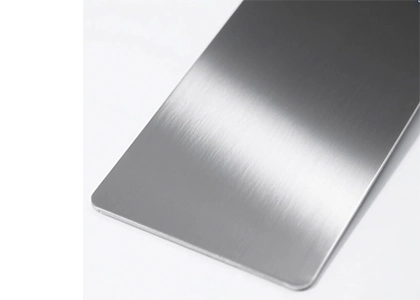
Plate |
Thickness: 0.3–15mm (thin), 2.5–125mm (thick) |
|
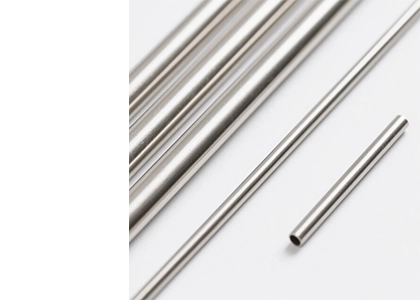
Tube |
Seamless per EN 12449 (Wall ≤15mm) |
|
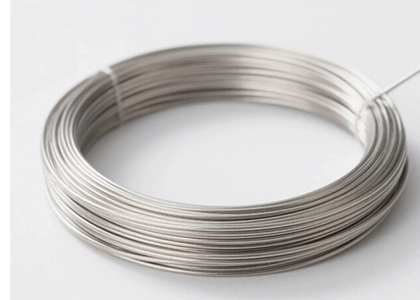
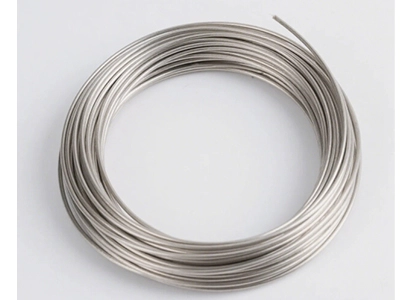
Wire |
Diameter: 0.5mm–6.0mm |
|
Forged Parts |
Custom flanges, valves, bushings |
|
Note: Confirm feasibility for non-standard sizes. |
|
Chemical Composition (wt%)
|
Element |
Cu |
Ni |
Fe |
Mn |
Pb |
S |
Impurities |
|
Range |
Bal. |
29–32 |
0.4–1.0 |
0.5–1.5 |
≤0.03 |
≤0.06 |
≤0.3 |
|
Data based on DIN 17664; cobalt (Co) ≤0.1%. |
|||||||
Physical Properties
|
Property |
Value/Description |
|
Density |
8.9 g/cm³ |
|
Thermal Conductivity |
37.3 W/m·K (at 20°C) |
|
Electrical Conductivity |
~4.8% IACS |
|
Elastic Modulus |
154 GPa |
|
Thermal Expansion |
16.8×10⁻⁶/K |
|
Data from multi-source tests. |
|
Mechanical Properties
|
Property |
Range/Typical Value |
|
Tensile Strength (Rm) |
350–520 MPa (varies by temper) |
|
Yield Strength (Rp0.2) |
120–300 MPa |
|
Elongation (A) |
14–40% |
|
Brinell Hardness (HB) |
80–160 |
|
Note: Hard temper (H) offers higher tensile strength. |
|
Core Advantages
-
Extreme Environment Adaptability: Suitable for marine, chemical, and high-pressure environments.
-
Versatile Processing: Supports casting, forging, welding, and precision machining.
-
Low Maintenance: Anti-fouling and wear-resistant properties.
Applications
-
Marine Engineering: Desalination pipes, ship condensers, submarine pipelines.
-
Chemical Industry: Reactors, heat exchangers, acid transfer pipes.
-
Power Systems: Medium-voltage terminals, grounding components.
-
Shipbuilding: Valves, pump bodies, salt spray-resistant parts.
Processing Guidelines
1. Welding: Prefer TIG welding; post-weld passivation required.
2. Cold Working: Deformation ≤20% per pass; anneal at 600–720°C.
3. Machining: Carbide tools with coolant.
4. Surface Treatment: Nickel/tin plating for corrosion resistance.
Key Application Scenarios
-
Nuclear Power Plants: Chloride-resistant heat transfer tubes.
-
Petrochemical: High-pressure reactor linings.
-
Aerospace: High-temperature conductive components.
FAQs
Q1: How does CuNi30Mn1Fe differ from B10 cupronickel?
A: B10 contains 10% Ni with lower strength; CuNi30Mn1Fe has 29–32% Ni and Fe/Mn for enhanced performance.
Q2: Suitable for sulfur-rich environments?
A: Not recommended due to sulfide stress corrosion risks.
Q3: High-temperature performance?
A: Stable ≤200°C long-term; short-term tolerance up to 250°C.
Standards Reference
-
DIN 17664: Chemical and mechanical specifications.
-
EN 1652: Plate and strip processing standards.
-
ISO 1634: Corrosion resistance testing.
DIN Grades
-
CuNi10Fe1Mn Copper
 Copper
 -
CuNi12Zn24 Copper
 Copper
 -
CuNi18Zn20 Copper
 Copper

