
 中文
中文
JIS H3250 Copper and Brass Rod Standard: What International Buyers Need to Know
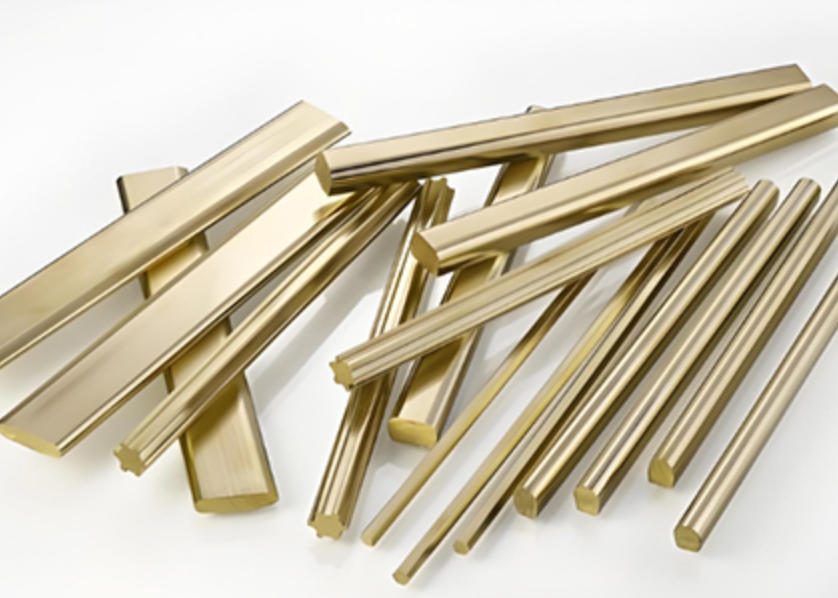
For international buyers sourcing copper and brass rod from different regions, understanding the applicable material standard is essential. JIS H3250 provides specifications for copper and copper-alloy rods and wires, including requirements related to chemical composition, dimensions, mechanical properties, and material condition. For buyers comparing Japanese grades with ASTM, UNS, or other international designations, the standard helps establish a clearer basis for material selection and purchasing.
What Does JIS H3250 Cover?
JIS H3250 is a Japanese Industrial Standard covering copper and copper-alloy bars, rods, and wires. It establishes requirements that can help manufacturers and buyers define material quality more precisely.
The standard is important because an alloy designation alone does not necessarily describe the complete product requirement. Diameter, tolerance, temper, mechanical properties, and applicable testing requirements may all affect whether a rod is suitable for a particular manufacturing process.
For international procurement, buyers should therefore specify both the required JIS grade and the relevant product requirements instead of assuming that an equivalent-looking alloy designation automatically provides identical performance.
Copper and Brass Grades Listed Under JIS H3250
JIS H3250 includes multiple copper and copper-alloy grades used for different manufacturing requirements. Brass grades are particularly relevant to forming, machining, electrical components, and general engineering applications.
The appropriate grade depends on the balance between copper content, zinc content, mechanical properties, ductility, and forming requirements. Buyers should also distinguish between material supplied in rod, bar, or wire form because the applicable dimensional and mechanical requirements can differ.
For manufacturers sourcing material internationally, the complete JIS designation should be included in purchasing documentation to minimize ambiguity between similar alloy grades.
JIS C2700, JIS C2680 and JIS C2600 Compared
JIS C2700, JIS C2680, and JIS C2600 are commonly encountered brass grades, but their different copper-zinc compositions give them different characteristics.
| Grade | Main Characteristic | Typical Use |
|---|---|---|
| JIS C2700 | 65/35 brass | Forming |
| JIS C2680 | 65/35-type brass | Sheet/rod applications |
| JIS C2600 | 70/30 brass | Deep forming |
JIS C2600 generally contains a higher copper content than C2700 and is known for good ductility and forming performance. C2700 is a widely used 65/35 brass grade, while C2680 is also associated with 65/35-type brass products.
The exact suitability of each grade depends on the forming method, product geometry, temper, and required mechanical properties. Buyers should avoid selecting a grade based solely on nominal copper percentage when a specific JIS specification is required.
Temper and Mechanical Requirements for Copper and Brass Rod
Temper is an important part of material specification because it influences hardness, strength, ductility, and forming behavior. The same alloy can perform differently depending on whether it is supplied in a softer or harder condition.
For example, a forming operation may require a more ductile material, while a component requiring higher strength may benefit from a harder temper. This is particularly important when copper or brass rod will undergo bending, drawing, machining, or other secondary processing.
International buyers should therefore specify the required temper together with the alloy designation. Dimensional tolerance should also be clearly stated because rod diameter variation can affect automated production and finished component dimensions.
How JIS H3250 Compares with ASTM and Other Standards
JIS H3250 belongs to the Japanese standards system, while ASTM and UNS designations are commonly used in North American and international supply chains. Although some grades may have broadly comparable chemical compositions, a JIS grade and an ASTM or UNS grade should not automatically be treated as identical.
Standards can differ in chemical limits, mechanical requirements, dimensions, testing, terminology, and product forms. A buyer seeking an equivalent material should therefore compare the complete specification rather than relying only on alloy numbers.
For cross-border procurement, it can be useful to provide both the preferred JIS grade and any acceptable alternative specification, subject to engineering approval. This gives suppliers a clearer understanding of the required material without creating unintended substitutions.
What International Buyers Should Include in an RFQ
A clear RFQ can significantly reduce material specification problems. Instead of requesting only “JIS H3250 brass rod,” buyers should provide enough information for the supplier to identify the exact product required.
Important details include:
-
Standard and grade: Specify JIS H3250 and the exact alloy, such as JIS C2700, C2680, or C2600.
-
Product form: State whether rod, bar, or wire is required.
-
Dimensions: Provide diameter, length, and dimensional tolerances.
-
Temper: Specify the required material condition.
-
Quantity: Include total required weight or number of pieces.
-
Inspection: Identify required certificates, testing, and inspection documentation.
-
Application: Where appropriate, explain the intended forming, machining, or fabrication process.
For international orders, packaging, labeling, shipping requirements, and documentation should also be agreed upon before production begins.
Conclusion
JIS H3250 provides an important reference for buyers sourcing copper and brass rods manufactured to Japanese requirements. Grades such as JIS C2700, JIS C2680, and JIS C2600 can serve different forming and engineering needs, but alloy designation alone is not enough to define a complete purchasing specification. International buyers should also consider temper, dimensions, mechanical requirements, inspection, and applicable standards. A detailed RFQ helps ensure that the supplied material matches both the JIS requirement and the downstream manufacturing process.
JIS H3250 FAQs
What products does JIS H3250 cover?
JIS H3250 covers specified copper and copper-alloy products, including relevant bars, rods, and wires. Buyers should confirm the current standard and applicable product form for their order.
Can JIS H3250 materials be supplied internationally?
Yes. JIS-specified copper and brass products can be sourced for international manufacturing, provided the supplier can meet the required grade, dimensions, temper, testing, and documentation requirements.
How do JIS copper grades differ from UNS grades?
JIS and UNS are different designation systems. Some materials may have comparable compositions, but equivalence should be confirmed by comparing the complete chemical, mechanical, dimensional, and product requirements.
Why is temper important for copper rod?
Temper affects hardness, strength, ductility, and forming behavior. Selecting the appropriate temper helps ensure that the rod performs properly during subsequent manufacturing processes.
Should buyers request JIS certification?
When compliance with JIS H3250 is a contractual or engineering requirement, buyers should request appropriate material documentation and certification to verify that the supplied product meets the specified standard.
What information should an international RFQ include?
An RFQ should identify the JIS standard, exact grade, product form, dimensions, tolerance, temper, quantity, inspection requirements, certificates, and intended application. This reduces ambiguity and makes supplier quotations easier to compare.
-
Tel:
-
E-mail:
-
Address:
No.1 Chengxi West Road, Cicheng, Ningbo, China
-

Ms.Yu
-

Ms.Sun