
 中文
中文
Pre-Soldered Copper Fittings vs Solder Ring Copper Fittings: What Is the Difference?
In modern plumbing and HVAC engineering, choosing the right connection method directly affects installation efficiency, system reliability, and long-term maintenance costs. Among copper joining solutions, pre-soldered copper fittings and solder ring copper fittings are often compared because they both aim to simplify traditional brazing or soldering processes. However, despite similar goals, their structure, installation behavior, and application scenarios are quite different. Understanding these differences helps engineers and procurement teams select the most suitable solution for each project.
What Are Pre-Soldered Copper Fittings?
Pre-soldered copper fittings are designed with solder material already integrated into the joint area. During installation, heat is applied to melt the preloaded solder, allowing it to flow and form a sealed connection between pipe and fitting. This design reduces the need for manually feeding solder wire, making installation more controlled and consistent. Typical characteristics include factory-integrated solder material, reduced dependency on installer skill level, faster and more standardized solder distribution, and suitability for repetitive installation environments. In many commercial projects, pre-soldered copper fittings are selected when consistency and speed are more important than manual flexibility.
What Are Solder Ring Copper Fittings?
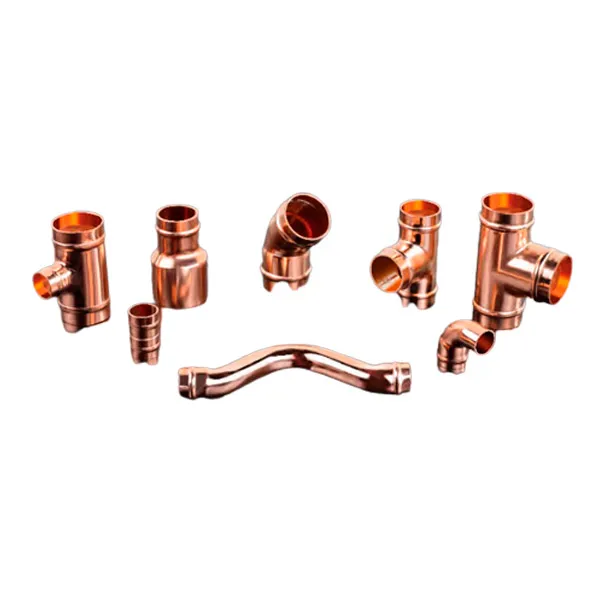
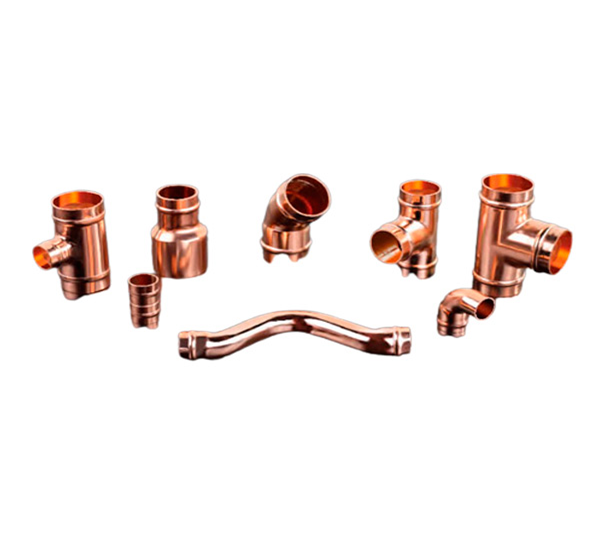
Solder ring copper fittings contain a pre-placed ring of solder inside the fitting socket. When heat is applied, the ring melts and automatically fills the joint gap, forming a sealed connection. Compared with traditional soldering and even pre-soldered designs, solder ring fittings provide a more “self-contained” installation experience. At Jintian Copper, engineered solutions such as Solder Ring Copper Fitting are designed to support stable melting behavior and consistent sealing performance across plumbing and HVAC systems. Key characteristics include:
· Built-in solder ring for controlled melting
· More uniform solder volume per joint
· Reduced risk of under- or over-soldering
· Suitable for field installation with variable skill levels
Installation Efficiency: Which One Is Faster?
From an installation perspective, both systems aim to reduce manual solder handling, but their efficiency differs slightly. Pre-soldered copper fittings typically require the installer to manage solder flow during heating, which still demands some level of control over heating time and temperature distribution. This can introduce variability in large-scale installations. Solder ring copper fittings, on the other hand, simplify the process further by eliminating external solder feeding, providing fixed solder quantity per joint, offering more predictable melting behavior, and lowering dependence on installer judgment. In repetitive commercial piping systems, solder ring designs often provide more stable efficiency outcomes.
Sealing Reliability and Joint Consistency
Sealing performance is one of the most critical factors in copper piping systems. Pre-soldered copper fittings rely heavily on heat control and solder distribution skill. If heating is uneven, it may result in incomplete bonding or excessive solder accumulation. Solder ring copper fittings provide more controlled sealing because the solder volume is pre-calibrated at the factory level, the molten flow is naturally guided into the joint gap, and the risk of voids or dry joints is significantly reduced. This leads to more consistent results across large batches. In real engineering applications, solder ring systems are often preferred for projects requiring uniform quality standards across multiple contractors.
Application Scenarios in Plumbing, HVAC, and Gas Systems
Different project environments determine which fitting type is more suitable. Pre-soldered copper fittings are commonly used in residential plumbing systems, small-scale HVAC installations, and repair and retrofit work where flexibility is needed. Solder ring copper fittings are more commonly used in commercial building water systems, HVAC distribution networks with repetitive joints, large-scale contractor-driven installations, and projects requiring consistent quality control across teams. For gas systems, both solutions must comply with strict certification requirements, and material selection becomes even more critical.
Installation Conditions and Skill Requirements
One of the key differences lies in installation dependency. Pre-soldered systems still rely on the installer’s ability to manage:
· Heating intensity
· Flame positioning
· Solder flow timing
Solder ring systems reduce these variables by standardizing solder quantity and placement inside the fitting. This makes solder ring copper fittings more suitable for:
· Large contractor teams
· Multi-site installation projects
· Environments with varying skill levels
Procurement Considerations and Product Selection
When selecting between these two types of fittings, engineers should evaluate more than just cost. Key factors include:
· Installation labor structure (skilled vs mixed workforce)
· Project scale and repetition level
· Quality consistency requirements
· On-site installation conditions
· Certification and compliance requirements
At Jintian Copper, copper fitting solutions are developed for industrial-grade applications with stable material control and manufacturing consistency, supporting both OEM supply and engineering procurement needs.
FAQ: Pre-Soldered vs Solder Ring Copper Fittings
What is the main difference between the two?
Pre-soldered fittings require external solder flow control, while solder ring fittings contain a pre-measured solder ring inside the joint.
Which one is easier to install?
Solder ring copper fittings are generally easier because they eliminate manual solder feeding.
Are both suitable for HVAC systems?
Yes, both can be used in HVAC applications, depending on project standards and installation requirements.
Which one provides more consistent sealing?
Solder ring copper fittings typically offer more uniform sealing due to controlled solder quantity.
-
Tel:
-
E-mail:
-
Address:
No.1 Chengxi West Road, Cicheng, Ningbo, China
-

Ms.Yu
-

Ms.Sun