
 中文
中文

C14500 Tellurium Copper Rod for High-Speed Machining: When Is It Better Than Brass?
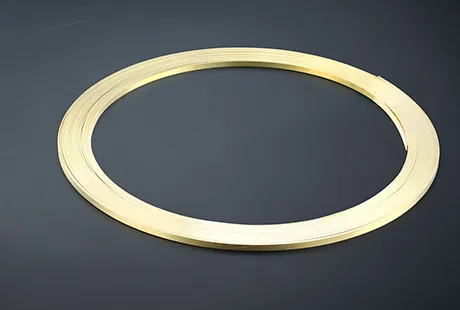
In modern precision manufacturing, material selection for machined components has a direct impact on production efficiency, tool life, electrical performance, and total manufacturing cost. Among machinable copper alloys, C14500 tellurium copper has become a widely used solution for high-speed CNC machining applications where both conductivity and cutting performance are required.
Compared with traditional brass, C14500 tellurium copper offers a unique balance of electrical conductivity and excellent machinability, making it a preferred material for electrical connectors, switch components, and precision terminals.
What Is C14500 Tellurium Copper?
C14500 tellurium copper is a free-machining copper alloy that contains a small addition of tellurium (Te). This micro-alloying element significantly improves chip-breaking behavior during machining while maintaining relatively high electrical conductivity compared to other machinable copper alloys.
Unlike pure copper, which is difficult to machine due to its softness and tendency to stick to cutting tools, C14500 is engineered specifically for high-speed machining environments. It allows stable chip formation, reduced tool wear, and improved surface finish quality.
This makes it especially suitable for mass production of precision electrical components.
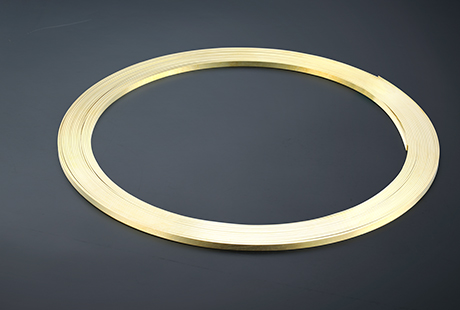
Machining Performance: Why C14500 Excels in High-Speed CNC
One of the most important advantages of C14500 tellurium copper is its outstanding machinability. In high-speed CNC operations, tool wear and chip control are often the limiting factors for production efficiency. C14500 improves machining performance through excellent chip breaking that reduces tool clogging, stable cutting behavior that allows higher spindle speeds, reduced tool wear that extends tool life in mass production, and improved surface finish that reduces post-processing requirements. Compared with standard copper, which tends to form long, continuous chips, C14500 behaves more like a free-cutting alloy, enabling smooth and predictable machining performance.
Electrical Conductivity vs Brass: Key Performance Difference
When comparing C14500 tellurium copper with brass, the most important distinction lies in electrical conductivity.
Brass alloys generally offer good machinability but significantly lower conductivity. In contrast, C14500 maintains much higher conductivity while still providing excellent cutting performance.
This makes it particularly suitable for electrical and electronic applications where current transmission is critical.
Typical advantages include:
-
Higher electrical conductivity than brass
-
More stable electrical performance in connectors
-
Better heat dissipation in power-related components
For engineers designing electrical terminals or conductive parts, this difference can be decisive.
When Is C14500 Better Than Brass?
While brass remains widely used due to its low cost and good machinability, C14500 tellurium copper becomes the better choice in specific engineering scenarios.
C14500 is preferred when:
-
Electrical conductivity is required in addition to machinability
-
Components are used in power or signal transmission systems
-
High precision machining is required for tight-tolerance parts
-
Thermal performance and heat dissipation are important
Brass may still be sufficient for purely mechanical components, but when electrical functionality is involved, C14500 offers a more balanced engineering solution.
Typical Application Scenarios
C14500 tellurium copper rod is widely used in industries requiring both precision machining and electrical performance. Common applications include:
-
Electrical connectors and terminals
-
Switch components and relay parts
-
CNC-machined conductive components
-
Automotive electrical systems
-
Industrial control equipment parts
In these applications, consistency in both machinability and conductivity directly impacts product reliability and manufacturing efficiency.
Cost Considerations in Material Selection
From a procurement perspective, cost is always a key factor. Brass is generally cheaper than C14500 tellurium copper, making it attractive for high-volume, non-critical mechanical parts.
However, when considering total manufacturing cost, C14500 often provides better long-term value. Its superior machinability reduces tool wear, increases machining speed, and lowers rejection rates due to better surface quality.
In many cases, these savings in production efficiency can offset the higher raw material cost.
Engineering Selection Perspective
When selecting between brass and C14500 tellurium copper, engineers typically evaluate three core factors: electrical performance requirements, machining efficiency, and total lifecycle cost.
C14500 is not simply a replacement for brass—it is a performance upgrade for applications where conductivity and machinability must coexist. Brass remains suitable for general mechanical parts, but C14500 is increasingly used in high-performance electrical and precision manufacturing environments.
For detailed material properties, machining guidance, and industrial applications, Jintian Copper provides technical resources and stable supply support for tellurium copper rod materials.
FAQ: C14500 Tellurium Copper vs Brass
What is C14500 tellurium copper used for?
It is mainly used for electrical connectors, precision machined parts, and conductive components requiring high machinability.
Is C14500 easier to machine than pure copper?
Yes, it offers significantly better chip breaking and tool life compared to pure copper.
Why choose it over brass?
Because it provides much higher electrical conductivity while still maintaining excellent machinability.
Is brass cheaper than C14500?
Yes, brass is generally lower in cost, but may not meet electrical performance requirements.
-
Tel:
-
E-mail:
-
Address:
No.1 Chengxi West Road, Cicheng, Ningbo, China
-

Ms.Yu
-

Ms.Sun