
 中文
中文

Brass Manifold with Valves for Water Distribution: Port Count, Flow Control and Customization
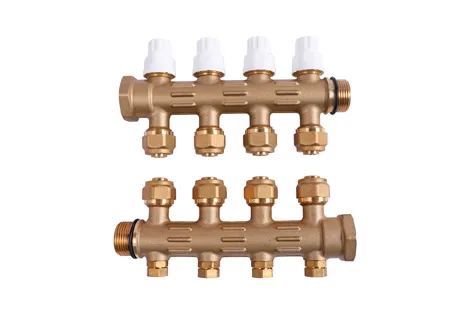
In modern plumbing, HVAC, and water distribution systems, efficient flow management is essential for ensuring stable performance and balanced pressure across multiple outlets. A brass water manifold plays a central role in these systems by distributing water from a single source into multiple controlled branches.
Whether used in residential floor heating, commercial HVAC systems, or industrial water distribution networks, a well-designed brass manifold ensures consistent flow regulation, simplified installation, and improved system reliability. For engineered brass components and distribution solutions, Jintian Copper provides stable manufacturing support for industrial plumbing systems and OEM applications.
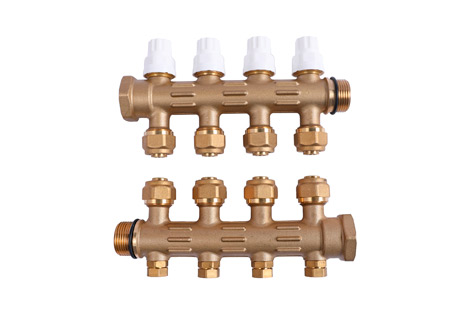
Port Count Design and System Capacity Planning
One of the most important factors when selecting a brass manifold is the number of outlets. Outlets count directly determines how many branches the system can support and how evenly water can be distributed. Common configurations include:
· 2–3 outlets for small residential systems
· 4–6 outlets for standard floor heating or HVAC setups
· 8+ outlets for large commercial or industrial distribution systems
Choosing the correct outlets count is not just about capacity—it also affects flow balance, pressure stability, and installation flexibility. Oversizing outlets may lead to unnecessary cost, while undersizing can restrict system scalability and performance.
Flow Control and Valve Integration Performance
A key advantage of modern brass manifolds is integrated flow control through built-in valves. These valves allow precise adjustment of water distribution to each branch, ensuring balanced system performance. In practical applications, flow control provides independent adjustment of each outlet branch, improved hydraulic balance across the system, reduced risk of overpressure in specific zones, and easier maintenance and troubleshooting. High-quality valve integration ensures smooth operation without leakage or flow instability, even after long-term use in high-pressure systems.
Interface Design, Pressure Rating and Installation Flexibility
Interface compatibility is another critical factor in manifold selection. A brass water manifold must match system piping standards to ensure secure sealing and efficient installation. Key considerations include:
· Thread standards such as BSP or NPT depending on regional requirements
· Compatibility with PEX, copper, or PVC piping systems
· Secure sealing performance to prevent leakage under pressure
· Pressure rating suitable for HVAC and water distribution systems
In addition, installation flexibility plays an important role. Wall-mounted and bracket-supported designs are commonly used in floor heating systems, while compact integrated designs are preferred in space-limited installations.
Pressure Stability and Long-Term Reliability
In water distribution systems, pressure fluctuations can affect flow consistency and system efficiency. A well-designed brass manifold helps maintain stable pressure distribution across all branches. Important performance factors include resistance to pressure surges in dynamic systems, stable sealing performance under long-term operation, minimal pressure loss across distribution paths, and structural strength of brass body under load conditions. Brass material is widely used because of its excellent mechanical strength, corrosion resistance, and compatibility with both hot and cold water systems.
Customization and OEM Engineering Solutions
Modern plumbing and HVAC projects increasingly require customized manifold solutions rather than standard off-the-shelf products. OEM customization allows engineers to optimize system performance based on specific project requirements. Common customization options include:
· Adjustable outlets configurations and spacing
· Integrated flow meters or control valves
· Surface finishing such as nickel or chrome plating
· Customized inlet/outlet sizing for different piping systems
· Branding and packaging for OEM distribution
In large-scale projects, customization improves installation efficiency and ensures system compatibility across different building layouts and engineering standards.
Engineering Selection Perspective
When selecting a brass water manifold, engineers must evaluate the system as a whole rather than focusing on individual components. Outlets count determines scalability, valve design affects flow accuracy, interface compatibility ensures installation success, and pressure rating defines operational safety. In real-world applications such as floor heating systems or HVAC water loops, small design differences can significantly impact long-term performance and energy efficiency. Therefore, choosing a stable and well-engineered manifold system is essential for reducing maintenance costs and improving system lifespan. Jintian Copper supports industrial brass manifold manufacturing with stable material quality and OEM customization capabilities, helping global customers achieve reliable water distribution solutions.
FAQ: Brass Water Manifold Selection
What is a brass water manifold used for?
It distributes water from one inlet into multiple controlled outlet branches in plumbing and HVAC systems.
How do I choose the right port count?
It depends on system size and number of distribution zones required.
Can each outlet be controlled individually?
Yes, most manifolds include valves for independent flow control.
What piping systems are compatible?
Commonly compatible with PEX, copper, and PVC piping systems depending on interface design.
-
Tel:
-
E-mail:
-
Address:
No.1 Chengxi West Road, Cicheng, Ningbo, China
-

Ms.Yu
-

Ms.Sun