
 中文
中文
Grade Designation & Standards
Standard Grade: C7060 (Iron-White Copper Alloy)
International Equivalents:
China GB/T 4423-1992: BFe30-1-1
UNS (USA): C71500 (similar composition, verification required)
Applicable Standards:
GB/T 4423-1992 (China Iron-White Copper Standard)
JIS H3250 (Japanese Standard for Copper and Copper Alloy Rods, subject to actual specifications)
Key Features
1. Corrosion Resistance: Excellent resistance in seawater, freshwater, and steam, especially in high-salinity environments (corrosion rate ≤0.01 mm/a).
2. Mechanical Properties: Tensile strength ≥490 MPa, balancing high strength and ductility.
3. High-Temperature/High-Pressure Stability: Operates reliably at ≤400°C and under high pressure, ideal for condensers and heat exchangers.
4. Workability: Supports cold/hot working, welding, and surface treatments (e.g., plasma nitriding), but machinability is limited.
5. Conductive & Thermal Properties: Electrical conductivity ~5% IACS, thermal conductivity 40 W/(m·K), suitable for applications requiring both conductivity and corrosion resistance.
Common Product Forms & Specifications
|
Product Form |
Size Range |
Delivery Condition |
|
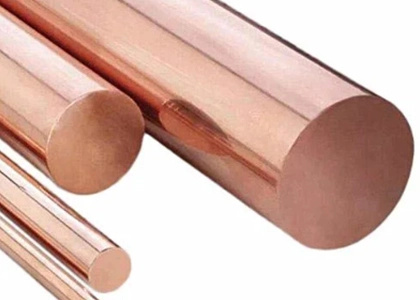
Rod |
Diameter: 5–150 mm; Length: 1–6 m |
Annealed, Cold-drawn |
|
Sheet/Strip |
Thickness: 0.5–12 mm; Width ≤1200 mm |
Soft (O), Hard (H) |
|
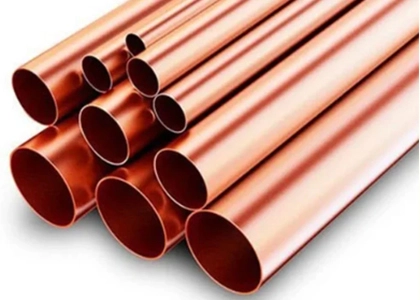
Tube |
OD: 10–200 mm; Wall Thickness: 1–15 mm |
Annealed, Half-hard |
|
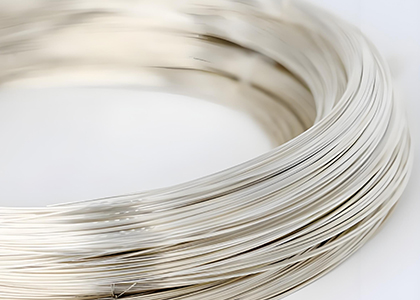
Wire |
Diameter: 0.5–10 mm |
Coiled or Straight |
|
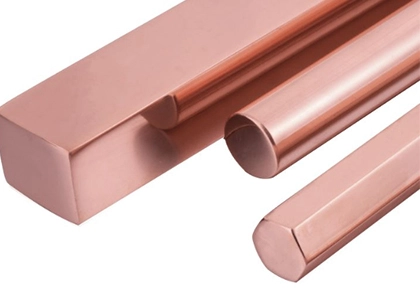
Custom Profiles |
As per technical drawings |
Tailored processing states |
|
Note: Size ranges reference Chinese standards; adjust per JIS H3250 for Japan. |
||
Chemical Composition
|
Element |
Cu |
Ni |
Fe |
Mn |
Other Impurities |
|
Content |
Balance |
29.0–32.0% |
0.5–1.0% |
0.5–1.2% |
Zn≤0.3%, Pb≤0.02% |
|
Typical total impurities ≤0.7% (including Si, C, S, etc.). |
|||||
Physical Properties
|
Property |
Value |
Remarks |
|
Density |
8.9 g/cm³ |
High density for structural stability |
|
Melting Point |
1330–1350°C (cast) |
Suitable for high-temperature casting |
|
Electrical Conductivity |
~5% IACS |
Low conductivity, typical for Cu-Ni alloys |
|
Thermal Conductivity |
40 W/(m·K) |
Moderate heat dissipation |
|
Thermal Expansion Coefficient |
17.1×10⁻⁶/°C (20–200°C) |
Excellent dimensional stability at high temperatures |
Mechanical Properties
|
Property |
Annealed (Soft) |
Cold-Worked (Hard) |
|
Tensile Strength (Rm) |
≥280 MPa |
≥480 MPa |
|
Yield Strength (Rp0.2) |
≥130 MPa |
≥450 MPa |
|
Elongation (A50) |
≥30% |
≥8% |
|
Hardness (HV) |
75–110 |
150–220 |
|
Note: Data based on GB/T 4423-1992; Japanese standards may vary. |
||
Core Advantages
1. Marine-Grade Corrosion Resistance: Superior resistance to pitting and biofouling compared to stainless steel.
2. High-Temperature Stability: Long-term operation at ≤400°C, ideal for heat exchangers and marine power systems.
3. Surface Modification Potential: Plasma nitriding enhances surface hardness to HV 800–1000, significantly improving wear resistance.
Product Applications
-
Shipbuilding: Condenser tubes, thermostats, seawater pump components.
-
Chemical Equipment: Reactor linings, acid-resistant pipelines, storage tanks.
-
Energy & Power: Power plant condensers, desalination equipment.
-
Mechanical Engineering: Gears, bearing bushings (requires surface hardening).
Processing Guidelines
1. Welding:
Use TIG or laser welding; avoid overhead welding.
Interpass temperature ≤100°C to prevent hot cracking.
2. Machining:
Employ carbide tools with sulfur-based coolant; cutting speed ≤60 m/min.
3. Heat Treatment:
Stress relief annealing: 780–810°C; low-temperature annealing: 250–300°C for dimensional stability.
Key Application Scenarios
-
Seawater Cooling Systems: Piping and heat exchangers for ships and coastal power plants.
-
Deep-Sea Equipment: Submersible housings, high-pressure valves (requires nitriding).
-
Chemical Reactors: Liners and agitators for corrosive media.
FAQs
Q1: How does C7060 differ from C70600 (Cu-Ni alloy)?
A1: C7060 (iron-white copper, ~30% Ni) emphasizes corrosion resistance and high-temperature strength; C70600 (Cu-Ni, ~10% Ni) is cost-effective but less corrosion-resistant.
Q2: How to enhance C7060’s wear resistance?
A2: Plasma nitriding increases surface hardness to HV 800+, suitable for gears and bearings.
Q3: How to prevent edge cracking in cold-rolled sheets?
A3: Limit rolling reduction to ≤20% per pass, ensure lubrication, and anneal post-processing.
Standard References
-
Chemical Composition: GB/T 4423-1992 (China), JIS H3250 (Japan).
-
Mechanical Testing: ISO 6892-1 (Metallic Materials – Tensile Testing).
-
Processing: ASTM B543 (Cu-Ni Alloy Seamless Condenser Tubes).
Note: This specification integrates data from GB/T 4423-1992. Parameters under JIS standards require further verification. Actual performance may vary slightly due to manufacturing processes. Refer to supplier test reports for precise specifications.
JIS Grades
-
C1011 Copper
 Copper
 -
C1100 Copper
 Copper
 -
C1201 Copper
 Copper

