
 中文
中文
NdFeB Magnet Grades Explained: N, M, H, SH, UH, EH and AH Series Selection Guide
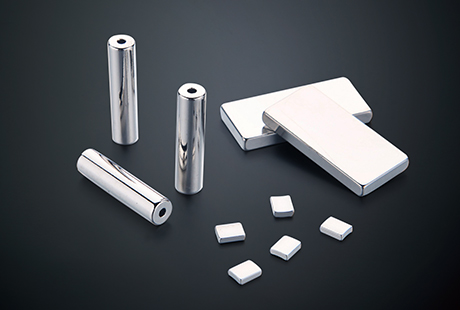
In modern industries such as electric motors, automotive systems, sensors, and renewable energy equipment, NdFeB magnet materials have become the core of high-performance permanent magnet applications. Their extremely high magnetic energy product, compact size, and strong magnetic force make them indispensable in miniaturized and high-efficiency designs.
However, not all NdFeB magnets are the same. Different grades such as N, M, H, SH, UH, EH, and AH are designed for different working temperatures and performance requirements. Choosing the correct grade is critical to avoiding demagnetization, performance loss, or system failure.
Why NdFeB Magnet Grades Matter in Engineering Design
NdFeB magnets are classified mainly based on their maximum operating temperature and resistance to thermal demagnetization. As temperature increases, magnetic performance naturally decreases, so selecting the correct grade ensures stable operation in real working environments. In engineering applications, choosing the wrong grade may lead to permanent loss of magnetic strength, reduced motor efficiency, sensor signal instability, and system failure under high-temperature conditions. Therefore, grade selection is not optional—it is a core part of magnetic circuit design.
NdFeB Magnet Grade Overview (N to AH Series)
Different grades of NdFeB magnet materials are designed for different thermal environments and performance levels:
· N Series (Standard Grade)
Suitable for room-temperature applications with no significant heat exposure. Common in basic electronic devices and small motors.
· M Series (Medium Temperature Resistance)
Improved thermal stability compared to N series, suitable for slightly elevated working temperatures.
· H Series (High Temperature Grade)
Designed for environments up to around 100℃, widely used in automotive and industrial motors.
· SH Series (Super High Temperature)
Offers stronger resistance to demagnetization, suitable for demanding industrial equipment.
· UH Series (Ultra High Temperature)
Used in harsh environments where thermal stability is critical, such as EV drive systems.
· EH Series (Extreme High Temperature)
Designed for very high-temperature applications requiring maximum stability under heat stress.
· AH Series (Advanced High Temperature)
Premium grade offering the highest thermal resistance and stability for extreme engineering environments.
Key Performance Factors in NdFeB Magnet Selection
When selecting NdFeB magnet grades, engineers must consider more than just temperature ratings. Several performance parameters must be balanced:
· Magnetic energy product (BHmax): Determines magnetic strength per unit volume
· Coercivity (resistance to demagnetization): Critical for high-temperature stability
· Thermal performance: Determines safe operating temperature range
· Mechanical strength: Important for assembly and vibration resistance
· Coating compatibility: Affects corrosion resistance and durability
Among these, thermal stability is the most critical factor in real-world applications.
Temperature and Demagnetization Risk
The biggest risk in NdFeB magnet applications is thermal demagnetization. As temperature rises, the internal magnetic domains become unstable, leading to irreversible performance loss if the operating limit is exceeded. In high-performance systems such as EV motors or wind turbines, even a small drop in magnetic strength can reduce efficiency and increase energy consumption significantly. This is why high-temperature grades like UH, EH, and AH are increasingly used in advanced industrial systems.
Application Matching for Different Grades
Different industries require different NdFeB magnet grades based on operating conditions:
· N and M series → Consumer electronics, small sensors, low-load motors
· H and SH series → Industrial motors, automotive actuators, pumps
· UH series → EV motors, aerospace components, high-load automation systems
· EH and AH series → Extreme industrial environments, high-temperature energy systems
In practice, engineers often select a grade that provides at least 20–30% safety margin above expected operating temperature.
Engineering Selection Perspective
When choosing NdFeB magnet materials, the selection process is not just about maximum magnetic strength. It is about balancing performance, thermal stability, and system safety. A higher-grade magnet may cost more, but it significantly improves reliability and reduces long-term maintenance risk. In contrast, selecting a lower-grade magnet in a high-temperature environment can lead to premature failure and system inefficiency. For industrial buyers and OEM manufacturers, working with stable material suppliers ensures consistent magnetic performance and reliable batch quality. Jintian Copper supports industrial material supply systems for NdFeB magnet-related applications, helping manufacturers achieve stable performance in demanding engineering environments.
FAQ: NdFeB Magnet Grade Selection
What does NdFeB magnet grade mean?
The numbers represent the magnetic flux density, and the letters indicate the ability to withstand high temperatures..
What is the difference between N and UH grades?
N grade is for room temperature use, while UH grade is designed for high-temperature environments like EV motors.
Why do magnets lose strength at high temperatures?
Because heat disrupts magnetic domain alignment, reducing overall magnetic force.
Which grade is best for EV motors?
Generally speaking, UH grades are the most commonly used, while some high-end EV models may involve EH grades. For some smaller vehicles, SHT grades (which fall between SH and UH in terms of temperature resistance) may be used.
-
Tel:
-
E-mail:
-
Address:
No.1 Chengxi West Road, Cicheng, Ningbo, China
-

Ms.Yu
-

Ms.Sun