
 中文
中文

CuZn40Pb2 vs CuZn39Pb2 Brass for CNC Machining and Hot Forging
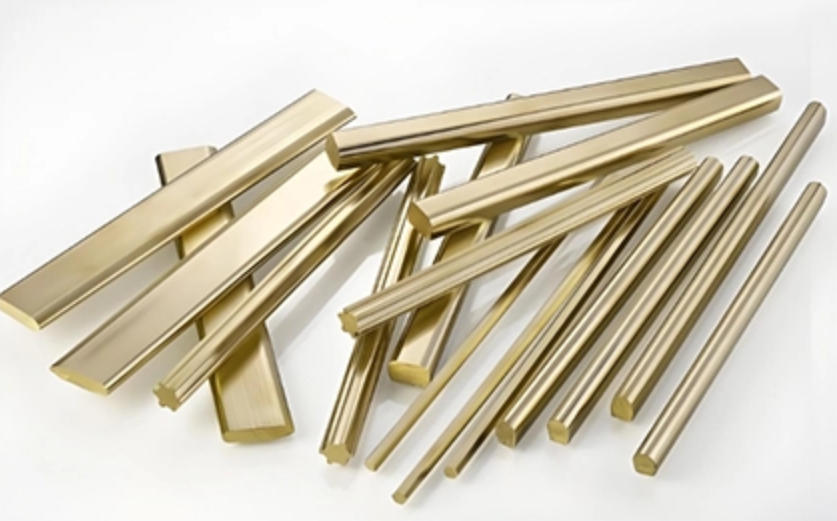
When brass rod is destined for CNC turning, automatic machining, valves, fittings, or other precision components, machinability can be just as important as strength and corrosion resistance. This is where leaded brass grades such as CuZn40Pb2 and CuZn39Pb2 become relevant.
Both alloys are copper-zinc-lead brasses developed for applications that require efficient machining and good production productivity. However, alloy designation alone does not determine the final machining result. Chemical composition, rod diameter, temper, tolerance, cutting conditions, and component geometry all need to be considered when selecting brass for CNC machining.
What Is CuZn40Pb2 Brass?
CuZn40Pb2 is a leaded copper-zinc alloy in which lead is incorporated to improve machining behavior. The presence of lead can help promote chip breaking and smoother cutting, making this type of brass particularly useful for automatic and high-volume machining.
It is commonly considered for brass rod applications where components require turning, drilling, threading, milling, or other subtractive processes. Typical examples include valves, fittings, fasteners, plumbing components, and precision-machined parts.
The lead addition is not intended primarily to increase electrical conductivity or forming ability. Its main practical role is to improve the material's machinability, helping manufacturers produce consistent chips, maintain surface quality, and reduce machining difficulties.
For buyers, however, CuZn40Pb2 should always be specified according to the applicable standard. Similar alloy names can have different designation systems, so chemical composition, mechanical requirements, and product specifications should be verified before ordering.
CuZn40Pb2 vs CuZn39Pb2: Composition and Mechanical Properties
CuZn40Pb2 and CuZn39Pb2 are closely related leaded brass grades. Their small differences in copper-zinc balance and specified alloying elements can influence mechanical properties and processing behavior.
| Property | CuZn40Pb2 | CuZn39Pb2 |
|---|---|---|
| Base alloy | Copper-zinc brass | Copper-zinc brass |
| Lead addition | Yes | Yes |
| Machinability | Excellent | Excellent |
| CNC machining | Well suited | Well suited |
| Hot working | Good under suitable conditions | Good under suitable conditions |
| Cold forming | More limited than low-lead brass | More limited than low-lead brass |
| Typical product | Rod | Rod |
| Common uses | Machined components, fittings, valves | Machined components, fittings, valves |
The comparison should not be interpreted as meaning that one alloy is automatically superior. For a CuZn39Pb2 material specification, the exact standard, product condition, diameter, mechanical properties, and tolerance may be just as important as the nominal alloy designation.
Leaded brass should therefore be selected according to the complete production route rather than the alloy name alone.
Why Lead Content Matters for CNC Machining
Lead is added to certain brass grades primarily because it improves machinability. During cutting, small lead-rich regions can help interrupt the continuity of the chip, making chips easier to break and evacuate.
This can be especially useful for automatic machining operations where long, continuous chips can interfere with production.
The practical advantages can include:
-
Better chip breaking during turning and drilling
-
More stable cutting in high-volume production
-
Improved surface finish under suitable cutting conditions
-
Reduced risk of chip entanglement around tools and workpieces
For CNC manufacturers, these characteristics can improve production efficiency, particularly when machining complex components with multiple operations.
However, lead content should not be viewed as a substitute for proper machining parameters. Tool geometry, cutting speed, feed rate, lubrication, workpiece diameter, and component design all affect the final result.
This is why selecting the right CuZn39Pb2 material requires more than checking its nominal lead content. The actual material specification must be matched with the intended machining process.
Hot Forging and Forming Performance
Machinability and forgeability are related to manufacturing performance, but they are not the same property.
A brass grade can be highly machinable without being the optimal choice for severe cold forming. Likewise, hot forging performance depends on temperature, deformation rate, tooling, billet geometry, and alloy condition.
For hot-forged components, manufacturers should consider:
-
Forging temperature: The material should be processed within an appropriate temperature range.
-
Deformation level: Complex geometries may require multiple forming stages.
-
Component geometry: Sharp transitions and thin sections can increase forming demands.
-
Post-forging machining: The final design may combine forging with CNC machining.
Leaded brass grades can be used for certain hot-working operations, but the appropriate grade and processing window should be confirmed against the relevant standard and forging process.
This distinction matters because choosing brass solely because it has excellent machinability does not automatically guarantee the best forging performance.
CuZn40Pb2 vs CuZn39Pb2 Applications
The strong machinability of leaded brass makes these grades particularly useful where a brass rod must be converted into a finished precision component through repeated cutting operations.
Typical applications include:
| Application | Why Leaded Brass Is Considered |
|---|---|
| Valves | Efficient machining of threaded and precision features |
| Fittings | Good machinability for complex profiles |
| Fasteners | Suitable for repeated turning and threading |
| Automotive parts | Supports high-volume precision machining |
| Plumbing components | Useful for turned and machined geometries |
| Precision-machined parts | Good chip control and surface quality potential |
JINTIAN's rod and wire portfolio includes leaded brass rod as well as machining-friendly brass rod, lead-free brass rod, ordinary brass rod, and anti-dezincification brass rod. This broader product range allows brass selection to be based on the actual combination of machining, corrosion, forming, and application requirements.
How to Specify Leaded Brass Rod for CNC Machining
A CNC manufacturer should provide more than the alloy name when requesting brass rod. The following information helps suppliers identify the appropriate material and production condition:
-
Alloy and standard: Specify the required grade and governing specification.
-
Diameter and tolerance: Precision turning often requires controlled dimensional tolerances.
-
Temper and mechanical properties: Define the required material condition.
-
Surface and straightness: Important for automatic feeding and machining stability.
-
Machining method: Indicate turning, drilling, threading, milling, or multi-axis machining.
-
Component requirements: Geometry, finished dimensions, and production volume can affect material selection.
-
Certification and testing: Specify inspection documents and applicable quality requirements.
For CNC-machined components, JINTIAN can help buyers evaluate brass grade, rod specification, dimensions, and material requirements according to the machining process and component application.
FAQ
Why is lead added to brass for machining?
Lead improves the machinability of certain brass alloys by promoting chip breaking and helping produce more manageable chips during cutting.
Can CuZn40Pb2 be used for precision turned parts?
Yes. CuZn40Pb2 is suitable for many precision-machined components where good machinability and consistent production are important.
Is leaded brass suitable for hot forging?
Certain leaded brass grades can be hot worked, but forging temperature, deformation, tooling, and alloy condition must be evaluated for the specific grade.
What affects brass rod machinability?
Alloy composition, lead content, temper, rod diameter, tool geometry, cutting speed, feed rate, lubrication, and component design can all affect machining performance.
How should brass rod diameter tolerance be specified?
Tolerance should be defined according to the applicable standard and the requirements of the finished component, including the machining allowance and final dimensional accuracy.
What information should CNC manufacturers provide when ordering brass rod?
Provide the alloy, standard, diameter, tolerance, temper, surface condition, straightness, machining method, finished application, and required certifications.
-
Tel:
-
E-mail:
-
Address:
No.1 Chengxi West Road, Cicheng, Ningbo, China
-

Ms.Yu
-

Ms.Sun