
 中文
中文

CuZn35Pb2 Brass for Precision Machining: How to Control Machinability, Surface Finish and Part Consistency
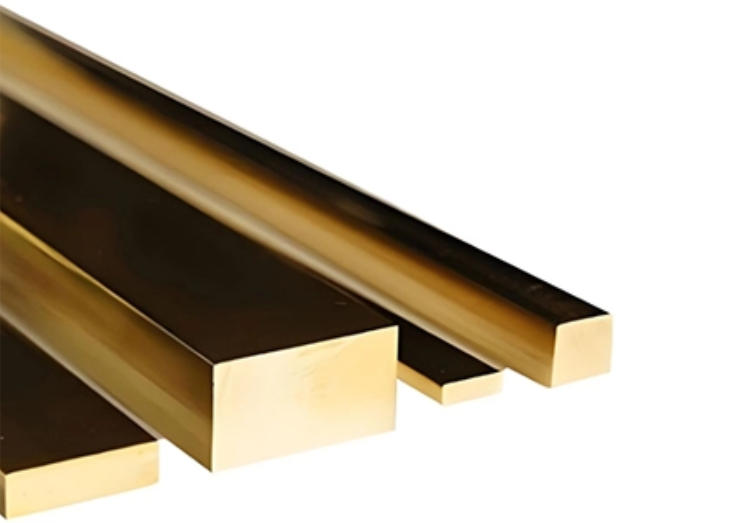
CuZn35Pb2 is a leaded brass alloy developed for applications where machinability and dimensional consistency are important. Its copper-zinc base provides a useful combination of strength and corrosion resistance, while lead improves cutting behavior and chip breaking. For precision machining, however, simply choosing a free-cutting brass is not enough. Tool geometry, cutting parameters, material condition, and rod tolerances all influence the quality of finished parts.
What Is CuZn35Pb2 Brass?
CuZn35Pb2 belongs to the copper-zinc-lead brass family, with zinc and a controlled amount of lead added to the copper base. The lead is dispersed within the brass matrix and helps reduce friction during machining, allowing chips to break more readily instead of forming long, difficult-to-manage strands.
The alloy is commonly supplied in bar or rod form for turning, milling, drilling, and other machining operations. As a leaded brass rod, it can be particularly useful for producing relatively complex components in which repeated machining operations demand stable cutting performance.
CuZn35Pb2 is therefore better viewed as a machining-oriented engineering material rather than simply a general-purpose brass.
CuZn35Pb2 Composition and Machinability
The machining behavior of CuZn35Pb2 is strongly influenced by its copper-zinc-lead composition. Copper provides the basic mechanical and corrosion-resistant characteristics, zinc contributes to strength and hardness, while lead improves machinability.
During turning or drilling, lead helps promote chip segmentation. Shorter chips are easier to evacuate and less likely to wrap around the workpiece or cutting tool. This can improve automated machining efficiency and reduce interruptions.
Cutting speed, feed rate, depth of cut, and tool geometry still need to be optimized for the actual material condition and machine. Excessive cutting conditions can accelerate tool wear or generate unwanted heat.
For comparison, C36000 brass composition is also designed around free-machining performance and generally contains a higher lead content than many other brasses. Its machining behavior can therefore be excellent, but alloy selection should depend on the required combination of machinability, mechanical properties, corrosion resistance, and application requirements.
How to Improve Surface Finish in CuZn35Pb2 Machining
Good machinability does not automatically produce an excellent surface finish. For CuZn35Pb2, surface quality depends on the relationship between tooling, cutting parameters, lubrication, and chip evacuation.
Sharp tools with suitable geometry can reduce cutting forces and minimize surface tearing. Feed rate should be selected according to the required finish, while cutting speed must remain within a practical range for the machine and tool material.
Chip evacuation is particularly important during high-volume CNC production. Accumulated chips can interfere with the cutting zone and potentially scratch the workpiece. Proper coolant or lubrication can help control heat and friction, although the appropriate approach depends on the machining operation.
Tool wear should also be monitored. A tool that initially produces a consistent finish may gradually generate higher cutting forces and dimensional variation as its edge deteriorates.
CuZn35Pb2 vs Other Leaded Brass Grades
CuZn35Pb2 is not the only leaded brass suitable for machining. C36000 brass and CuZn39Pb3 are also widely associated with machining applications, but their composition and resulting performance differ.
| Factor | CuZn35Pb2 | C36000 | CuZn39Pb3 |
|---|---|---|---|
| Machinability | High | Excellent | High |
| Lead content | Moderate | Higher | Higher |
| Surface finish | Good | Excellent | Good |
| Typical use | Precision parts | Automatic machining | General machined parts |
The comparison should not be based on lead content alone. The required dimensional tolerance, surface finish, mechanical properties, manufacturing process, and applicable material specification all need to be considered.
Applications of CuZn35Pb2 Brass Rod
The combination of machinability and stable material behavior makes CuZn35Pb2 suitable for various machined components. Typical applications can include fittings, connectors, valves, precision hardware, and other turned or CNC-machined parts.
A leaded brass rod can be particularly practical for automatic or CNC machining because consistent stock dimensions help reduce adjustment requirements during production. The final application, however, determines whether the alloy's mechanical and corrosion characteristics are adequate.
For precision components, buyers should also consider the required rod diameter, dimensional tolerance, temper, surface condition, and relevant material standard rather than specifying the alloy designation alone.
How Manufacturers Can Control Part Consistency
Consistent machining begins before the material reaches the CNC machine. Incoming inspection should verify the alloy designation, rod dimensions, surface condition, and other agreed specifications.
Rod diameter tolerance is particularly important because variation in stock size can affect tool engagement and finished dimensions. Hardness or temper should also remain within the required range, since changes in material condition can alter cutting forces and tool behavior.
During production, manufacturers should monitor tool condition and maintain stable cutting parameters. Final dimensional inspection then confirms whether the machining process remains within the required tolerances.
In practice, consistent results depend on several controls:
-
Incoming material and dimensional inspection
-
Stable rod diameter and material condition
-
Consistent tooling and cutting parameters
-
Regular monitoring of tool wear
-
Final dimensional and surface inspection
Conclusion
CuZn35Pb2 is not selected simply because it is machinable. Its value in precision machining comes from the combination of lead-assisted chip breaking, suitable material properties, and the ability to produce consistent machined components when the process is properly controlled. Rod tolerance, material condition, tooling, cutting parameters, and inspection all contribute to the final result. For manufacturers evaluating CuZn35Pb2 for precision parts, understanding these factors is essential for achieving repeatable machining performance.
CuZn35Pb2 Brass FAQs
Is CuZn35Pb2 suitable for CNC machining?
Yes. Its leaded composition provides good machinability and chip-breaking behavior, making it suitable for many CNC turning and machining applications.
Does lead improve brass chip breaking?
Yes. Lead can promote easier chip segmentation during machining, reducing long chips and improving machining efficiency.
How can brass machining surface finish be improved?
Use suitable tool geometry, optimized cutting parameters, effective chip evacuation, appropriate lubrication, and regular tool-condition monitoring.
Is CuZn35Pb2 suitable for precision fittings?
It can be suitable for precision fittings when its mechanical, corrosion, dimensional, and application requirements match the intended service conditions.
How does CuZn35Pb2 compare with C36000?
Both are leaded, free-machining brasses. C36000 generally offers excellent machinability, while CuZn35Pb2 provides a different balance of composition and properties. The appropriate grade depends on the application and applicable specification.
What should buyers specify when ordering CuZn35Pb2 rod?
Buyers should specify the alloy designation, rod diameter, dimensional tolerance, material condition or temper, surface requirements, quantity, and applicable standard
-
Tel:
-
E-mail:
-
Address:
No.1 Chengxi West Road, Cicheng, Ningbo, China
-

Ms.Yu
-

Ms.Sun