
 中文
中文

CuZn15 vs CuZn30 Brass: How Zinc Content Affects Formability and Corrosion Resistance
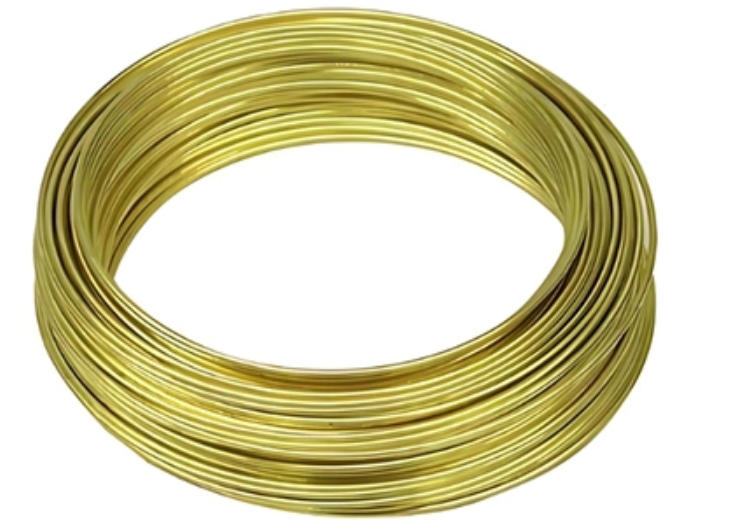
Brass performance is strongly influenced by the balance between copper and zinc. Comparing CuZn15 and CuZn30 provides a useful example of how increasing zinc content can change strength, electrical conductivity, ductility, and forming behavior. Although both are copper-zinc alloys, their different compositions make them better suited to different manufacturing and application requirements.
For manufacturers selecting brass sheet, strip, rod, or other semi-finished forms, understanding this relationship is more useful than choosing an alloy based only on a familiar designation. The appropriate grade also depends on temper, thickness, forming method, dimensional requirements, and service environment.
What Is CuZn30 Brass?
CuZn30 is a copper-zinc brass with a nominal composition of approximately 70% copper and 30% zinc. It is commonly referred to as 70/30 brass and offers a practical balance of strength, ductility, formability, and corrosion resistance.
Compared with copper-rich brass grades, CuZn30 generally provides higher strength while retaining good forming capability. This balance makes it suitable for a range of formed, stamped, and general industrial components.
The actual chemical composition and mechanical properties should always be checked against the applicable material standard. Temper and processing condition can also substantially change elongation, hardness, tensile strength, and forming performance.
For buyers researching cuzn30, the alloy designation should therefore be considered together with the intended product form and processing route.
CuZn15 vs CuZn30 Chemical Composition
The main difference between CuZn15 and CuZn30 is their zinc content. CuZn15 contains substantially more copper, while CuZn30 contains more zinc. This difference influences the balance between conductivity, strength, and formability.
| Property | CuZn15 | CuZn30 |
|---|---|---|
| Nominal copper content | Approx. 85% | Approx. 70% |
| Nominal zinc content | Approx. 15% | Approx. 30% |
| Strength potential | Moderate | Higher |
| Electrical conductivity | Generally higher | Generally lower |
| Formability | Excellent | Very good |
| Corrosion resistance | Good in suitable environments | Good in suitable environments |
| Typical applications | Formed and conductive components | Sheet, strip, stamped and general brass components |
These values represent general alloy characteristics rather than universal performance limits. Actual properties vary with standard, temper, thickness, and manufacturing condition.
When reviewing cuzn30 chemical composition, manufacturers should therefore avoid treating the nominal 70/30 ratio as the complete specification. The applicable standard defines the permitted composition range and other requirements.
How Zinc Content Changes Brass Formability
Increasing zinc content generally strengthens copper-zinc alloys, but the trade-off can be reduced ductility and changes in forming behavior. This is why copper-rich grades such as CuZn15 can be attractive for applications requiring extensive cold deformation.
Forming operations such as bending, drawing, stamping, and rolling place different demands on the material. A component with a simple bend may tolerate a stronger brass grade, while a complex stamped geometry may require greater elongation and a suitable annealed temper.
Work hardening is another important consideration. During repeated or extensive cold forming, brass becomes harder and less ductile. If a manufacturing process involves multiple forming stages, intermediate annealing may be necessary depending on the alloy, thickness, and deformation level.
Therefore, zinc content provides an important starting point, but it does not determine forming performance by itself. Thickness, temper, tooling, forming speed, and part geometry must also be considered.
CuZn30 Material Properties and Corrosion Resistance
The cuzn30 material profile makes it attractive when manufacturers need a balance between mechanical strength and formability. Its strength is generally higher than that of more copper-rich brass, while its forming capability remains useful for many industrial applications.
CuZn30 also provides good corrosion resistance in many atmospheric and industrial environments. However, corrosion performance depends heavily on the service medium. Freshwater, humid air, industrial chemicals, and chloride-containing environments can produce very different corrosion conditions.
Dezincification should also be considered when brass is exposed to certain aqueous environments. The risk depends on alloy composition, water chemistry, temperature, flow conditions, and exposure time. CuZn30 should therefore not be described as universally resistant to dezincification or seawater corrosion.
For demanding marine or seawater applications, manufacturers may need to evaluate specialized brass or copper alloys specifically designed for improved resistance in those environments.
CuZn15 vs CuZn30 Applications
CuZn15 and CuZn30 can both be supplied in different product forms, but their performance profiles can make them more suitable for different types of components.
CuZn15 is attractive where high ductility, forming capability, and relatively higher conductivity are important. Potential applications include formed components, decorative parts, conductive components, and products requiring substantial cold working.
CuZn30 offers a stronger general-purpose brass option while retaining good formability. It can be used for brass strip, stamped components, hardware, electrical parts, and various industrial products where a balance of strength and processing performance is required.
JINTIAN's material range includes both CuZn15 Brass and CuZn30 Brass, providing manufacturers with options for selecting copper-zinc alloys according to the required composition and product application.
How to Select the Right Zinc Content
Selecting between CuZn15 and CuZn30 should begin with the manufacturing process and required final properties.
Consider CuZn15 when:
-
Extensive forming or bending is required.
-
Higher copper content and conductivity are beneficial.
-
Greater ductility is more important than maximum strength.
-
The component will undergo substantial cold deformation.
Consider CuZn30 when:
-
A stronger general-purpose brass is required.
-
Good formability remains important.
-
Stamping or forming is involved but extreme deformation is not required.
-
A balanced combination of strength and processing performance is desired.
If deep drawing is involved, however, zinc content should not be used as the sole selection criterion. Grade, temper, thickness, tooling, and forming geometry should be evaluated together.
For manufacturers, the practical rule is simple: zinc percentage is an important material-selection variable, but it should never be considered in isolation. JINTIAN can help buyers evaluate brass grade, product form, temper, dimensions, and application requirements when selecting CuZn15 or CuZn30.
Frequently Asked Questions
Is CuZn15 easier to form than CuZn30?
Generally, CuZn15 offers greater ductility and forming capability because of its higher copper content, but actual performance depends on temper, thickness, and processing conditions.
Does higher zinc content increase brass strength?
Generally, increasing zinc within the relevant copper-zinc alloy range can increase strength and hardness while changing ductility and conductivity.
Is CuZn30 suitable for electrical components?
Yes. CuZn30 can be used for certain electrical components, particularly where mechanical strength and formability are more important than maximum electrical conductivity.
Which brass is more resistant to dezincification?
Neither alloy should be selected for a demanding aqueous environment based on nominal zinc content alone. Water chemistry, temperature, flow, and applicable corrosion-resistant alloy specifications must also be considered.
Can CuZn30 be used for stamping?
Yes. CuZn30 can be suitable for stamping and forming applications, provided the alloy temper, thickness, tooling, and forming severity are appropriate.
What other factors affect brass formability besides zinc content?
Temper, thickness, grain structure, annealing condition, forming direction, tooling geometry, deformation level, and forming speed can all influence the final forming performance.
-
Tel:
-
E-mail:
-
Address:
No.1 Chengxi West Road, Cicheng, Ningbo, China
-

Ms.Yu
-

Ms.Sun