
 中文
中文

CuSn5 vs CuSn8 Phosphor Bronze: How Tin Content Changes Material Performance
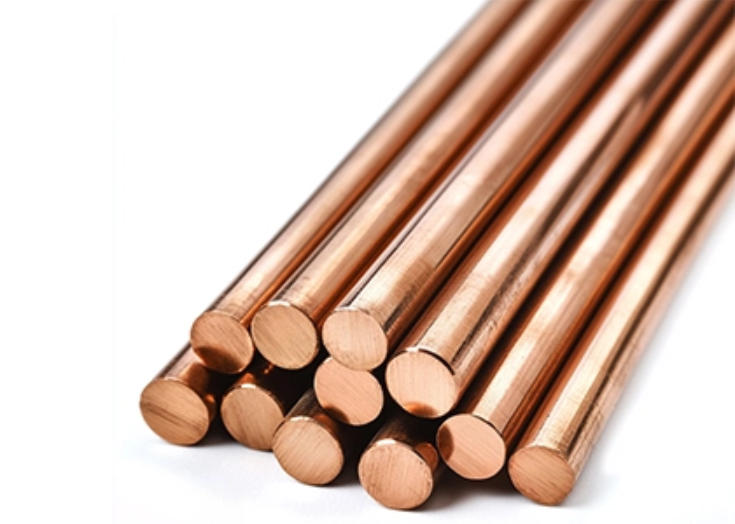
When selecting phosphor bronze for electrical components, springs, terminals, or precision stamped parts, alloy designation alone does not tell the whole story. CuSn5 and CuSn8 are both tin phosphor bronze alloys, but their different tin levels can influence strength, conductivity, formability, and spring performance. Understanding these differences helps manufacturers select a material that fits the actual balance between mechanical and electrical requirements.
What Is CuSn5 Phosphor Bronze?
CuSn5 is a copper-tin phosphor bronze alloy containing approximately 5% tin, with phosphorus used as a deoxidizing and alloying element. The combination provides a useful balance of electrical conductivity, strength, corrosion resistance, and formability.
Compared with commercially pure copper, CuSn5 offers greater mechanical strength while retaining useful conductivity. This makes it suitable for components that need both electrical functionality and resistance to mechanical deformation.
The exact chemical composition and mechanical properties depend on the applicable material standard, product form, and temper. For this reason, buyers should evaluate the complete material specification rather than selecting an alloy solely by its nominal tin content.
CuSn5 vs CuSn8 Chemical Composition
The primary distinction between CuSn5 and CuSn8 is the nominal tin level. CuSn8 contains more tin, which generally increases the strengthening effect of the alloy but can also reduce electrical conductivity and make forming more demanding.
| Property | CuSn5 | CuSn8 |
|---|---|---|
| Nominal tin level | Lower | Higher |
| Strength potential | High | Higher |
| Electrical conductivity | Generally higher | Generally lower |
| Elastic properties | Good | Excellent potential |
| Formability | Generally good | More demanding |
| Typical applications | Electrical components, terminals, stamped parts | Springs, precision contacts, elastic components |
These are general material-selection tendencies rather than fixed performance limits. Actual values can vary significantly with temper, thickness, cold working, heat treatment, and the applicable standard.
For buyers researching CuSn5 chemical composition, it is therefore important to check both the alloy designation and the relevant product specification. The same principle applies when comparing CuSn8 chemical composition across different standards.
How Tin Content Changes Strength and Conductivity
Tin is one of the main elements responsible for strengthening phosphor bronze. As tin content increases, the alloy can develop higher strength and improved resistance to deformation. This is particularly useful when a component must maintain its shape under repeated mechanical loading.
The trade-off is electrical conductivity. In general, increasing alloying content reduces conductivity compared with higher-copper alloys. Therefore, choosing between CuSn5 and CuSn8 is not simply a question of which alloy is stronger.
For applications carrying electrical current, manufacturers may prioritize conductivity and forming performance. For spring-like components, higher strength and elastic behavior may be more important. The optimal balance depends on the component's geometry, operating conditions, and required temper.
This relationship can be summarized as:
Higher tin content → greater strengthening potential → generally lower conductivity
However, this should be treated as a material-selection principle rather than an absolute rule. Processing condition and temper can substantially influence the final properties.
CuSn8 Material Properties for Spring and Connector Applications
The higher tin content of CuSn8 makes it particularly attractive when mechanical performance is a major design consideration. Its combination of strength and elasticity can support applications where a component must repeatedly deform and return toward its original position.
Typical considerations include yield strength, fatigue resistance, spring-back, stress relaxation, and contact force. These characteristics are important in springs, precision contacts, elastic terminals, and other components subjected to repeated mechanical loading.
When reviewing CuSn8 material properties, manufacturers should therefore look beyond tensile strength. A spring contact, for example, must retain sufficient contact force over its intended service life, while also maintaining the required electrical performance.
This differs from simply selecting a high-strength alloy. Component thickness, temper, forming method, and working environment can all affect the final behavior of the finished part.
CuSn5 vs CuSn8 Applications
The application difference between CuSn5 and CuSn8 is often driven by the required balance of conductivity, strength, and formability.
CuSn5 can be a practical choice for electrical components, terminals, connectors, and stamped parts where moderate-to-high strength needs to be combined with relatively good conductivity and processing characteristics.
CuSn8 is more suitable when higher mechanical strength and elastic performance are prioritized. It is commonly considered for springs, precision contacts, elastic components, and applications where resistance to repeated deformation is important.
JINTIAN's phosphor bronze product range includes both CuSn5 and CuSn8 materials, allowing material selection to be aligned with the required alloy, product form, temper, and application.
Which Phosphor Bronze Should Manufacturers Choose?
The choice between CuSn5 and CuSn8 should start with the performance requirements of the finished component rather than the alloy name alone.
CuSn5 may be preferable when:
-
Electrical conductivity has relatively high importance.
-
Good formability is required.
-
Moderate-to-high strength is sufficient.
-
The component involves stamping or other forming operations.
CuSn8 may be preferable when:
-
Higher strength is required.
-
Spring properties are a major design requirement.
-
Resistance to repeated loading is important.
-
Elastic deformation and contact-force retention are critical.
For production applications, buyers should specify the alloy together with the product form, thickness, temper, dimensional tolerance, surface condition, and applicable standard. These parameters can have as much practical impact on component performance as the nominal tin content itself.
JINTIAN can help manufacturers evaluate CuSn5 and CuSn8 phosphor bronze according to electrical requirements, forming conditions, mechanical performance, and final component application.
Frequently Asked Questions
Is CuSn8 stronger than CuSn5?
Generally, the higher tin content of CuSn8 provides greater strengthening potential, although actual strength depends on temper, product form, and processing condition.
Does more tin reduce electrical conductivity?
Generally yes. Increasing tin content tends to increase strength while reducing electrical conductivity compared with lower-tin phosphor bronze.
Which phosphor bronze is better for springs?
CuSn8 is often considered when higher strength and elastic performance are required, but the final choice should also consider temper, thickness, geometry, and fatigue requirements.
Can CuSn5 be used for electrical connectors?
Yes. CuSn5 can be suitable for electrical connectors and terminals when the required combination of conductivity, strength, and formability is achieved.
Does temper change phosphor bronze performance?
Yes. Temper and cold-working condition can significantly affect strength, elongation, hardness, spring performance, and conductivity.
What should buyers specify when ordering phosphor bronze strip?
Buyers should normally specify alloy, applicable standard, thickness, width, temper, dimensional tolerances, surface condition, mechanical requirements, and electrical requirements where applicable.
-
Tel:
-
E-mail:
-
Address:
No.1 Chengxi West Road, Cicheng, Ningbo, China
-

Ms.Yu
-

Ms.Sun