
 中文
中文

C23000 Red Brass for Industrial Forming: Where It Fits Between Copper and High-Zinc Brass
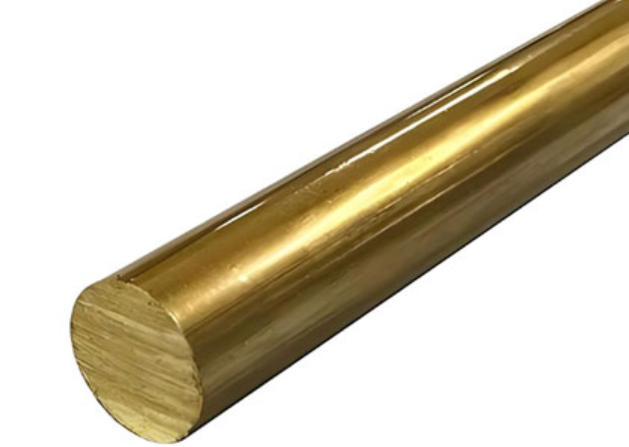
When choosing a brass alloy for forming, higher strength is not always the deciding factor. Manufacturers often need to balance ductility, strength, conductivity, corrosion resistance, and fabrication requirements. C23000 occupies an interesting position in this range because its copper-rich composition gives it characteristics that sit closer to copper than many conventional higher-zinc brass grades.
Also known as red brass, C23000 is generally associated with an approximately 85/15 copper-zinc composition. Compared with 70 30 brass and other higher-zinc alloys, it offers a different balance of formability, conductivity, appearance, and mechanical performance. Understanding this balance can help manufacturers determine where C23000 makes sense in an industrial forming application.
What Is C23000 Red Brass?
C23000 is a copper-zinc alloy containing approximately 85% copper and 15% zinc. Its relatively high copper content gives it a warmer, reddish appearance compared with conventional yellow brass. At the same time, zinc increases strength compared with commercially pure copper.
C23000 can be supplied in different product forms, including sheet, strip, rod, bar, and tube, depending on the applicable specification. Its combination of ductility, moderate strength, corrosion resistance, and conductivity makes it suitable for a variety of formed and fabricated components.
The actual properties of C23000 depend on product form, thickness, temper, and processing history, so the nominal alloy designation should not be treated as a complete material specification.
C23000 Composition and Copper-Zinc Balance
The defining feature of C23000 composition is its high copper-to-zinc ratio. Copper contributes to ductility and electrical conductivity, while zinc increases strength and hardness. Because C23000 contains less zinc than many conventional brass grades, its properties differ noticeably from alloys with 30% or 40% zinc.
| Property | C23000 | 70/30 Brass | 60/40 Brass |
|---|---|---|---|
| Copper content | Approx. 85% | Approx. 70% | Approx. 60% |
| Zinc content | Approx. 15% | Approx. 30% | Approx. 40% |
| Strength potential | Moderate | Higher | Higher |
| Formability | Good | Good to very good | Grade-dependent |
| Conductivity | Relatively higher | Lower | Lower |
| Appearance | Copper-rich/redder | Yellow brass | Yellow brass |
These are general alloy-family trends rather than guaranteed product values. Temper, thickness, manufacturing condition, and applicable standards can all affect actual performance.
This is why brass 60 40 chemical composition should be considered in relation to the intended application rather than treated as an interchangeable specification for C23000.
Why Copper-Rich Brass Offers Good Formability
The relatively high copper content of C23000 helps retain useful ductility while the zinc addition provides greater strength than pure copper. This balance can be advantageous when components need to undergo bending, stamping, drawing, or other forming operations.
However, formability is not determined by composition alone. A softer temper may be preferred for more severe deformation, while a harder condition can provide greater resistance to deformation after forming. Thickness, bend radius, tooling geometry, lubrication, and forming speed can also influence production results.
For this reason, manufacturers should evaluate the complete forming process rather than assuming that a copper-rich composition will automatically perform well in every forming application.
C23000 vs 70/30 Brass and Higher-Zinc Brass
The comparison between C23000 and 70 30 brass is particularly useful because the two alloys represent different positions within the copper-zinc family. C23000 contains substantially more copper, while 70/30 brass contains more zinc and generally offers greater strength potential.
The trade-off is that increasing zinc changes conductivity and ductility. A higher-zinc alloy may make more sense when mechanical strength is the dominant requirement, while C23000 can be attractive when formability, conductivity, and copper-rich characteristics carry more weight.
A similar distinction appears when comparing C23000 with brass 60 40. Its higher zinc content creates a different balance of strength, conductivity, and forming behavior. Therefore, the selection should be based on the complete application rather than zinc percentage alone.
Industrial Applications of C23000
C23000 can be used for industrial components where good forming characteristics and copper-rich material properties are required. Depending on the product form and applicable standard, applications may include plumbing components, hardware, decorative parts, formed components, and certain electrical or conductive products.
Its appearance can also be an advantage where the finished surface is visible. Compared with higher-zinc brass, its higher copper content produces a warmer color that can be desirable for architectural or decorative components.
For plumbing or fluid-handling applications, material selection should consider the actual service environment. Water chemistry, chloride exposure, temperature, pressure, and applicable regulatory requirements can all influence whether C23000 is appropriate.
How to Select C23000 for Forming Applications
For manufacturers, selecting C23000 should begin with the production process and finished-part requirements. The buyer should identify the required product form, thickness or diameter, temper, dimensional tolerance, surface condition, applicable standard, and forming method.
For relatively simple forming operations, the selected temper may provide sufficient strength while retaining adequate ductility. More severe drawing or complex forming may require a softer condition. If the finished component will subsequently be machined, joined, plated, or exposed to a particular corrosive environment, those requirements should also be included in the material specification.
When evaluating a C23000 order, manufacturers should pay particular attention to:
-
Product form and dimensions: Specify sheet, strip, rod, bar, or tube together with thickness, width, diameter, or length.
-
Temper: Match the material condition to the required forming severity and finished-part strength.
-
Forming method: Define whether the material will be stamped, bent, drawn, rolled, or otherwise fabricated.
-
Surface and tolerance: These can be critical for precision components and downstream finishing.
-
Service environment: Consider temperature, water chemistry, corrosion exposure, and regulatory requirements.
For high-volume production, validating the selected C23000 condition using the actual thickness, tooling, and component geometry can help reduce forming problems and maintain dimensional consistency.
JINTIAN's brass product range can support buyers in evaluating the appropriate material form and specification for specific industrial requirements.
Conclusion
C23000 provides a useful middle ground between commercially pure copper and higher-zinc brass. Its approximately 85/15 copper-zinc balance gives it good formability, useful conductivity, corrosion resistance, and moderate strength. Compared with 70 30 brass and brass 60 40, its higher copper content makes it particularly suitable when ductility and copper-rich characteristics are more important than maximum strength. The final selection should consider alloy, temper, product form, dimensions, processing method, and service environment together.
FAQ
Why is C23000 called red brass?
C23000 has a relatively high copper content, giving it a redder appearance than many conventional higher-zinc yellow brasses.
How much zinc does C23000 contain?
C23000 is generally associated with approximately 15% zinc and 85% copper, subject to the applicable specification.
Is C23000 easier to form than higher-zinc brass?
Generally, its copper-rich composition provides good ductility and formability, although actual performance depends on temper, thickness, and forming conditions.
Can C23000 be used for plumbing components?
It can be suitable for certain plumbing applications, but the specific material standard and applicable water-system requirements should always be verified.
How does C23000 compare with 70/30 brass?
C23000 contains more copper and less zinc, generally providing higher conductivity and good ductility, while 70/30 brass offers greater strength potential.
What product forms are available for C23000?
Depending on the specification, C23000 may be supplied in forms such as sheet, strip, rod, bar, and tube.
-
Tel:
-
E-mail:
-
Address:
No.1 Chengxi West Road, Cicheng, Ningbo, China
-

Ms.Yu
-

Ms.Sun