
 中文
中文
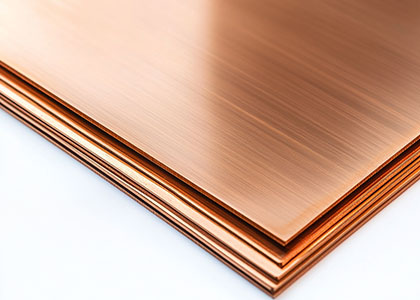
Alloy Designation
-
International: UNS C51900, CDA 519, CuSn6 (EN Standard)
-
Chinese: QSn6.5-0.1 (GB/T 4423-1992)
-
Alias: Tin-phosphor bronze, Instrument bronze, featuring 6-7% tin and 0.1-0.25% phosphorus.
Key Features
C51900 balances high strength with functionality:
-
High Strength & Elasticity: Tensile strength ≥480 MPa (cold-worked), elastic modulus 115 GPa; ideal for precision springs.
-
Corrosion/Wear Resistance: Corrosion rate <0.01 mm/year in atmosphere/freshwater; low friction coefficient (0.18-0.25).
-
Special Properties: Non-magnetic (μ<1.01), spark-resistant for explosion-proof applications.
-
Processing Flexibility: Excellent hot/cold workability, weldability, brazing, and machinability.
Product Forms & Dimensions
Table 1: Product Forms & Specifications
|
Form |
Size Range |
Temper |
Standard |
|
Sheet/Plate |
Thickness: 0.1-50mm; Width: 100-1500mm |
O60 (Soft), H08 (Hard) |
ASTM B103 |
|
Strip |
Thickness: 0.05-2.0mm; Width: 10-600mm |
H04, H06 |
GB/T 4423 |
|
Bar (Round/Hex) |
Diameter/Width: Ø5-200mm |
Y2 (Half-hard), T6 (Aged) |
ASTM B139 |
|
Wire |
Diameter: Ø0.1-12mm |
Soft, Half-hard |
ASTM B103 |
|
Tube |
OD: Ø3-150mm; Wall: 0.2-10mm |
Annealed, Hard |
GB/T 4423 |
Note: Custom sizes (e.g., hex bars, profiles) available with ±0.05mm tolerance.
Chemical Composition
Table 2: Chemical Composition (wt%, Cu bal.)
|
Element |
Req. |
Typical |
Impurity Max |
Function |
|
Sn |
6.0-7.0 |
6.5 |
– |
Strength, hardness & corrosion resistance |
|
P |
0.10-0.25 |
0.15 |
– |
Deoxidation, fluidity & wear resistance |
|
Fe |
≤0.05 |
≤0.02 |
0.05 |
Excessive amounts reduce conductivity |
|
Pb |
≤0.02 |
≤0.005 |
0.02 |
Controls hot shortness |
|
Zn |
≤0.30 |
≤0.10 |
0.30 |
Trace residual |
|
Total Impurities |
≤0.10 |
≤0.05 |
0.10 |
– |
*Standards: GB/T 4423-1992, ASTM B139.*
Physical Properties
Table 3: Physical Properties (20°C)
|
Property |
Value Range |
Unit |
Test Condition |
|
Density |
8.80-8.86 |
g/cm³ |
ASTM B193 |
|
Electrical Conductivity |
15-16 |
%IACS |
Annealed |
|
Thermal Conductivity |
38-42 |
W/(m·K) |
Steady-state heat flow |
|
CTE |
18.5×10⁻⁶ |
K⁻¹ |
20-300°C |
|
Elastic Modulus |
110-115 |
GPa |
Tensile test |
|
Melting Point |
1000-1020 |
°C |
– |
Mechanical Properties
Table 4: Mechanical Properties (Room Temp, Bar Samples)
|
Property |
Annealed (O60) |
1/4 Hard (H02) |
Hard (H08) |
Test Standard |
|
Tensile Strength (σb) |
≥325 MPa |
≥480 MPa |
≥620 MPa |
ASTM E8 |
|
Yield Strength (σ₀.₂) |
≥150 MPa |
≥400 MPa |
≥550 MPa |
ASTM E8 |
|
Elongation (δ₅) |
≥30% |
≥13% |
≥5% |
GB/T 228.1 |
|
Hardness (HV) |
85-100 |
150-180 |
200-230 |
ASTM E92 |
|
Fatigue Strength (10⁷ cycles) |
140 MPa |
240 MPa |
300 MPa |
Rotating bending |
*Note: Sample diameter 5-12mm (longitudinal direction).
Core Advantages
-
Strength-Conductivity Balance: 15-16% IACS + 480 MPa tensile strength (H02), outperforms C51000/C51100.
-
Extended Wear Life: 2× longer bearing life vs. brass (PV limit: 2.5 MPa·m/s).
-
Cryogenic Suitability: No brittleness at -200°C for aerospace/superconducting equipment.
-
Processing Compatibility: Supports cold heading, stamping (≤30% deformation), TIG welding (SCu5210 filler).
Applications
-
Electronics: High-reliability connectors, relay springs, test probes (>100k mating cycles).
-
Precision Instruments: Hairsprings, diaphragms, brush holders, gears (non-magnetic).
-
Industrial: Bellows, bearing bushes, chemical pump seals (resists weak acids/seawater).
-
Transportation: Aircraft sensor springs, automotive seat brackets (cold-stamped).
Processing Guidelines
-
Hot Working: Strictly 750-770°C; >800°C causes grain growth, <700°C increases deformation resistance.
-
Cold Working: ≤30% per-pass reduction; intermediate anneal (600-650°C×1h) to relieve hardening.
-
Welding: Prefer TIG (SCu5210 filler + 200-250°C preheat); post-weld anneal at 500-550°C.
-
Surface Treatment: Avoid lead-containing coolants to prevent SCC; chromate passivation enhances corrosion resistance.
Key Application Scenarios
-
Aerospace Connectors: Stable performance under high vibration (Airbus A350 certified).
-
Marine Valve Bushings: ≥10-year design life in seawater.
-
Smart Meter Springs: Elastic hysteresis <0.05% (meets Class 0.1 accuracy).
-
Explosion-Proof Tools: Spark-free impact for oil platform maintenance.
FAQ
Q1: C51900 vs. QSn4-3 (C51100)?
A1: C51900 has higher Sn (6.5% vs. 4%), 30% higher strength/elasticity, but 20% higher cost. Use C51100 for general springs; C51900 for high-stress springs/wear parts.
Q2: Extra protection in seawater?
A2: Corrosion rate <0.015 mm/year (static). For flow >2 m/s, use passivation/cathodic protection; avoid direct contact with stainless steel.
Q3: Microcracks after cold working?
A3: Caused by excessive deformation/surface defects. Solutions:
1. Limit per-pass reduction to ≤25%;
2. Acid-clean oxide layers pre-processing;
3. Intermediate anneal (620°C×1h).
Q4: Insufficient hardness post-heat treatment?
A4: Verify parameters:
-
Annealed: 600-650°C + air cooling;
-
Aging: 320-340°C×2-3h (hardness ↑10-15%).
Reference Standards
|
Standard |
Code |
Title |
|
China |
GB/T 4423-1992 |
Wrought Copper Alloy Bars |
|
GB/T 5231-2012 |
Chemical Composition & Forms of Wrought Copper Alloys |
|
|
USA |
ASTM B103/B103M-2019 |
Phosphor Bronze Plate, Sheet, Strip, and Rolled Bar |
|
ASTM B139/B139M-2013 |
Phosphor Bronze Rod and Bar |
|
|
International |
ISO 427:2016 |
Wrought Copper Alloys – Composition & Product Forms |
|
EN 12163:2016 |
Copper and Copper Alloys – Rod for General Purposes (CuSn6 equivalent) |
|
|
Japan |
JIS C5191 |
Phosphor Bronze Strip for Electronic Equipment |
Testing Standards
-
Chemistry: ASTM E54 (Sn), ASTM E62 (P)
-
Mechanical: ASTM E8 (tensile), ASTM E92 (hardness)
-
Metallography: ASTM E112 (grain size)
Note: Data synthesized from ASTM, GB, JIS, and manufacturer specs. Performance may vary slightly with processing. Conduct application-specific validation before use.
UNS Grades
-
C10100 Copper
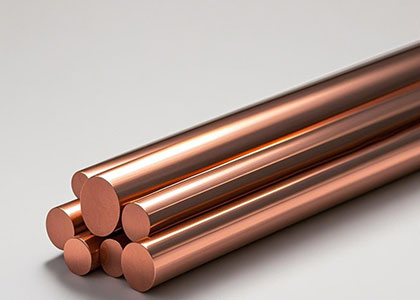 Copper
 -
C10300 Copper
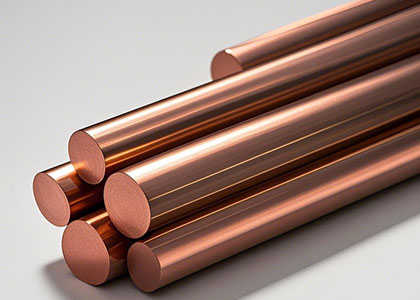 Copper
 -
C11000 Copper
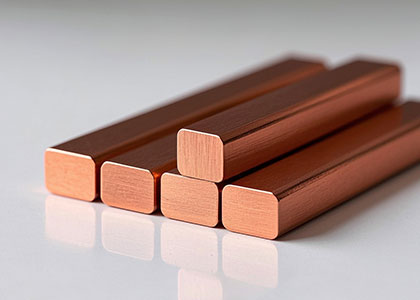 Copper

