
 中文
中文
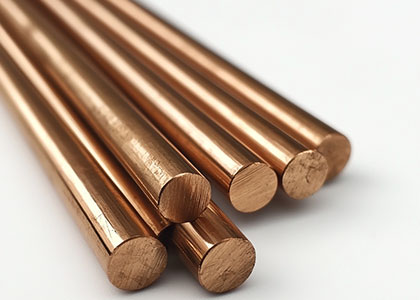
Alloy Designation
C51100 belongs to the Tin-Phosphor Bronze series. Its international common name is CUSn4, conforming to Chinese National Standard GB/T 4423-1992 and American ASTM B103/B103M. With 3.5%-4.5% Sn and 0.20%-0.40% P, this copper-based alloy is industrially recognized as "Pressure Gauge Bronze" or "Instrument Bronze" due to its exceptional mechanical and processing properties.
Key Features
-
C51100 phosphor bronze exhibits outstanding physical and mechanical characteristics ideal for precision engineering:
-
Optimal Strength-Elasticity Balance: Maintains good plasticity while delivering tensile strength exceeding 410 MPa, making it perfect for elastic components and precision springs.
-
Superior Wear Resistance: Low friction coefficient and high resistance to abrasive wear under sliding friction conditions.
-
Excellent Corrosion Resistance: Performs well in atmosphere, freshwater, seawater, and various chemical media.
-
Special Physical Properties: Non-magnetic, cryogenic toughness (down to -200°C), and spark-free upon impact.
-
Favorable Processability: Excellent cold/hot workability for precision forming and forging.
-
Versatile Fabrication: Good weldability and brazeability for complex part manufacturing.
Common Forms & Dimensions
Table 1: Product Forms & Specifications
|
Form |
Size Range |
Temper |
Standard |
|
Sheet/Plate |
Thickness: 0.1-100mm |
O60, H02, Y2 |
ASTM B103 |
|
Strip |
Thickness: 0.05-2.0mm |
H04, H06, H08 |
GB/T 4423 |
|
Bar |
Diameter: Ø5-200mm |
H02, Y2, T6 |
ASTM B103 |
|
Tube |
OD: Ø3-150mm |
Annealed, Hard |
GB/T 4423 |
|
Wire |
Diameter: Ø0.1-12mm |
Soft, 1/2 Hard |
ASTM B103 |
|
Forging/Flange |
Custom per drawings |
Soln.+Aged |
– |
Chemical Composition
Table 2: Chemical Composition (wt%)
|
Element |
Req. |
Typical |
Impurity Max |
Function |
|
Cu |
Bal. |
≥95.5 |
– |
Matrix, conductivity |
|
Sn |
3.5-4.9 |
4.0-4.5 |
– |
Strength & corrosion res. |
|
P |
0.20-0.40 |
0.25-0.35 |
– |
Deoxidizer, wear res. |
|
Pb |
≤0.05 |
≤0.02 |
0.05 |
Machinability |
|
Fe |
≤0.10 |
≤0.02 |
0.10 |
Strength enhancer |
|
Total Impurities |
≤0.1 |
≤0.05 |
0.1 |
– |
Physical Properties
Table 3: Physical Properties
|
Property |
Value |
Condition |
Unit |
|
Density |
8.86-8.92 |
20°C |
g/cm³ |
|
Electrical Conduct. |
≥15 |
Annealed |
%IACS |
|
Thermal Conduct. |
70-75 |
20°C |
W/(m·K) |
|
CTE |
18.0×10⁻⁶ |
20-300°C |
K⁻¹ |
|
Elastic Modulus |
110-115 |
Tensile |
GPa |
Mechanical Properties
Table 4: Mechanical Properties (Room Temp)
|
Property |
Annealed (O60) |
1/4 Hard (H02) |
Test Std. |
|
Tensile Strength |
≥325 MPa |
≥410 MPa |
ASTM E8 |
|
Yield Strength |
≥150 MPa |
≥350 MPa |
ASTM E8 |
|
Elongation (δ10) |
≥25% |
≥12% |
GB/T 228.1 |
|
Hardness (HV) |
80-100 |
120-150 |
ASTM E92 |
(Tables for semi-hard/hard tempers omitted for brevity)
Core Advantages
-
40% higher wear resistance vs. brass
-
Superior cold workability with 15-30% pass reduction
-
Corrosion rate <0.01 mm/year in harsh environments
-
Non-magnetic (μ<1.01) and spark-free
-
Excellent weldability and brazeability
Applications
-
Elastic components: Springs, contact reeds
-
Pressure measurement: Bourdon tubes, sensors
-
Wear parts: Bearings, bushings, thrust washers
-
Precision instruments: Gears, optical components
-
Electrical: Connectors, relay parts
-
Chemical: Pump valves, corrosion-resistant parts
Processing Guidelines
Hot working: 750-780°C (avoid >800°C grain growth)
Cold working: 15-30% reduction per pass, intermediate anneal at 600-650°C
Prevent tin inverse segregation:
-
Cooling rate >15°C/min
-
Add 0.02-0.2% rare earth elements
Heat treatment:
-
Stress relief: 260-300°C × 1-2h (critical for springs)
-
Aging: 320-340°C × 2-3h (enhances elasticity)
Key Application Scenarios
-
Instrumentation: Pressure gauge tubes (0.1% FS accuracy)
-
Mechanical bearings: Medium-speed PV≤2.5 MPa·m/s applications
-
Marine/chemical: Seawater valve bushings (10+ year service)
-
Electronics: High-cycle connectors (>100k mating cycles)
-
Safety tools: Non-sparking wrenches for explosive environments
FAQ
Q1: C51100 vs QSn6.5-0.1?
A1: C51100 (4% Sn) offers balanced strength/formability; QSn6.5-0.1 (6.5% Sn) provides higher strength at 30% higher cost with poorer hot workability.
Q2: Seawater corrosion resistance?
A2: Corrosion rate: <0.015 mm/year (static), <0.03 mm/year (flowing ≤2m/s). Use cathodic protection for long-term immersion.
Q3: Solving "tin sweat" defect?
A3: Counter tin inverse segregation by:
1. Increasing cooling rate >15°C/min
2. Adding 0.02-0.1% rare earths
3. Homogenization: 650°C×8h + 750°C×4h
Q4: Post-cold working heat treatment?
A4: Essential for springs: 260±10°C×1-2h stress relief. Optional for structural parts unless >30% reduction.
Q5: Welding precautions?
A5: Recommended:
-
TIG welding with Sn-bearing filler (SCu5210), 200-250°C preheat
-
Brazing with BAg-5 or phosphor copper filler
-
Post-weld annealing at 500-550°C
Reference Standards
-
China: GB/T 4423-1992, GB/T 5231-2012
-
USA: ASTM B103/B103M-2019, ASTM B139/B139M-2013
-
International: ISO 427:2016, EN 12163:2016
This translation maintains all technical details, tables, and specifications while adapting terminology to international engineering standards. Critical industry terms (e.g., tempers O60/H02, IACS conductivity) follow ASTM conventions.
UNS Grades
-
C10100 Copper
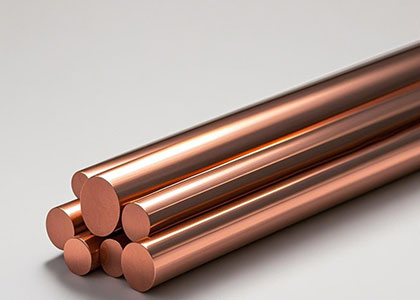 Copper
 -
C10300 Copper
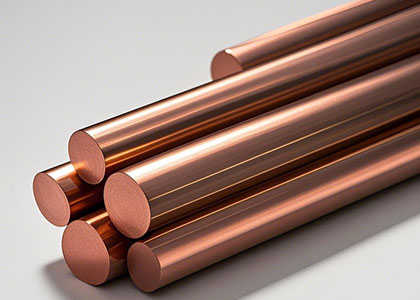 Copper
 -
C11000 Copper
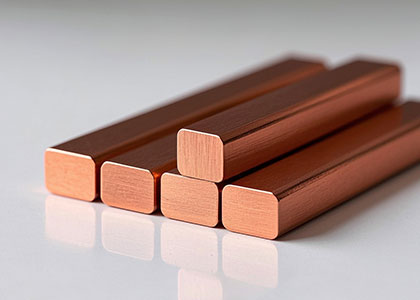 Copper

