
 中文
中文
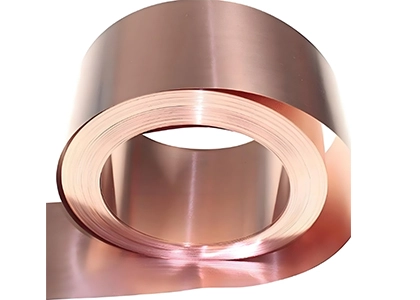
Designation and Standards
-
Standard Designation: QSn4-0.3 (Phosphor Bronze)
-
Implementing Standards: GB/T 5231-2012 (Wrought Copper and Copper Alloys), GB/T 4423-2007 (Bars)
-
Material Category: Copper-Tin-Phosphorus Alloy (Cu-Sn-P), Tin content 3.5%-4.5%, Phosphorus content 0.2%-0.4%, Copper balance.
Product Characteristics
-
High Strength and Wear Resistance:
Tensile strength ≥350 MPa, high hardness (HB 70-120), suitable for high-load, wear-resistant applications.
-
Excellent Elasticity and Fatigue Resistance:
Elastic modulus ≥105 GPa, stable performance after repeated deformation, suitable for springs and contact components.
-
Outstanding Corrosion Resistance:
Corrosion-resistant to atmosphere, freshwater, and seawater (corrosion rate ≤0.01 mm/a), no tendency for stress corrosion cracking.
-
Good Working Adaptability:
Good cold/hot working performance, supports stamping, drawing, welding, etc.; annealing is required after cold working.
Chemical Composition
|
Element |
Cu |
Sn |
P |
Pb |
Total Impurities |
|
Content (%) |
Remainder (≥95.3%) |
3.5-4.5 |
0.2-0.4 |
≤0.02 |
≤0.2 |
Physical Properties
|
Property |
Value |
Remarks |
|
Density |
8.8-8.9 g/cm³ |
Higher than brass, dense material |
|
Electrical Conductivity |
Approximately 15% IACS |
Lower conductivity than pure copper, but meets industrial requirements |
|
Thermal Conductivity |
75-85 W/(m·K) |
Suitable for moderate heat dissipation needs |
|
Coefficient of Linear Expansion |
18.5×10⁻⁶/°C (20-200°C) |
Excellent thermal stability |
|
Melting Point |
1000-1020°C |
Moderate casting fluidity |
Mechanical Properties
|
Property |
Value |
Test Conditions |
|
Tensile Strength (σb) |
350-600 MPa |
M≥350 MPa, Y≥600 MPa |
|
Elongation (δ10) |
5%-50% |
Up to 50% (M) |
|
Hardness (HV) |
80-180 |
Significant increase in hardness (Y) |
|
Elastic Limit |
≥200 MPa |
Key indicator for spring applications |
|
Annealing Temperature |
600-700°C (stress relief) |
Recommended annealing process |
Common Product Forms and Specifications
|
Product Form |
Specification Range |
Typical Applications |
|
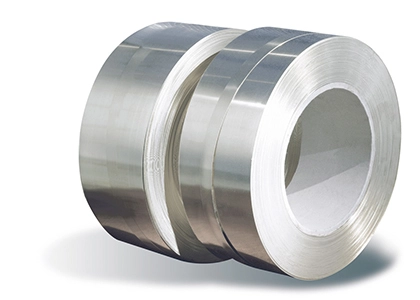
Strip |
Thickness 0.1-2.0mm, Width ≤600mm |
Spring sheets, connector contacts |
|
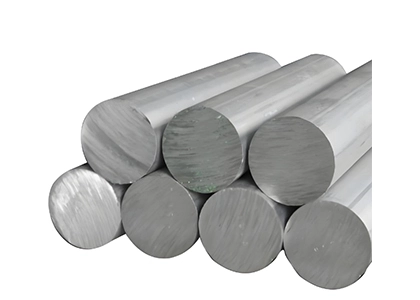
Bar |
Diameter 5-150mm, Length 2000-6000mm |
Bearings, gear blanks |
|
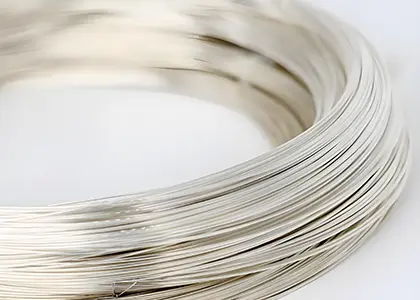
Wire |
Diameter 0.1-12.0mm |
Precision springs, electronic leads |
|
Tube |
Outer diameter 3-200mm, Wall thickness 0.5-20mm |
Marine parts, chemical valves |
Core Application Fields
-
Electronics and Electrical Equipment:
Connectors: Mobile/computer spring contacts, relay contacts (high elasticity and wear resistance required).
Conductive Springs: Switches, sensor spring pieces.
-
Mechanical Manufacturing:
Bearings and Gears: Low-speed, high-load environments (e.g., papermaking machinery).
Wear-resistant Bushings: Chemical pump and valve components.
-
Marine Engineering:
Seawater Pipelines: Corrosion-resistant valves, pump body components.
-
Automotive Industry:
Fuel Injection Systems: Precision springs, sealing rings.
Processing Considerations
-
Annealing Process:
After cold working, annealing at 600-700°C is required to relieve internal stress and restore plasticity.
-
Welding Requirements:
Argon protected welding or resistance welding is recommended to avoid tin oxidation, which could cause weld embrittlement.
-
Cutting Processing:
Use sharp tools, cutting speed ≤60 m/min, and employ sulfur-containing cutting fluids.
-
Surface Treatment:
Nickel/silver plating can enhance conductivity, or apply anti-corrosion coatings for marine environments.
Frequently Asked Questions
Q: What is the difference between QSn4-0.3 and brass (e.g., H62)?
A: QSn4-0.3 is a tin bronze with significantly higher strength, wear resistance, and corrosion resistance compared to brass, but it is more expensive and suitable for high-end precision components.
Q: Is it suitable for high-temperature environments?
A: The recommended long-term use temperature is ≤200°C, as it tends to soften at high temperatures (recrystallization temperature around 300°C).
Q: How can cracking during processing be avoided?
A: Control the cold working deformation rate (≤50%) and anneal promptly; avoid excessive acid pickling, which may lead to hydrogen embrittlement.
Standards References
-
Chemical Composition and Processing Specifications: GB/T 5231-2012, GB/T 4423-2007 (Bars).
-
International Standards: ASTM B103 (American standard for strips), EN 12163 (European Standard).
Note: The data above is based on national standards and industry technical documents. Actual performance may vary slightly due to production processes, and specific values should be verified with the supplier's test report.
GB Grades
-
BZn12-24 Copper
 Copper
 -
BZn12-26 Copper
 Copper
 -
BZn18-18 Copper
 Copper

