
 中文
中文
IEC 60317 Thermal Classes Explained: How to Specify Enameled Wire for Motors
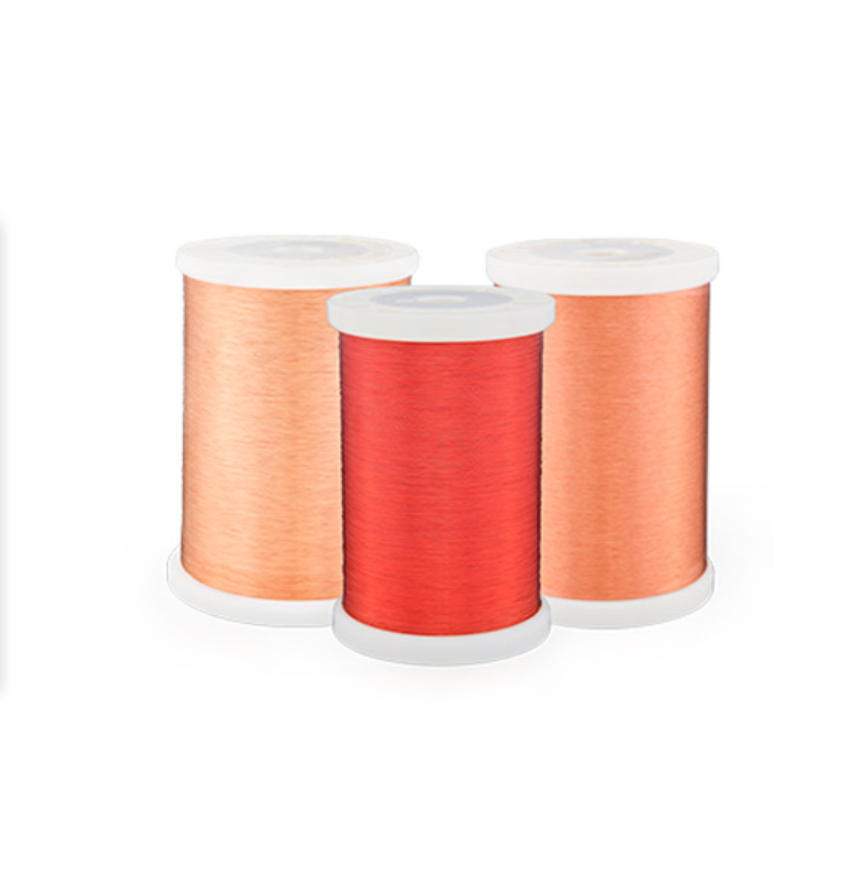
Motor winding performance depends on much more than copper conductivity. The conductor must carry current efficiently while its insulation withstands heat, mechanical stress, voltage, and the winding process. This is why IEC 60317 is important when manufacturers specify enameled wire for motors, transformers, compressors, and other electromagnetic equipment.
IEC 60317 is a series of International Standards covering particular types of winding wires. Different parts address specific conductor and insulation constructions, dimensions, and performance requirements. For example, IEC 60317-0-1 establishes general requirements for enameled round copper winding wires, while individual parts specify particular insulation systems and thermal classes.
What Is IEC 60317?
IEC 60317 is a family of standards developed for particular types of winding wires used in electrical equipment. Rather than defining one universal type of magnet wire, the series specifies requirements for different combinations of conductor form, insulation system, dimensions, grades, and thermal performance.
For manufacturers, IEC 60317 helps create a common technical language for specifying winding wire. Depending on the relevant Part, requirements can address characteristics such as conductor dimensions, insulation thickness, breakdown voltage, adhesion, elongation, flexibility, and thermal performance. IEC 60317 is used together with the IEC 60851 series of test methods.
This means a specification such as “Class 180 enamelled copper wire” is not necessarily complete. The buyer should identify the applicable IEC 60317 Part and the required insulation construction.
Understanding Thermal Classes for Enameled Wire
Thermal class describes the temperature endurance level associated with an insulation system. In practical motor design, it helps engineers determine whether an insulation system is appropriate for the expected thermal environment.
Common thermal classes encountered in winding-wire specifications include:
|
Thermal Class |
General Meaning |
Typical Consideration |
|
Class 105 |
Lower thermal endurance |
Moderate-temperature applications |
|
Class 130 |
Intermediate thermal endurance |
General electrical equipment |
|
Class 155 |
Higher thermal endurance |
Motors and industrial equipment |
|
Class 180 |
High thermal endurance |
Higher-temperature winding environments |
|
Class 200+ |
Very high thermal endurance |
Specialized applications |
These categories should be treated as a starting point rather than a universal product classification. IEC specifications connect particular thermal classes with particular insulation systems. For example, IEC 60317-17 specifies polyvinyl acetal enamelled rectangular copper wire of Class 105, while IEC 60317-20 specifies solderable polyurethane enameled round copper wire of Class 155.
Thermal class also should not be interpreted as a simple recommendation that the motor can continuously operate at exactly that temperature under every condition. Actual winding temperature, insulation aging, thermal gradients, duty cycle, cooling, and equipment design all affect service life.
How Insulation Type Affects Motor Winding Performance
The insulation system is what allows a conductive wire to be wound into a compact coil without creating electrical contact between adjacent turns.
In an enameled wire construction, the copper conductor is covered by a thin insulating coating. Depending on the application, the insulation system may use materials such as polyurethane, polyester, polyesterimide, polyamide-imide, or other specified constructions.
Important insulation characteristics include:
· Dielectric strength: Resistance to electrical breakdown.
· Thermal endurance: Ability to withstand elevated temperatures over the intended service life.
· Abrasion resistance: Important during high-speed winding and insertion.
· Flexibility and adhesion: Helps the insulation remain intact during forming.
· Corona resistance: Particularly relevant to inverter-fed motors and high-frequency electrical stress.
The correct insulation is therefore a balance between electrical, thermal, and mechanical requirements. A higher thermal class is not automatically the best option if the application requires specific solderability, flexibility, abrasion resistance, or other characteristics.
JINTIAN's enameled copper wire range includes polyurethane, polyester, polyesterimide, polyamide-imide overcoated systems, and corona-resistant wire for inverter-fed motors. This variety demonstrates why insulation construction needs to be specified alongside thermal requirements.
Enameled Wire Meaning: More Than Just Copper Wire
So, what is the meaning of enameled wire in practical engineering terms?
Enameled wire is an electrically conductive wire, usually copper or aluminum, covered with a thin insulating enamel coating. The conductor provides the electrical path, while the enamel insulation prevents adjacent turns or conductive components from creating unwanted electrical contact.
A typical winding wire specification therefore contains several layers of information:
Conductor → insulation system → thermal class → dimensions → electrical and mechanical requirements
This explains why two wires with similar conductor dimensions can behave differently in actual motor applications. Their insulation systems may have different thermal endurance, dielectric performance, mechanical properties, or processing characteristics.
For motor manufacturers, the wire should be selected according to the complete winding system rather than the conductor material alone.
How Enameled Wire Gauge and Diameter Affect Motor Design
Enameled wire gauge is commonly used as a convenient way to describe conductor size, but gauge terminology is not a universally sufficient specification for international motor procurement.
Conductor diameter directly affects several design factors, including electrical resistance, current density, winding space, and heat generation. Insulation thickness also changes the overall finished-wire diameter and therefore influences coil packing.
For this reason, motor manufacturers should preferably specify:
Conductor diameter + insulation build + applicable standard
rather than relying on gauge terminology alone.
A larger conductor can carry more current under appropriate conditions but occupies more winding space. A smaller conductor may allow more turns within a given winding window but can increase resistance and affect thermal performance. The correct choice depends on the motor's electrical design, current, voltage, winding geometry, cooling system, and allowable temperature rise.
How to Specify Enameled Copper Wire for Motors
A complete purchasing specification should define both the conductor and insulation requirements. A practical checklist includes:
1. Conductor material — Usually copper or aluminum.
2. Conductor diameter — Specify the nominal diameter or dimensional range.
3. Insulation type — Identify the required enamel or insulation system.
4. Thermal class — Define the required thermal endurance level.
5. IEC 60317 Part — Identify the specific standard applicable to the wire construction.
6. Electrical performance — Include breakdown-voltage or other required electrical tests.
7. Mechanical properties — Define elongation, flexibility, adhesion, or abrasion requirements where applicable.
8. Winding process — Explain whether the wire will be used for high-speed winding, insertion, forming, or other processes.
9. Application temperature — Provide the expected thermal environment and duty conditions.
NEMA's current magnet-wire standard, ANSI/NEMA MW 01000-2025, also provides specifications organized by thermal class, insulation, coating, covering, and conductor form, and provides cross-reference information between NEMA and IEC specifications.
For manufacturers sourcing enameled copper wire, JINTIAN offers IEC 60317-compliant options as part of its product portfolio, with applications covering motors, transformers, compressors, new-energy vehicles, wind power, and other electrical equipment.
The key procurement principle is simple: specify the conductor, insulation system, thermal class, applicable IEC 60317 Part, dimensions, and application together. This reduces the risk of selecting a wire that meets one requirement but fails to match the actual winding process or operating environment.
FAQ
What does IEC 60317 cover?
IEC 60317 is a series of standards specifying particular types of winding wires, including requirements related to conductor dimensions, insulation systems, grades, and performance characteristics. Different Parts apply to different wire constructions.
Why is thermal class important for motor windings?
Thermal class indicates the thermal endurance associated with an insulation system and helps engineers select winding wire for the expected temperature environment.
Can two enameled wires have the same diameter but different ratings?
Yes. They can have similar conductor dimensions while using different insulation systems, grades, or thermal classes.
Does thicker enamel always provide better insulation?
Not necessarily. While a thicker enamel build generally increases dielectric strength, it can also reduce flexibility and winding-space utilization. Overall insulation performance depends on the specific insulation system, material properties, adhesion, and the applicable standard—not simply thickness alone.
How does winding temperature affect wire life?
Higher operating temperature generally accelerates insulation aging. Actual service life depends on the insulation system, temperature profile, electrical stress, cooling, and operating conditions.
What information should motor manufacturers provide when ordering enameled wire?
Provide the conductor material and diameter, insulation type, thermal class, applicable IEC 60317 Part, grade, electrical requirements, mechanical requirements, winding process, and expected operating conditions.
-
Tel:
-
E-mail:
-
Address:
No.1 Chengxi West Road, Cicheng, Ningbo, China
-

Ms.Yu
-

Ms.Sun