
 中文
中文
How to Audit Copper Fitting Manufacturers: Materials, Dimensions, Leak Testing, and Traceability
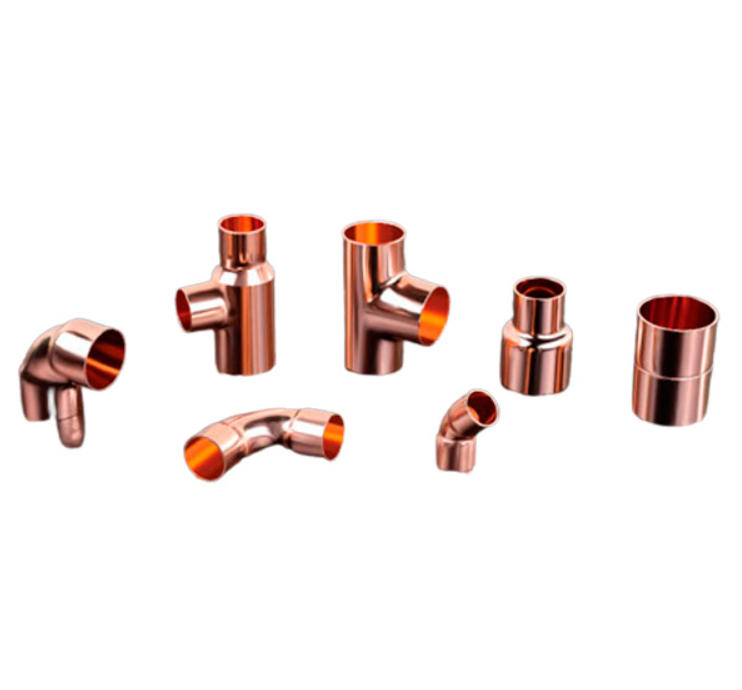
Choosing reliable copper fittings manufacturers requires more than reviewing a product catalog or comparing quotations. Copper fittings are used in HVAC, refrigeration, plumbing, and industrial piping systems, where dimensional accuracy, joining performance, pressure resistance, and material consistency directly affect system reliability.
A factory audit gives buyers an opportunity to verify whether a supplier's actual production and quality-control practices match its stated capabilities. For international buyers, the audit should cover materials, forming processes, dimensions, leak testing, surface condition, documentation, and traceability.
Why Should Buyers Audit Copper Fittings Manufacturers?
A supplier audit helps identify production risks before they become delivery or field-performance problems. A manufacturer may provide acceptable samples while having inconsistent controls during larger production runs.
During an audit, buyers can evaluate whether the supplier has appropriate equipment, inspection procedures, trained personnel, and documented quality controls.
Particular attention should be given to:
-
Production capability: Check whether the factory has suitable forming, bending, joining, cleaning, and inspection equipment.
-
Process consistency: Determine whether key production parameters are documented and monitored.
-
Quality control: Review incoming-material inspection, in-process checks, and final inspection procedures.
-
Testing capability: Confirm whether leak, pressure, dimensional, and material tests can be performed as required.
-
Capacity and organization: Evaluate whether production capacity and scheduling can support repeat orders.
An audit should focus on evidence rather than general claims. Actual inspection records, production samples, equipment, and test procedures provide more useful information than a supplier's marketing materials.
How to Verify Copper Fittings Materials
Material verification is one of the first areas to review when auditing a copper fittings manufacturer. The copper grade should match the applicable product standard and the requirements of the intended application.
Buyers should check whether incoming copper tube, sheet, or other raw materials are identified and traceable. Material certificates should be reviewed against the actual production batch where possible.
Chemical composition may be verified through supplier documentation or additional testing when required. Material condition can also influence forming and joining performance, so the audit should consider temper and processing condition where relevant.
For HVAC and refrigeration fittings, cleanliness is another important consideration. Oil, moisture, oxide, or other contamination can interfere with brazing and system cleanliness. A capable copper fittings factory should have defined procedures for cleaning, handling, storage, and packaging.
Dimensional Accuracy and Connection Requirements
Copper fittings must connect reliably with tubes, valves, and other components. Even relatively small dimensional deviations can affect assembly and joining.
During an audit, buyers should review how the supplier controls outside diameter, wall thickness, fitting geometry, socket depth, roundness, and other application-specific dimensions.
Measurement equipment should be appropriate for the required tolerances and regularly calibrated. Inspection should not be limited to final products; critical dimensions should also be monitored during production.
Joining compatibility is equally important. Fittings intended for soldering or brazing should have dimensions and surface conditions appropriate for the specified joining process. Buyers should confirm that the manufacturer understands the requirements of the intended connection method.
Leak Testing and Pressure Testing
Leak testing is particularly important for fittings used in pressurized fluid or refrigerant systems. The appropriate test method depends on the fitting design, application, pressure rating, and applicable standard.
A supplier may use air, gas, hydrostatic, or other testing methods depending on the product and customer requirements. Buyers should verify that the test pressure, duration, equipment, and acceptance criteria are clearly defined.
During a factory audit, it is useful to observe an actual test rather than simply reviewing a test report. The auditor should check whether equipment is calibrated and whether failed products are identified and segregated.
For high-volume production, automated or standardized leak-testing procedures can also help reduce variation between operators.
Production Traceability and Quality Documents
Traceability connects finished fittings with their raw material, production batch, inspection records, and test results. This becomes particularly valuable when fittings are used in critical HVAC, refrigeration, or industrial systems.
A qualified supplier should be able to identify the relevant batch or lot and retrieve corresponding quality records. Documentation may include material certificates, dimensional inspection reports, leak-test records, pressure-test results, and final inspection reports.
Buyers should also review how nonconforming products are controlled. Defective fittings should be clearly identified and prevented from being mixed with accepted products.
Good documentation does not replace physical quality control, but it provides evidence that the supplier's processes are systematic and traceable.
Copper Fittings Manufacturer Audit Checklist
A practical audit can use a standardized checklist to compare different copper fittings suppliers objectively.
| Audit Area | Key Check |
|---|---|
| Material | Grade/composition |
| Dimensions | OD/wall/fitting geometry |
| Joining | Solder/braze compatibility |
| Leak test | Pressure/air test |
| Surface | Oxidation/contamination |
| Traceability | Batch/lot |
The audit should also consider equipment maintenance, calibration records, operator training, production capacity, packaging, and corrective-action procedures. For a new supplier, sample approval followed by a trial production order can provide additional evidence of process stability.
For long-term sourcing, an audit should not necessarily be a one-time activity. Significant changes in production equipment, materials, ownership, quality performance, or manufacturing location may justify a new review.
Conclusion
Auditing copper fittings manufacturers allows buyers to evaluate the production system behind the finished product rather than relying solely on samples and certificates. Material verification, dimensional control, joining compatibility, leak testing, surface cleanliness, and traceability are all important when assessing a supplier.
A structured factory audit combined with sample inspection, documented testing, and batch traceability can help buyers identify production risks earlier and establish a more reliable supply chain.
Copper Fittings Manufacturer FAQs
What should be checked during a fittings factory audit?
Review raw materials, forming equipment, dimensional inspection, joining compatibility, leak testing, surface cleanliness, production capacity, documentation, and traceability.
Why is material verification important?
The correct copper grade and material condition help ensure that fittings provide the required forming, joining, corrosion, and service performance.
How are copper fittings leak tested?
Depending on the application and applicable requirements, fittings may be tested using air, gas, hydrostatic, or other suitable methods under defined pressure and acceptance criteria.
What dimensions should buyers inspect?
Typical checks may include outside diameter, wall thickness, fitting geometry, socket depth, roundness, and other dimensions required for reliable tube connections.
What traceability records should be available?
Records may include material certificates, batch or lot numbers, dimensional inspection reports, leak-test results, pressure-test records, and final inspection documentation.
How often should a supplier be re-audited?
There is no universal interval. Re-auditing should be based on supplier risk, quality performance, contractual requirements, and significant changes in production, equipment, materials, or manufacturing location.
-
Tel:
-
E-mail:
-
Address:
No.1 Chengxi West Road, Cicheng, Ningbo, China
-

Ms.Yu
-

Ms.Sun