
 中文
中文
C38000 Brass for Extruded Profiles: Machinability, Forming and Material Selection
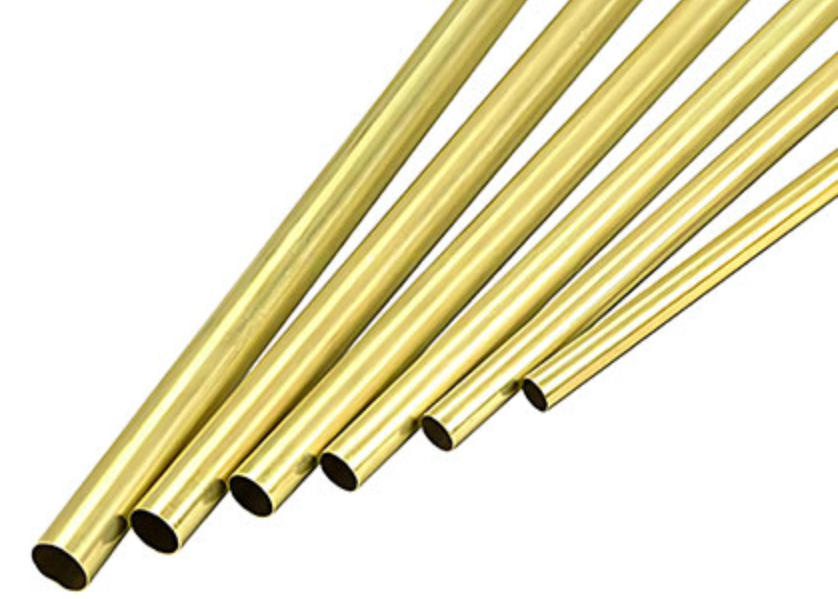
Selecting brass for an extruded profile involves more than choosing a material with good machinability. The alloy must also respond appropriately to extrusion, provide the required dimensional stability, and support any secondary machining needed after the profile is produced. C38000 is a leaded brass grade that can be attractive for applications combining extrusion with subsequent machining.
Known for its excellent machinability, C38000 is used for rods, bars, profiles, fittings, and other precision components. However, its suitability still depends on profile geometry, extrusion conditions, required properties, and the applicable material standard.
What Is C38000 Brass?
C38000 is a leaded copper-zinc alloy commonly associated with the CuZn39Pb3 designation. The addition of lead is primarily intended to improve machinability, helping the material produce more manageable chips during cutting operations.
JINTIAN identifies C38000 as a leaded brass grade and references standards including ASTM B453, ASTM B121, and SAE J463. Its published technical information also indicates that mechanical properties vary according to product condition and specification.
The combination of strength, corrosion resistance, and machinability makes C38000 relevant to components that may first be produced as an extruded section and then turned, drilled, milled, or otherwise machined.
This distinction is important: an alloy's excellent machining behavior does not automatically mean it is the best choice for every forming process. The complete manufacturing route should determine the material selection.
C38000 Brass Composition and Key Properties
The chemical composition of C38000 brass helps explain its manufacturing characteristics. As a leaded brass, it contains copper and zinc as its primary alloying elements, with lead added to enhance machining performance.
| Property | C38000 Brass |
|---|---|
| Alloy family | Leaded brass |
| Common designation | CuZn39Pb3 |
| Lead content | Approximately 3% in commonly referenced compositions |
| Machinability | Excellent |
| Corrosion resistance | Good |
| Thermal conductivity | Moderate |
| Typical forms | Rod, bar, profile and related wrought products |
Lead can promote chip breaking during machining, which is particularly useful for automatic or high-volume production. However, the exact chemical limits and mechanical properties should always be confirmed against the governing standard.
For example, published C38000 performance data may include tensile strength and elongation values that vary with product form, size, temper, and manufacturing condition. Buyers should therefore avoid treating a single catalog value as a universal property of every C38000 product.
Why C38000 Works Well for Brass Extrusion
The relationship between alloy composition and extrusion processing is central to selecting brass extrusion material.
During extrusion, a heated billet is forced through a die to create a continuous profile with a defined cross-section. The process can produce round, rectangular, or more complex sections, but extrusion performance depends heavily on alloy condition, billet temperature, extrusion ratio, die design, and profile geometry.
For C38000, manufacturers should evaluate:
-
Extrusion temperature and billet preparation
-
Extrusion ratio and material flow
-
Profile complexity and wall thickness
-
Dimensional tolerances
-
Surface quality requirements
-
Machining required after extrusion
A relatively simple profile may be straightforward to produce, while a thin-wall or highly asymmetric section can impose substantially greater demands on tooling and process control.
Therefore, the question should not be whether C38000 is simply “extrudable.” The more useful question is whether the alloy, profile geometry, extrusion process, and subsequent machining route are compatible.
C38000 Machinability vs Forming Performance
One of the most important distinctions when selecting C38000 is the difference between machinability and forming performance.
C38000's lead addition provides excellent machinability, making it suitable for turning, drilling, milling, threading, and other cutting operations. This can be especially valuable when an extruded brass rod or profile will require substantial secondary machining.
However, excellent machinability does not automatically mean excellent cold-forming performance. Leaded brass generally has more limited cold-forming capability than brass grades specifically selected for severe cold deformation.
This means C38000 can be particularly attractive when the production sequence looks like:
Extrusion → cutting → CNC machining → finishing → assembly
rather than a process dominated by extensive cold bending, deep drawing, or severe deformation.
Tool geometry, cutting speed, feed rate, lubrication, and component design will still influence the actual machining result.
Where Are C38000 Extruded Profiles Used?
C38000 can be considered for extruded profiles and semi-finished products that combine material efficiency with subsequent machining requirements.
Typical applications include:
| Application | Typical Requirement |
|---|---|
| Precision hardware | Accurate machined features |
| Electrical components | Conductive brass sections and fittings |
| Fittings | Complex profiles and threaded features |
| Industrial components | Strength and machining efficiency |
| Fasteners | Repeated turning and threading |
| Machined profiles | Extrusion followed by secondary machining |
The broader application of the material depends on the final component design and applicable regulatory requirements.
JINTIAN's precision alloy rod and wire product range covers applications including precision parts, electrical hardware, welding materials, and aviation-related components, providing a useful material context for buyers evaluating precision brass products.
How to Select C38000 Brass for Extrusion
Before ordering an extruded brass profile, purchasing teams should provide enough information to evaluate both the extrusion process and the finished component.
Key information includes:
-
Profile geometry — Provide drawings or cross-sectional dimensions, including wall thickness and complex features.
-
Extrusion requirements — Specify section size, length, dimensional tolerance, and expected production condition.
-
Temper and properties — Define the required mechanical condition according to the applicable standard.
-
Machining requirements — Explain whether the profile will undergo turning, drilling, milling, threading, or other secondary operations.
-
Surface requirements — State requirements for surface finish, straightness, and dimensional consistency.
-
Standard and application — Identify the governing specification and final-use requirements.
For applications where extrusion is followed by substantial CNC machining, C38000 can provide a useful balance between profile production and machining efficiency. JINTIAN can help buyers evaluate the brass grade, profile dimensions, applicable standard, and subsequent machining requirements together.
FAQ
Is C38000 suitable for precision machining?
Yes. C38000 is recognized for excellent machinability and can be suitable for turning, drilling, milling, threading, and other precision machining operations.
What does CuZn39Pb3 mean?
CuZn39Pb3 is a designation describing a copper-zinc-lead brass composition. Its exact chemical limits should be verified against the applicable material standard.
Can C38000 be cold formed?
C38000 can undergo certain forming operations, but its cold-forming capability is more limited than grades specifically optimized for severe cold deformation.
What profile shapes can brass extrusion produce?
Depending on the alloy and extrusion equipment, brass extrusion can produce round, rectangular, hollow, and other custom cross-sections.
Does C38000 require special environmental compliance checks?
Yes. Because C38000 contains lead, buyers should evaluate applicable environmental, regulatory, and end-use requirements before specifying the material.
What dimensions should buyers provide for extruded brass profiles?
Provide the profile drawing, cross-sectional dimensions, wall thickness, length, tolerance, surface requirements, temper, applicable standard, and intended machining process.
-
Tel:
-
E-mail:
-
Address:
No.1 Chengxi West Road, Cicheng, Ningbo, China
-

Ms.Yu
-

Ms.Sun