
 中文
中文
ASTM B187 C11000 Copper Bar: Dimensions, Temper And Procurement Requirements
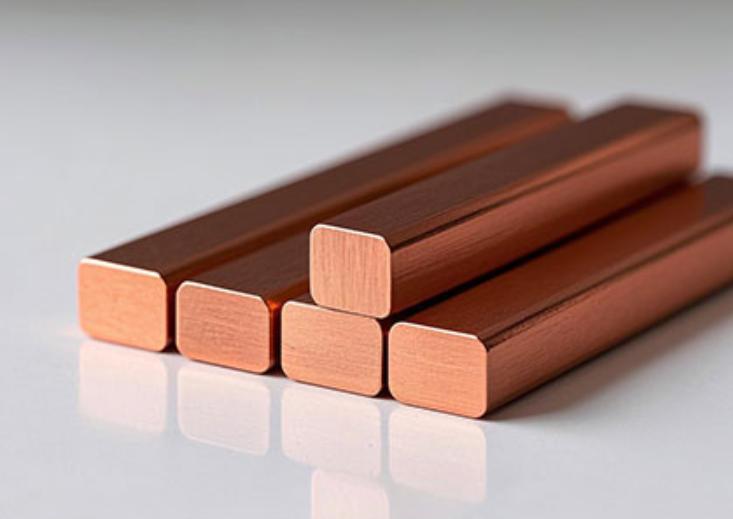
When purchasing copper bar for electrical equipment or downstream machining, specifying only “C11000 copper” leaves several important questions unanswered. Buyers also need to define the applicable standard, cross-sectional dimensions, length, temper, tolerances, surface condition, and testing requirements. ASTM B187 C11000 provides a more precise starting point for specifying copper bar and rod products for industrial applications.
C11000 is widely selected for its high electrical conductivity, good thermal conductivity, and useful formability. However, the final mechanical performance of a C11000 copper bar depends strongly on its temper and processing condition. Understanding these factors can help manufacturers prepare a more accurate RFQ and avoid receiving material that meets the alloy requirement but does not match the production process.
What Is ASTM B187 C11000 Copper Bar?
ASTM B187 C11000 refers to C11000 copper products covered by ASTM B187/B187M, a specification associated with copper bar, bus bar, rod, and related shapes for electrical applications and other industrial uses.
C11000 is UNS C11000, commonly known as electrolytic tough-pitch copper or ETP copper. Its high copper content and controlled oxygen level provide excellent electrical conductivity while retaining the ductility required for many forming and fabrication processes.
Compared with C11000 sheet and plate specified under ASTM B152, ASTM B187 focuses on bar, rod, and related product forms. This distinction is important for procurement because dimensions, tolerances, straightness, length, and product condition become central considerations.
JINTIAN's C11000 product range includes copper rod and bar products in different sizes and conditions, allowing the material to be specified according to electrical, machining, and forming requirements.
C11000 Chemical Composition and Conductivity
The performance of C11000 begins with its copper-rich chemical composition. The alloy is characterized by high copper content and controlled oxygen, which helps provide its well-known electrical conductivity.
The C11000 chemical composition is important for applications such as conductive components, busbars, electrical hardware, and other current-carrying parts. Its thermal conductivity can also make it useful where electrical and heat-transfer performance are both relevant.
Typical reference characteristics include high electrical conductivity, high thermal conductivity, good ductility, and good corrosion resistance. However, chemical composition should always be verified against the applicable standard rather than relying on a generic catalog value.
For electrical applications, conductivity requirements should also be stated clearly in the purchasing specification. This is particularly important when the copper bar will become part of a component where resistance or heat generation directly affects system performance.
C11000 Copper Bar Dimensions and Temper
For a copper bar or rod purchase, dimensions are just as important as the alloy designation. A supplier needs to know the required cross-sectional size, length, dimensional tolerances, and material condition before the product can be matched to the intended application.
JINTIAN's C11000 product information indicates rod dimensions in an approximate range of 3–50 mm, with lengths of around 1000–6000 mm, drawn rod although available sizes depend on the specific product and specification.
A practical RFQ should define the following:
|
Specification |
Buyer Should Define |
|
Diameter or section |
Required round diameter or cross-sectional size |
|
Length |
Fixed, standard, or specified cut length |
|
Temper |
Annealed or required cold-worked condition |
|
Straightness |
Required straightness or applicable tolerance |
|
Surface |
Standard, cleaned, bright, or other specified condition |
|
Dimensional tolerance |
Standard or application-specific tolerance |
Temper deserves particular attention because it directly affects how C11000 behaves during fabrication. Annealed material generally offers greater ductility for forming, while cold-worked material can provide increased strength and hardness.
Therefore, two C11000 bars with the same nominal dimensions may not have the same mechanical performance if they are supplied in different tempers.
Electrical and Mechanical Performance
High conductivity is one of the primary reasons manufacturers choose C11000 copper bar. The material is commonly used where electrical current must pass efficiently through a relatively compact conductive component.
Typical applications include electrical connections, busbars, terminals, switchgear components, grounding components, and other conductive hardware.
At the same time, mechanical properties should not be overlooked. Tensile strength, yield strength, elongation, and hardness can vary with temper and processing condition. C11000 should therefore not be treated as having one fixed set of mechanical values.
For example, a manufacturer machining or forming a copper bar may prioritize ductility and workability, while an application requiring greater dimensional stability or mechanical strength may call for a harder temper.
The correct specification should therefore connect conductivity + mechanical requirements + temper + processing method rather than evaluating the alloy name alone.
C11000 Bar vs Continuous Cast Copper Rod
The terms copper bar, copper rod, and continuous cast copper rod are sometimes used too broadly in procurement discussions, but they should not automatically be treated as interchangeable.
A continuous casting process describes how copper material is produced, while bar or rod describes the resulting product form and dimensions. A continuously cast copper product may subsequently undergo drawing, rolling, machining, or other processing before becoming the final product supplied to a customer.
The practical differences buyers should consider include:
· Production method: Casting route and subsequent working can influence material condition.
· Cross-section: Rod and bar may be supplied in different dimensional ranges and shapes.
· Downstream processing: Drawing, machining, bending, or forming requirements can affect the appropriate condition.
· Application: Electrical conductivity, dimensional precision, and mechanical requirements may differ between end uses.
Consequently, “continuous cast copper rod” should be treated as a production and product description rather than automatically as an alternative designation for every C11000 copper bar.
ASTM B187 C11000 Procurement Checklist
A complete ASTM B187 C11000 purchase specification should provide enough information for the supplier to identify the exact product required.
Before issuing an RFQ, buyers should confirm:
1. Standard: ASTM B187/B187M or another applicable specification.
2. Alloy: UNS C11000.
3. Product form: Bar, rod, bus bar, or required section.
4. Diameter or dimensions: Define the exact cross-section.
5. Length: Specify standard, random, or fixed lengths.
6. Temper: State the required material condition.
7. Tolerance: Define dimensional and straightness requirements.
8. Surface: Specify the required surface condition.
9. Electrical requirements: Include conductivity requirements where critical.
10. Documentation: Request applicable inspection reports or material certificates.
Providing these details helps manufacturers avoid a common procurement problem: selecting the correct copper alloy but receiving the wrong size, temper, or surface condition for the intended production process.
JINTIAN provides C11000 copper products in multiple forms and dimensions, allowing buyers to align copper grade, product condition, dimensions, and application requirements.
FAQ
What is ASTM B187 used for?
ASTM B187/B187M establishes requirements for specified copper bar, bus bar, rod, and related products, including applicable dimensions, properties, and testing requirements.
Is C11000 copper bar suitable for machining?
Yes. C11000 can be machined, although its high ductility means machining parameters and tooling should be selected appropriately for the required surface finish and dimensional accuracy.
What diameter ranges are available for copper bar?
Available dimensions depend on the supplier and applicable specification. JINTIAN's C11000 rod information indicates an approximate diameter range of 3–50 mm.
How does temper affect C11000 bar strength?
Cold working can increase strength and hardness, while annealing generally increases ductility and improves forming performance. The required temper should therefore be specified according to the manufacturing process.
What is the difference between copper bar and copper rod?
The terms generally refer to product forms with different dimensional or application conventions, although definitions can vary by standard. The applicable specification and cross-sectional dimensions should be used to determine the exact product.
What documents should accompany an ASTM B187 copper order?
Buyers may request material certificates, chemical composition results, mechanical or electrical test data, dimensional inspection records, and documentation confirming compliance with the specified ASTM and UNS requirements.
-
Tel:
-
E-mail:
-
Address:
No.1 Chengxi West Road, Cicheng, Ningbo, China
-

Ms.Yu
-

Ms.Sun