
 中文
中文
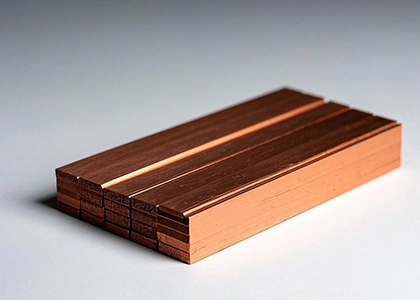
Designation and Standards
-
Standard Designation: H96 (Common Brass)
-
Corresponding International Standards: GB/T 5231-2001, GB/T 1527-1997
-
Material Category: Copper-Zinc Alloy (Cu-Zn), Copper Content 95%-97%
Product Features
-
High Electrical and Thermal Conductivity: Conductivity close to pure copper (about 90% IACS), suitable for electronic and electrical applications.
-
Excellent Corrosion Resistance: Strong corrosion resistance in atmospheric and freshwater environments, with no tendency for stress corrosion cracking.
-
Good Processability: Easy to cold/hot press, supports welding, forging, tin plating, and other processes.
-
Moderate Strength: The lowest strength among common brass, but higher than pure copper, with tensile strength ≥205-320 MPa.
Common Product Forms and Specifications
|
Product Form |
Specification Range |
Delivery Condition |
|
Bar |
Diameter: 4-350mm (Stock covers 6-350mm) |
Bright turned, drawn round, black surface |
|
Plate |
Thickness: 0.3-300mm (Standard 1-150mm) |
Machine-cut plate, forged plate |
|
Strip |
Thickness: 0.1-3.0mm |
M (Soft), Y (Hard) |
|
Tube |
Outer diameter: 3-300mm (Capillary tube outer diameter 1-6.1mm) |
M, Y2, Y, etc. |
|
Wire |
Diameter: 0.1-12.7mm |
Coils or straight rods |
Chemical Composition
|
Element |
Cu |
Zn |
Fe |
Pb |
Ni |
Total Impurities |
|
Content (%) |
95.0-97.0 |
Balance |
≤0.10 |
≤0.03 |
≤0.5 |
≤0.2 |
Physical Properties
|
Performance Parameter |
Value |
Test Conditions |
|
Density |
8.85 g/cm³ |
Room temperature |
|
Electrical Conductivity |
≥90% IACS |
Compared to pure copper |
|
Thermal Conductivity |
About 120 W/(m·K) |
Similar to pure copper |
|
Melting Point |
About 1065°C |
Alloy melting point |
|
Coefficient of Thermal Expansion |
18.5×10⁻⁶/°C (20-300°C) |
Reference value for brass |
Mechanical Properties
|
Performance Parameter |
Value |
Test Condition |
|
Tensile Strength (σb) |
205-320 MPa |
Varies with condition (M/Y) |
|
Elongation (δ10) |
3%-45% |
Up to 45%(M) |
|
Hardness (HV) |
45-105 |
Tube hardness (Y) |
|
Annealing Temperature |
540-600°C |
To relieve internal stress |
|
Hot Working Temperature |
640-850°C |
Recommended range |
Core Advantages
-
Balanced Overall Performance: A combination of electrical conductivity, corrosion resistance, and workability, with high cost-effectiveness.
-
No Stress Corrosion Tendency: Suitable for long-term exposure to humid environments.
-
Wide Range of Forms Available: Supports customization in bars, plates, tubes, and other forms.
Product Applications
-
Electronics & Electrical: Conductive terminals, heat sinks, relay components.
-
Architectural Decoration: Door handles, plumbing fittings, decorative moldings.
-
Shipbuilding & Automotive: Freshwater-resistant piping joints, instrument parts.
-
Industrial Manufacturing: Cold heading parts, rivets, welded structural parts.
Processing Notes
-
Temperature Control: Avoid exceeding 850°C during hot working to prevent grain coarsening.
-
Cold Processing Lubrication: To reduce friction-induced surface cracks, it is recommended to use specialized cutting fluids.
-
Welding Process: Prefer gas shielded welding to prevent zinc evaporation that can cause pores.
Frequently Asked Questions
Q: What is the difference between H96 and red copper (pure copper)?
A: H96 is a copper-zinc alloy (brass) with higher strength but slightly lower conductivity. Red copper is pure copper (Cu≥99.9%) with superior conductivity but lower strength.
Q: What is the color of H96 brass?
A: It has a light yellow color due to the high copper content, which is distinctly different from the reddish-purple color of red copper.
Q: Is it suitable for seawater environments?
A: Tin is needed (e.g., naval brass) for seawater corrosion resistance. H96 is recommended for freshwater environments.
Standards Reference
-
Chemical Composition: GB/T 5231-2001
-
Mechanical Properties: GB/T 1527-1997 (Tubes)
-
Processing Specifications: ASTM B36 (General standard for brass plates)
Note: The above data is compiled from multiple industrial standards and supplier technical documents. Specific parameters may vary slightly depending on production processes and testing methods. It is recommended to refer to actual testing reports for precise details.
GB Grades
-
BZn12-24 Copper
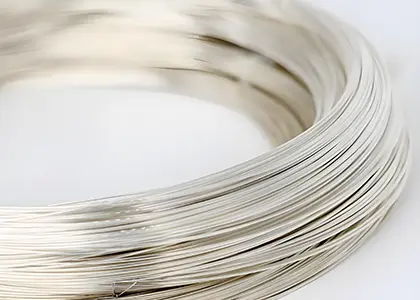 Copper
 -
BZn12-26 Copper
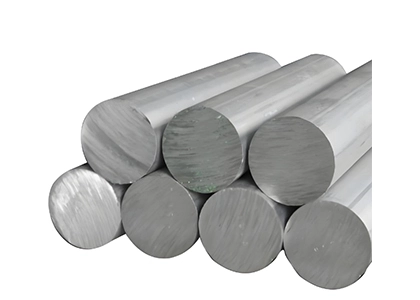 Copper
 -
BZn18-18 Copper
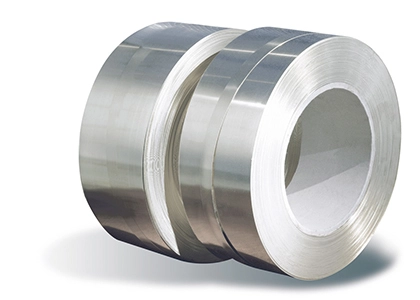 Copper

