
 中文
中文
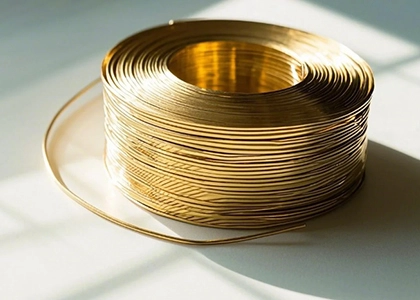
Designation and Standards
-
Standard Designation: H65 (Common Brass)
-
International/National Standards: GB/T 5231-2012, GB/T 2059-2000 (Strips)
-
Other Name: 60/40 Brass (Approx. 65% Copper Content)
-
Material Category: Copper-Zinc Alloy (Cu-Zn) (Copper 63.0%-68.5%, Zinc Balance)
Product Characteristics
-
Excellent Plasticity: H65 offers the best plasticity among common brass materials, with outstanding cold and hot working abality. Suitable for complex stamping parts (e.g., corrugated pipes, cartridge cases).
-
Strength and Ductility Balance: Wide tensile strength range (M≥290 MPa, up to 570 MPa(Y)).
-
Broad Processing Adaptability: Supports cold rolling, hot rolling, welding, soldering and brazing. Annealing is recommended after cold working to avoid stress corrosion cracking.
-
Corrosion Resistance: Good resistance to freshwater and atmospheric environments. Prone to stress corrosion cracking in ammonia or seawater (corrosion rate approx. 0.1 mm/a).
Common Product Forms and Specifications
|
Product Form |
Specification Range |
Delivery Condition |
|
Plate |
Thickness 0.2-150 mm (Standard 4-14 mm) |
R (Hot Rolling), M (Annealed), Y (Hard) |
|
Strip |
Thickness 0.1-3.0 mm |
M, Y2, Y4 |
|
Tube |
Outer Diameter 6-530 mm, Wall Thickness 0.5-50 mm |
M (Annealed), Y2 (1/2 Hard) |
|
Bar |
Diameter 4-350 mm |
Black Round and Bright drawn Bars |
|
Wire |
Diameter 0.1-12.7 mm |
Coils or Straight Rods |
Chemical Composition
|
Element |
Cu |
Zn |
Pb |
Fe |
Total Impurities |
|
Content (%) |
63.0-68.5 |
Balance |
≤0.03-0.09 |
≤0.07-0.10 |
≤0.3-0.45 |
Physical Properties
|
Parameter |
Value |
Remarks |
|
Density |
8.47 g/cm³ |
Lightweight Advantage |
|
Thermal Conductivity |
140.2-141.7 W/(m·K) |
Comparable to Pure Copper, Ideal for Heat Dissipation Applications |
|
Melting Point |
966-1001°C |
Alloy Melting Range |
|
Linear Expansion Coefficient |
19.1×10⁻⁶/°C (20-300°C) |
Excellent Thermal Stability |
|
Electrical Conductivity |
Approx 32% IACS (M) |
Lower Than Pure Copper, Sufficient for General Electrical Needs |
Mechanical Properties
|
Parameter |
Value |
Test Condition |
|
Tensile Strength (σb) |
290-570 MPa |
Varies with condition (M/Y) |
|
Elongation (δ10) |
3%-45% |
Up to 45%(M) |
|
Hardness (HV) |
55-190 |
Higher hardness (Y) |
|
Annealing Temperature |
520-650°C (Conventional Furnace Annealing) |
Eliminate cold work hardening |
|
Low-Temperature Annealing |
260-270°C |
Relieve internal stress |
Core Advantages
-
Excellent Comprehensive Performance: Best plasticity among brasses with balanced strength, suitable for deep drawing and bending.
-
Cost-Effective: Lower price than H68, ideal for mass production.
-
Variety of Forms: Available as plates, tubes, wires, and more, meeting diverse industrial needs.
Product Applications
-
Electronics and Electrical: Radiator housings, conductive terminals, instrument enclosures.
-
Construction and Marine: Condenser tubes, decorative grilles, plumbing fittings (with seawater protection recommended).
-
Defense Industry: Cartridge cases, weapon components (Key Application).
-
Industrial Equipment: Pump bodies, valves, stamped parts, chains.
Processing Notes
-
Annealing Treatment: After cold working, anneal at 600-700°C to eliminate internal stress and prevent stress corrosion cracking.
-
Welding Process: Argon protected welding is recommended to minimize zinc evaporation and porosity.
-
Temperature Control: Hot working temperature should not exceed 870°C to prevent grain coarsening.
Frequently Asked Questions
Q: What is the difference between H65 and H62?
A: H65 has a higher copper content (63%-68.5%) with superior plasticity, suitable for complex stamping parts. H62 has 60.5%-63.5% copper, providing higher strength but lower plasticity.
Q: Is H65 suitable for seawater applications?
A: Direct exposure may lead to a higher corrosion rate (approx. 0.1 mm/a). Coating or using Arsenical Brass (H68A) is recommended.
Q: Typical applications of H65?
A: Cartridge cases, radiators, condenser tubes, decorative materials, and more.
Standard References
-
Chemical Composition and Processing: GB/T 5231-2012, GB/T 2059-2000.
-
Mechanical Performance Testing: GB/T 228.1 (Metal Tensile Test).
-
International Standard: ASTM B36 (General Standard for Plates).
Note: The above data is compiled from multiple industrial standards and technical documents. Actual performance may vary depending on production processes and testing conditions. Please refer to supplier test reports for precise data.
GB Grades
-
BZn12-24 Copper
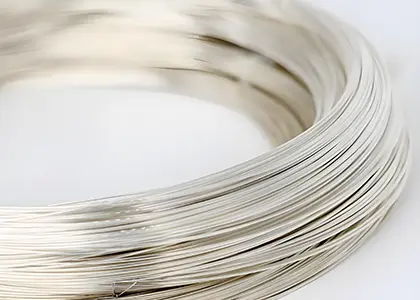 Copper
 -
BZn12-26 Copper
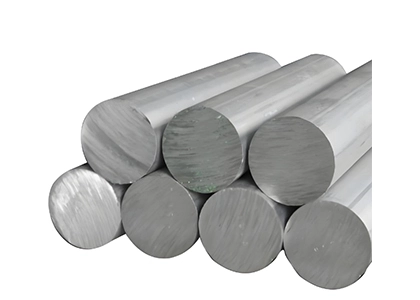 Copper
 -
BZn18-18 Copper
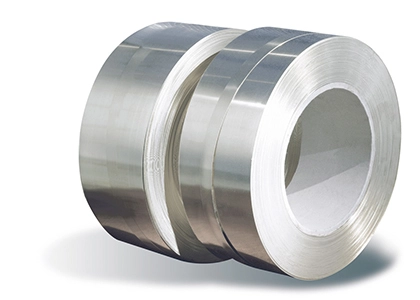 Copper

