
 中文
中文
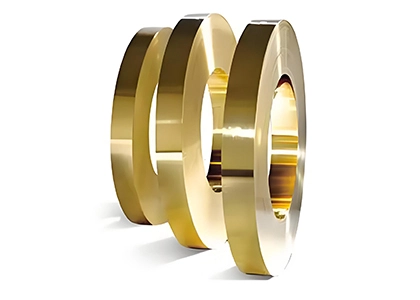
Designation and Standards
-
Standard Designation: H60 (Common Brass)
-
International/National Standards: GB/T 5231-2012 (Wrought Brass), GB/T 4423-2007 (Bars)
-
Equivalent International Grades: ASTM C28000 (American Standard), JIS C2800 (Japanese Standard)
-
Material Category: Copper-Zinc Alloy (Cu-Zn), Copper Content 59.0%-61.0%, Zinc Balance (Approx. 39%-41%).
Product Features
Economic and Performance Balance:
Moderate copper content, lower cost compared to Alpha Brass (such as H62, H65), suitable for large-scale industrial applications.
Excellent Working ability:
Good cold and hot working ability, supports stamping, forging, and welding processes. Annealing is required after cold working to relieve stress.
Moderate Strength:
Tensile Strength ≥300 MPa, suitable for general structural components and non-high-load applications.
Limited Corrosion Resistance:
Moderate resistance to corrosion in freshwater and dry atmospheric environments. Prone to dezincification corrosion in humid or sulfur-containing environments.
Chemical Composition
|
Element |
Cu |
Zn |
Pb |
Fe |
Total Impurities |
|
Content (%) |
59.0-61.0 |
Remainder (Approx. 39%-41%) |
≤0.03 |
≤0.10 |
≤0.5 |
Physical Properties
|
Property |
Value |
Remarks |
|
Density |
8.4-8.45 g/cm³ |
Advantageous for lightweight design |
|
Electrical Conductivity |
Approx. 20% IACS |
Suitable for general electrical applications |
|
Thermal Conductivity |
110-115 W/(m·K) |
Suitable for heat dissipation components |
|
Coefficient of Thermal Expansion |
21.2×10⁻⁶/°C (20-300°C) |
Good thermal stability |
|
Melting Point |
900-925°C |
Moderate casting flow ability |
Mechanical Properties
|
Property |
Value |
Test Conditions |
|
Tensile Strength (σb) |
300-550 MPa |
Varies significantly depending on processing state (M/Y) |
|
Elongation (δ10) |
≥8% (Y) |
Up to 35% (M) |
|
Hardness (HB) |
75-100 |
Higher hardness (Y) |
|
Annealing Temperature |
500-600°C (Conventional Furnace Annealing) |
Eliminate cold work hardening |
Common Product Forms and Specifications
|
Product Form |
Specification Range |
Standard/Condition |
|
Plate |
Thickness 0.5-50mm, Width 305-1000mm |
Hot Rolling(R), Annealed (M), Hard (Y) |
|
Strip |
Thickness 0.1-2.0mm |
M, Y₂, Y |
|
Bar |
Diameter 5-150mm, Length 2000-6000mm |
Bright drawn and Black Round Bars |
|
Wire |
Diameter 0.5-10.0mm |
Coils or Straight Rods |
|
Tube |
Outer Diameter 10-300mm, Wall Thickness 1.0-20mm |
Cold Working or 1/2 Hard |
Core Application Fields
-
Construction Hardware: Door locks, hinges, general-purpose pipes (non-high-pressure applications).
-
Consumer Goods: Zipper heads, buttons, decorative hardware.
-
Industrial Components: Low-load bolts, washers, stamped parts.
-
Heat Dissipation Components: Simple heat sinks, ventilation ducts (non-high-thermal-conductivity applications).
-
Decorative Materials: Metal mesh, low-cost handicrafts.
Processing Considerations
-
Annealing Process: After cold working, anneal at 500-600°C to prevent stress corrosion cracking.
-
Welding Requirements: Prefer soldering and brazing or argon protected welding to prevent zinc evaporation and porosity.
-
Corrosion Protection: In humid environments, apply nickel plating or anti-corrosion coatings.
-
Machining: Due to low lead content, use sharp tools to reduce burr formation.
Frequently Asked Questions
Q: What is the difference between H60 and H59 brass?
A: H60 has slightly higher copper content (59%-61% vs. 57%-60% for H59), resulting in better plasticity but slightly lower strength. The cost is similar.
Q: Is H60 suitable for making shell casings or high-precision parts?
A: No, H60 has lower strength and plasticity compared to H68/H70, making it more suitable for low-load general-purpose parts.
Q: How can the corrosion resistance of H60 be improved in sulfur-containing environments?
A: Applying a tin plating or epoxy resin can effectively mitigate corrosion.
Reference Standards
-
Chemical Composition and Processing Specifications: GB/T 5231-2012, GB/T 4423-2007 (Bars)
-
Mechanical Property Testing: GB/T 228.1 (Metal Tensile Testing)
-
International Standards: ASTM B36 (Plates), JIS H3250 (Japanese Standard)
Note: The above data is compiled from various industrial standards and technical documents. Actual parameters may vary depending on manufacturing processes. Refer to supplier test reports for precise values.
GB Grades
-
BZn12-24 Copper
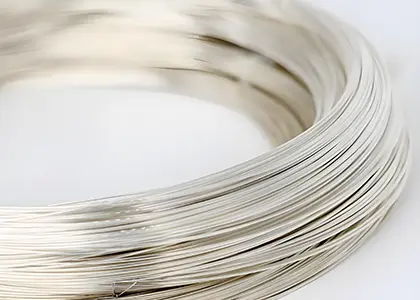 Copper
 -
BZn12-26 Copper
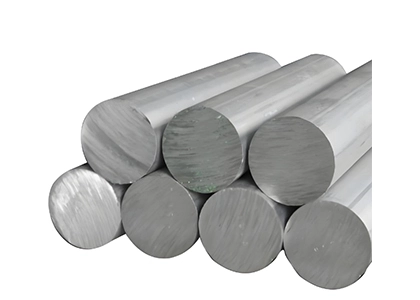 Copper
 -
BZn18-18 Copper
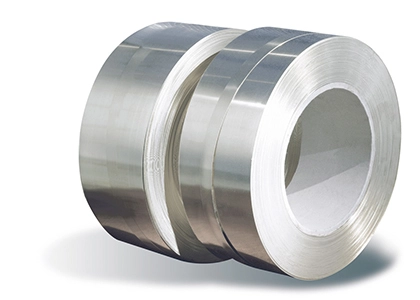 Copper

