
 中文


Bare Copper, Tinned Copper, and Silver-Plated Copper: How to Choose the Right Cable Conductor
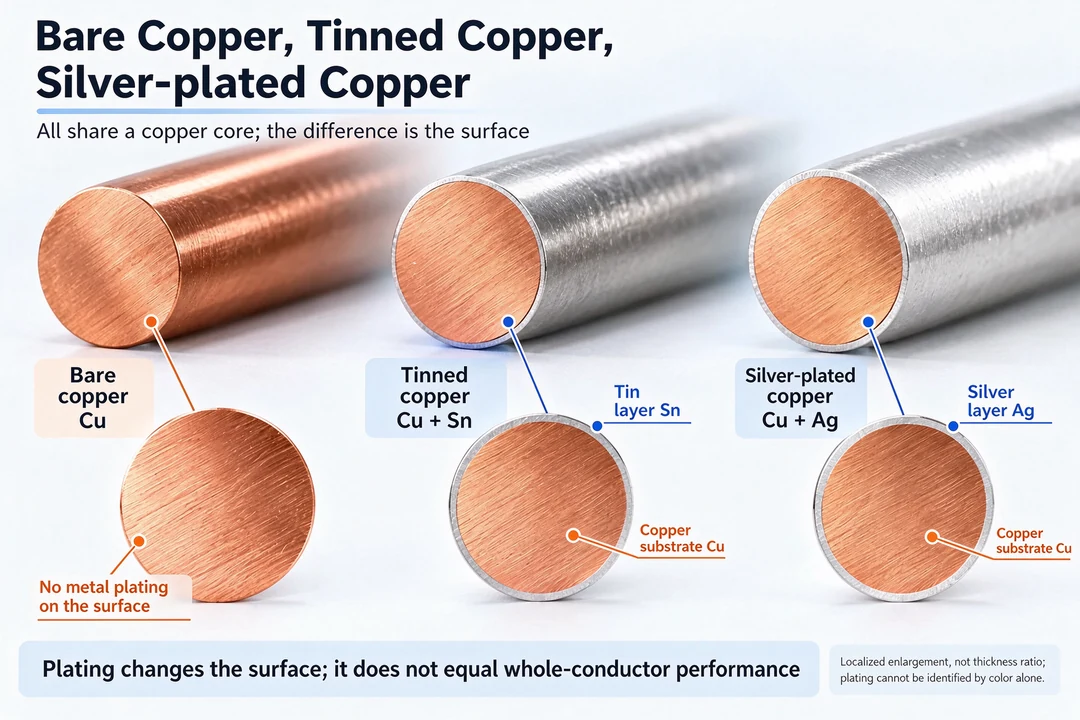
Note: This article explains the surface treatment options of copper conductors—bare, tinned, and silver-plated—and the engineering considerations behind their selection. It compares conductivity, high-frequency skin effect, termination method, storage and solderability, temperature rating, corrosion risk, and total cost. It does not recommend a universal “best” plating; conductor choice must be matched to the actual cable task, operating environment, and termination method.
Cable engineers and harness makers routinely work with three conductor types: bare copper, tinned copper, and silver-plated copper. The same copper wire may be left uncoated, coated with a thin layer of tin, or plated with silver. What is the real difference between them?
When discussing wire selection, one question often comes up: “Is bare copper better than tinned copper?” From the experience of harness processing, tinned copper often seems advantageous. Bare copper oxidizes easily, may darken after long storage, and can be difficult to solder, while the tin layer adds protection against oxidation and makes processing more convenient. Seen this way, bare copper appears to be the lower-end choice.
But the reasoning does not fully hold up. If tinned copper were universally superior, why do so many Ethernet cables on the market use bare copper conductors? Is it only to save cost? The issue is more complex than that.
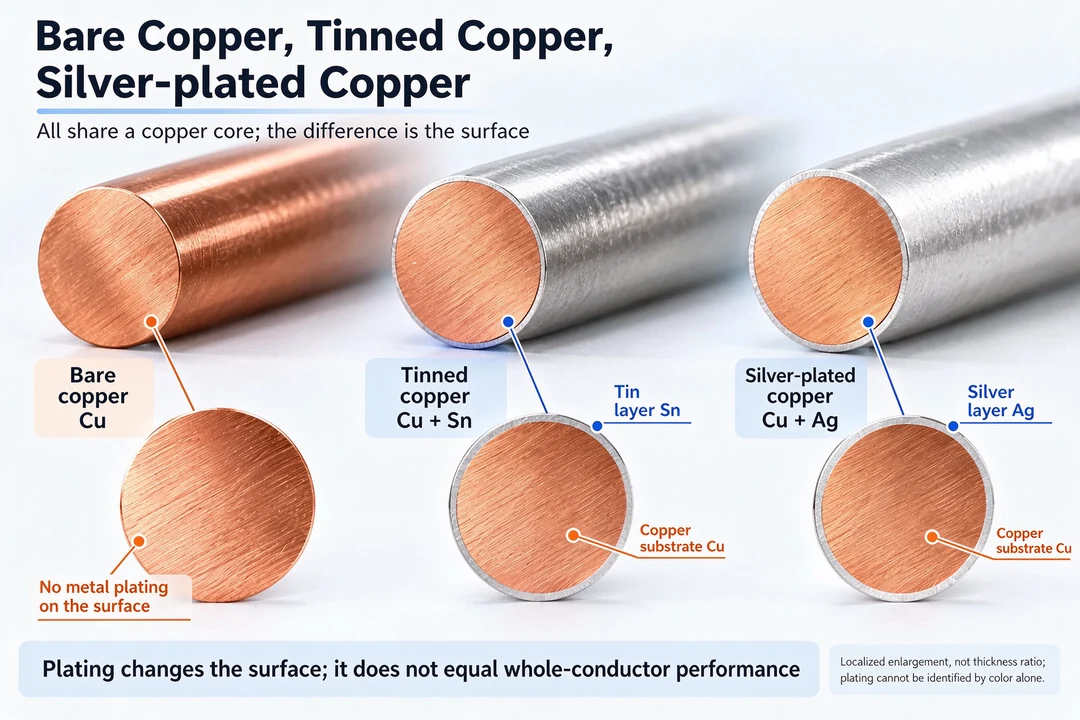
Figure 1 Three conductor surfaces and cross-sections: bare copper, Cu + Sn, and Cu + Ag.
I. Why Do Ethernet Cables Prefer Bare Copper?
Start with electrical performance. Copper itself is an excellent conductor, while tin conducts far less well. At about 20 °C, the resistivity of common metals is roughly:
| Metal | Resistivity (Ω·m) |
|---|---|
| Silver | 1.59×10⁻⁸ |
| Copper | 1.68×10⁻⁸ |
| Tin | 1.09×10⁻⁷ |
Tin’s resistivity is about 6.5 times that of copper. Yet ordinary power and control wires still often use tinned copper, because the tin layer is very thin and the conductor body remains copper. For DC or low-frequency applications, tin’s resistivity cannot be applied directly to the whole tinned-copper conductor.
The issue that deserves attention is high-frequency signals. As frequency rises, current distribution inside the conductor changes—the skin effect. DC current distributes relatively evenly inside a uniform conductor; the higher the AC frequency, the more current concentrates near the surface. Under high-frequency conditions, the portion of current carried by the conductor center drops noticeably.
For a copper conductor at 100 MHz, the skin depth is about 6.6 µm. A common 23 AWG solid copper conductor is about 0.57 mm (570 µm) in diameter. At 100 MHz, AC current already concentrates within a few micrometres of the surface. This does not mean current flows only in the outermost 6.6 µm: skin depth describes how current density decays with depth, not a hard boundary that blocks current.
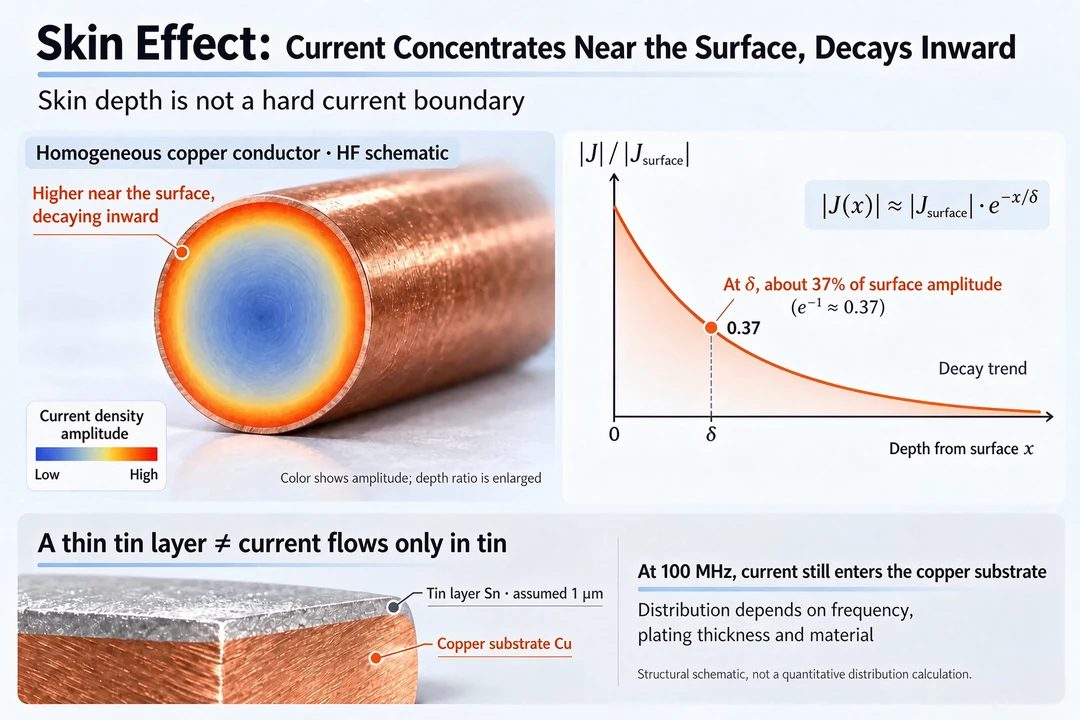
Figure 2 Skin effect and a thin plating layer.
Returning to tinned copper: adding a higher-resistivity tin layer over the copper may increase AC loss where high-frequency current passes through that layer. The actual effect cannot be judged from tin’s resistivity alone; tin thickness, signal frequency, and how current distributes between plating and copper core all matter. If the tin layer is only 1 µm thick, at 100 MHz current still enters the copper below and cannot be confined entirely to that 1 µm tin layer.
Tinning may add high-frequency conductor loss, but that does not mean tinned copper cannot meet high-speed signal requirements. Transmission performance must be judged by insertion loss, return loss, characteristic impedance, crosstalk, and similar metrics. Conductor plating is only one factor; pair structure, insulation material, lay length, and manufacturing consistency matter equally.
There is also a very practical reason ordinary Ethernet cables use bare copper: the termination method. Common RJ45 plugs and IDC terminals on patch panels pierce or displace the core insulation to make contact; each core does not have to be stripped and soldered. In this connection method, tinned copper’s main advantage—easy soldering—can barely be used. Not stripping insulation does not mean oxidation can be ignored: the terminal still must form reliable metal contact with the copper. Provided the terminal structure, crimping process, and operating environment meet requirements, bare copper satisfies long-term use. Bare copper also avoids the extra tinning step and has a cost advantage.
Thus ordinary Ethernet cables use bare copper in large numbers not because manufacturers downgraded the material, but because bare copper is well suited to this application. Even within one cable, bare and tinned copper may coexist. For example, the Belden 7971A industrial Cat 6 cable uses 22 AWG bare copper signal conductors, while the outer braid shield is tinned copper. Different positions in the same cable carry different tasks, so different surface treatments are chosen.
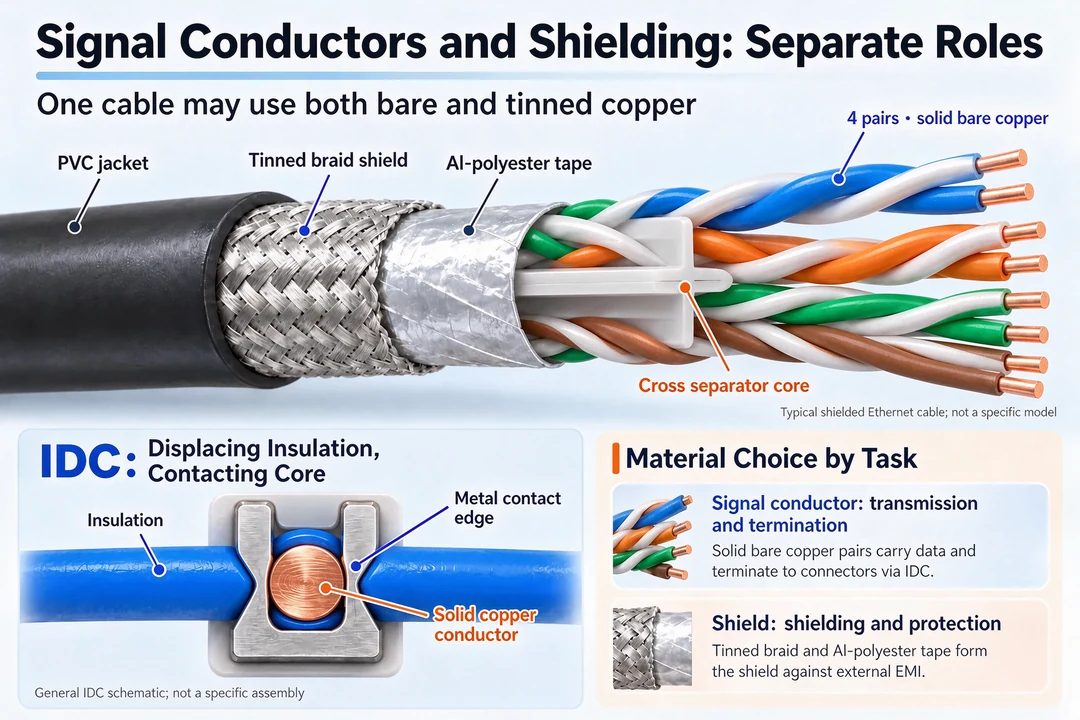
Figure 3 Signal conductor, shielding, and IDC contact principle.
II. What Happens When the Cable Runs Outdoors?
A follow-up question: indoor Ethernet cables using bare copper are easy to understand, but if a cable is installed outdoors long term—exposed to rain, humidity, and temperature changes—does bare copper not oxidize more easily? Why not switch directly to tinned copper?
This involves an engineering approach that is easily overlooked: solving conductor oxidation does not necessarily mean changing the conductor material; the cable structure can be changed instead. The Belden 2143A indoor/outdoor Cat 6 cable, for instance, uses 23 AWG solid bare copper conductors, water-blocking gel filling, and a UV-resistant outer jacket. It still chooses bare copper and adapts to outdoor conditions through water-blocking structure and jacket design.
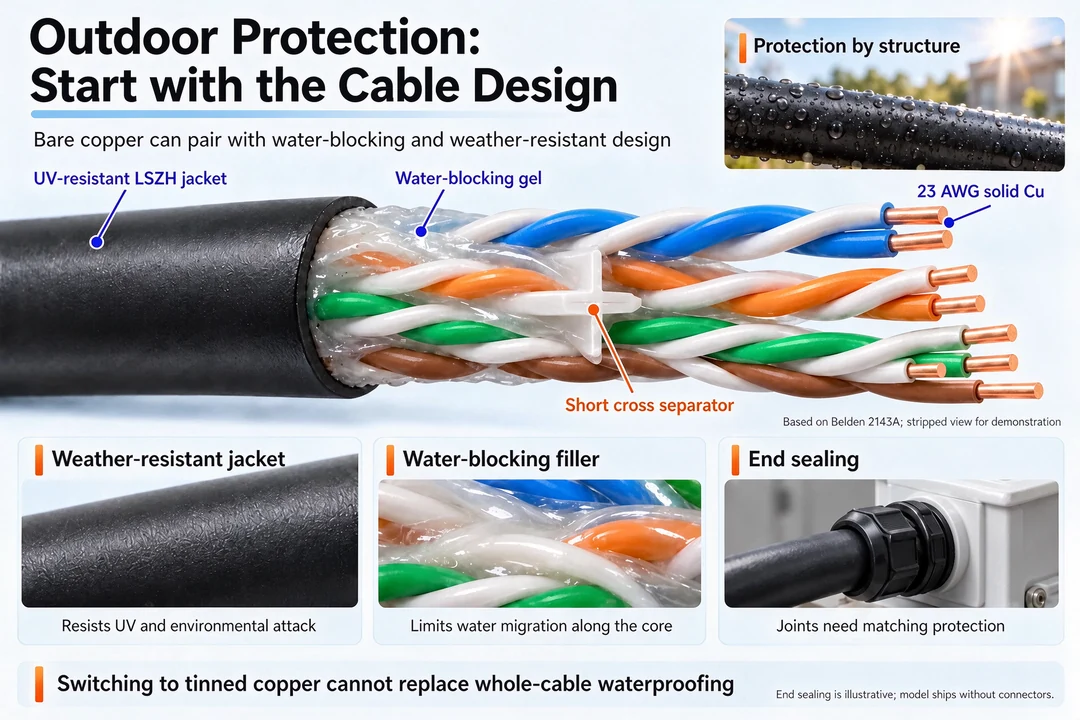
Figure 4 Outdoor protection and water-blocking structure.
Why design it this way? An outdoor cable does not only need to resist copper oxidation. If moisture enters the cable, besides corroding conductors it can alter the electrical properties of the insulation medium and affect the transmission performance of the whole cable. Even replacing every conductor with tinned copper cannot guarantee that a water-damaged cable still works normally. In many cases, rather than relying on conductor plating to resist corrosion, it is better to keep moisture out through weather-resistant jackets, water-blocking fill, and end sealing. Of course, where severe salt spray, corrosive gases, or special long-term corrosion protection are required, tinned copper remains worth considering—but then what must be assessed is the environmental adaptability of the whole cable, not just “bare vs tinned.”
III. The Real Value of Tinned Copper May Not Be Electrical Performance
If bare copper has so many advantages, why do industrial harnesses, power wires, and control wires still use tinned copper heavily? Go back to the harness processing floor. Imagine two reels of identical wire, one bare copper and one tinned copper, stored in a warehouse for months. In a humid storage environment, the bare copper surface may gradually oxidize. When production starts and stripping, tinning, and soldering begin, some copper strands may appear dull and wet poorly. This is where tinned copper shows its value: the tin layer keeps copper from direct contact with the outside environment and delays surface oxidation. Under suitable storage conditions, tinned copper generally retains better solderability.
Note that tin itself oxidizes as well. Tinning only improves oxidation resistance and solderability; it does not mean the wire can be stored indefinitely, nor that every tinned copper wire solders easily. Plating thickness, surface condition, storage environment, and soldering process all affect the result.
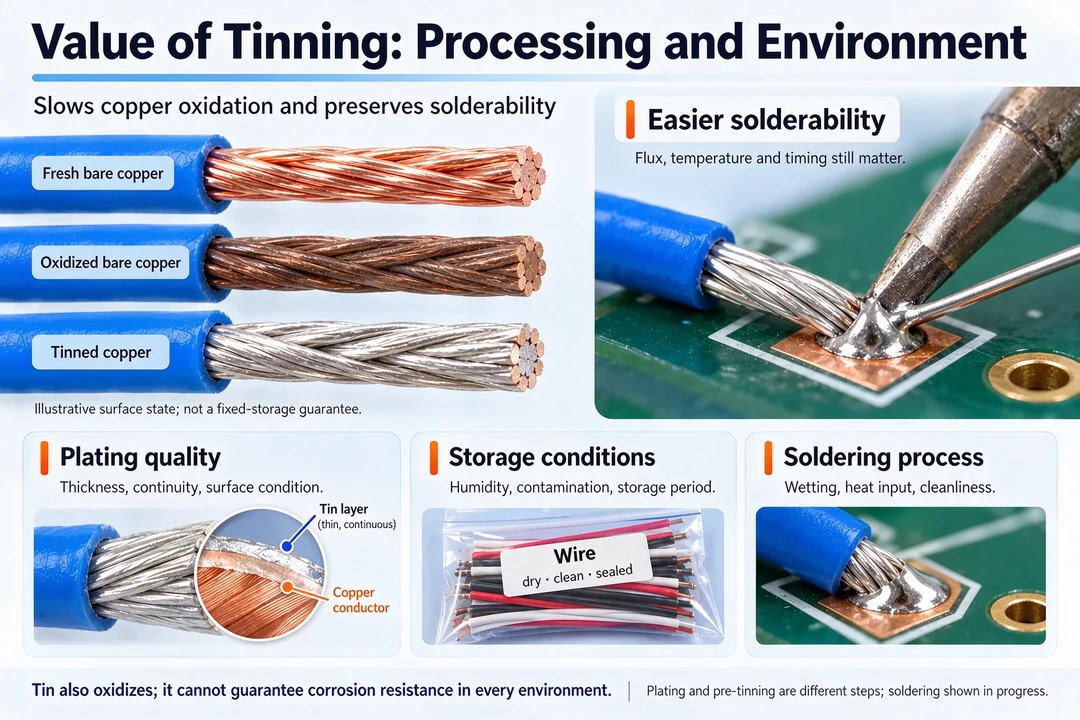
Figure 5 Processing and environmental value of tin plating.
Besides soldering, tinning also improves corrosion resistance in humid, saline, or chemically active environments. There is an interesting materials question, however: when tin contacts copper and moisture forms an electrolyte path, galvanic corrosion can occur between the two metals. In common electrochemical environments, tin acts as the anode relative to copper and may corrode preferentially, offering some protection to exposed copper. But it cannot be concluded that the tin layer always sacrifices itself to protect copper under any condition. Studies in simulated soil environments found that alternating current can passivate the tin plating and change its electrochemical behavior relative to copper, increasing local copper corrosion risk. Corrosion performance of even the familiar tinned copper cannot be judged apart from the actual environment. Overall, in many conventional industrial harness applications, tinned copper balances processing convenience, corrosion resistance, and cost: it is not the best conductive choice, but it may be a reasonably balanced total-cost choice.
IV. Silver Conducts Better Than Copper—Is Silver-Plated Copper Automatically Higher-End?
If tinned copper mainly solves processing and environmental issues, what does silver-plated copper solve? Silver conducts better than copper: from the resistivity data above, silver is about 1.59×10⁻⁸ Ω·m versus copper’s 1.68×10⁻⁸, equivalent to about 6% higher conductivity. The gap is small, but in high-frequency applications sensitive to conductor loss, surface silver plating can still deliver real value. Especially at higher frequencies, as skin depth shrinks, the performance of the surface material becomes increasingly important. A silver plating of suitable thickness and quality can reduce high-frequency conductor loss; this is one reason some RF cables, coaxial cables, and high-frequency connectors use silver-plated conductors.
It should be noted that silver’s 6% higher conductivity does not mean the high-frequency loss of a silver-plated copper cable drops by 6%. The actual improvement depends on plating thickness, frequency, conductor structure, and other loss sources.
Silver-plated copper has another important application direction: high temperature. Heat-resistant fluoropolymer wires often use silver-plated copper conductors. In certain aerospace wire systems, typical temperature ratings are:
| Conductor Surface Treatment | Typical Wire Temperature Rating |
|---|---|
| Tinned copper | 150 °C |
| Silver-plated copper | 200 °C |
| Nickel-plated copper | 260 °C |
These are typical ratings within specific high-temperature wire families, not a universal ceiling shared by all similarly plated conductors; the applicable standard and complete wire specification govern. The SAE AS22759 family includes fluoropolymer-insulated copper wires with tinned, silver-plated, and nickel-plated conductors. Here the meaning of silver plating goes beyond conductivity: compared with common tin systems, an appropriate silver system can withstand higher long-term working temperatures. The ultimate temperature of a finished wire still depends on the insulation, conductor plating, termination structure, and other material temperature limits. A silver-plated conductor does not by itself mean the whole wire can withstand 200 °C long term.
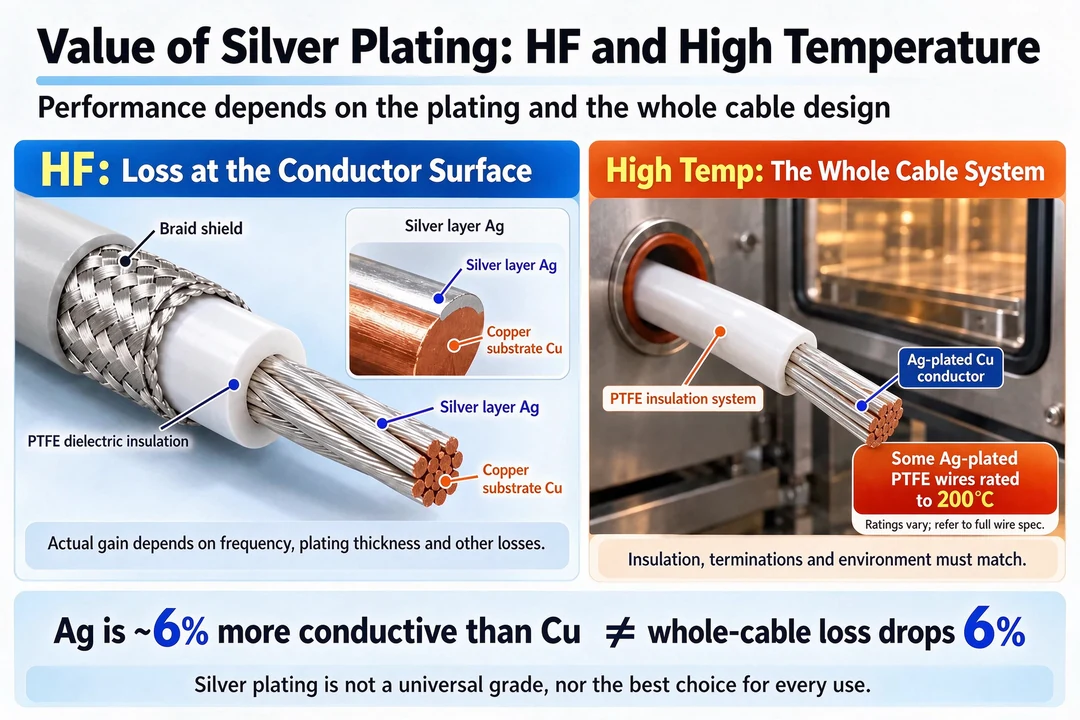
Figure 6 High-frequency and high-temperature value of silver plating.
V. Why Can More Expensive Silver-Plated Copper Still Suffer a Special Corrosion Risk?
Even so, silver-plated copper is not automatically the best conductor plating choice. A phenomenon worth knowing is red plague corrosion, which many harness makers have never encountered. It is associated with electrochemical corrosion of silver-plated copper under specific conditions.
Picture a copper wire plated with silver. Normally the silver plating provides some protection. But if the silver layer has pinholes or cracks, or is damaged during processing, the copper inside may be locally exposed. If condensate then enters and oxygen is present, galvanic corrosion conditions exist. Silver and copper have different electrode potentials: in this electrochemical environment silver is more noble while copper may act as the anode and oxidize. In effect, the silver layer originally meant to protect copper can, under specific conditions, participate in an electrochemical system that accelerates copper corrosion.
As the reaction proceeds, copper may form cuprous oxide, Cu₂O. This corrosion product is usually red or reddish-brown, hence the name red plague. The trouble is that corrosion does not stop at the surface: moisture can follow plating defects into the copper-silver interface and continue developing beneath the silver layer. Externally, only a local discoloration may be visible while the inner copper conductor has already corroded. In severe cases, effective conductor cross-section decreases, mechanical strength drops, and breakage can follow.
This is not pure theory. NASA Goddard Space Flight Center established GSFC-STD-8011 to control cuprous oxide corrosion risk in silver-plated copper wire, cable, and harness assemblies. The standard sets requirements for plating integrity, production and processing, storage conditions, and humidity control. This should not be read to mean silver-plated copper fails easily: red plague needs its conditions—exposed copper-silver interface, liquid or condensate water, and oxygen. Silver-plated copper exposed to damp air does not necessarily develop severe corrosion. With sound design, controlled plating quality, and proper processing and environmental protection, it remains a key choice for many high-reliability products.
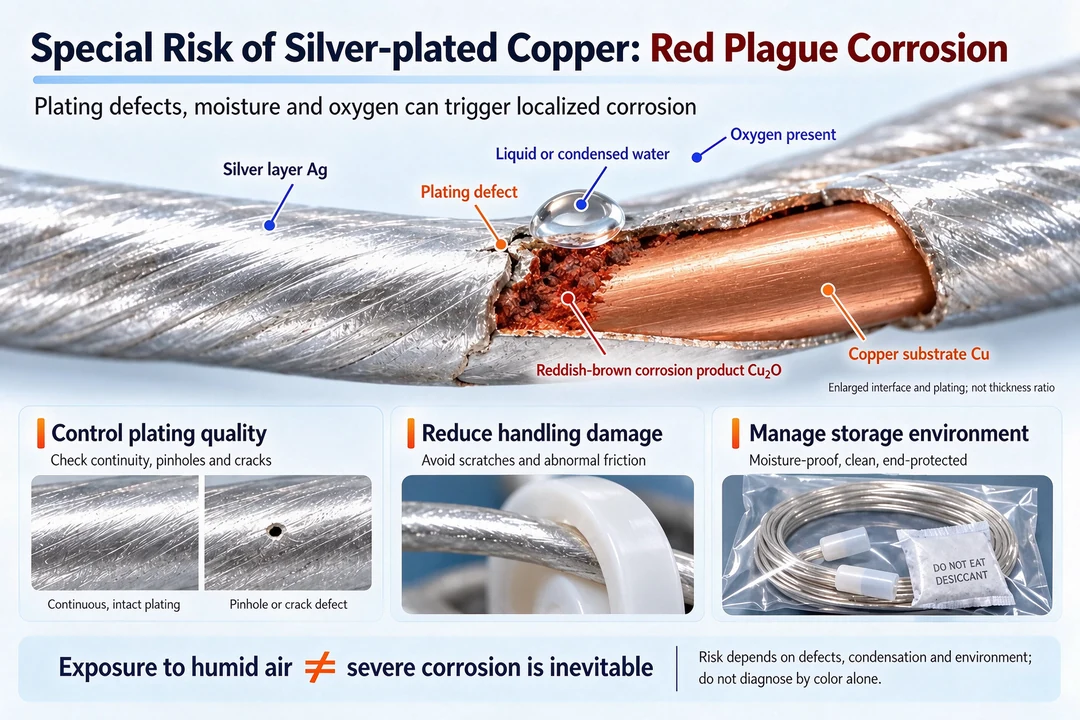
Figure 7 Red plague corrosion on silver-plated copper.
VI. Comparing Only Wire Price Does Not Account for the True Cost
Returning to procurement cost: at equal specification and conductor structure, bare copper generally carries lower material and manufacturing cost. Tinned copper requires additional tin material and processing steps; silver-plated copper uses precious silver and plating-quality control requirements, raising cost further. On purchase price alone, bare copper seems more economical.
For harness manufacturing, however, the matter is not that simple. Suppose a product requires soldered termination. Bare copper may be cheaper to buy, but if storage or processing mismanagement oxidizes the strands and makes soldering difficult, cleaning, rework, and defect costs increase. These costs are not visible when purchasing wire, but they are real on the production floor. If failures after delivery stem from conductor corrosion or poor contact, later repair, replacement, customer complaints, and even whole-equipment downtime losses can far outweigh the small material saving.
This does not mean tinned copper necessarily lowers production cost. If a product uses a mature crimping process in a stable environment and bare copper already meets long-term reliability, extra tinning may bring little benefit. Conversely, if the customer has specific high-frequency loss or long-term temperature requirements, the added cost of silver-plated copper can be fully justified. What should be compared is not only material purchase price, but also processing cost, defect risk, and reliability cost over service life.
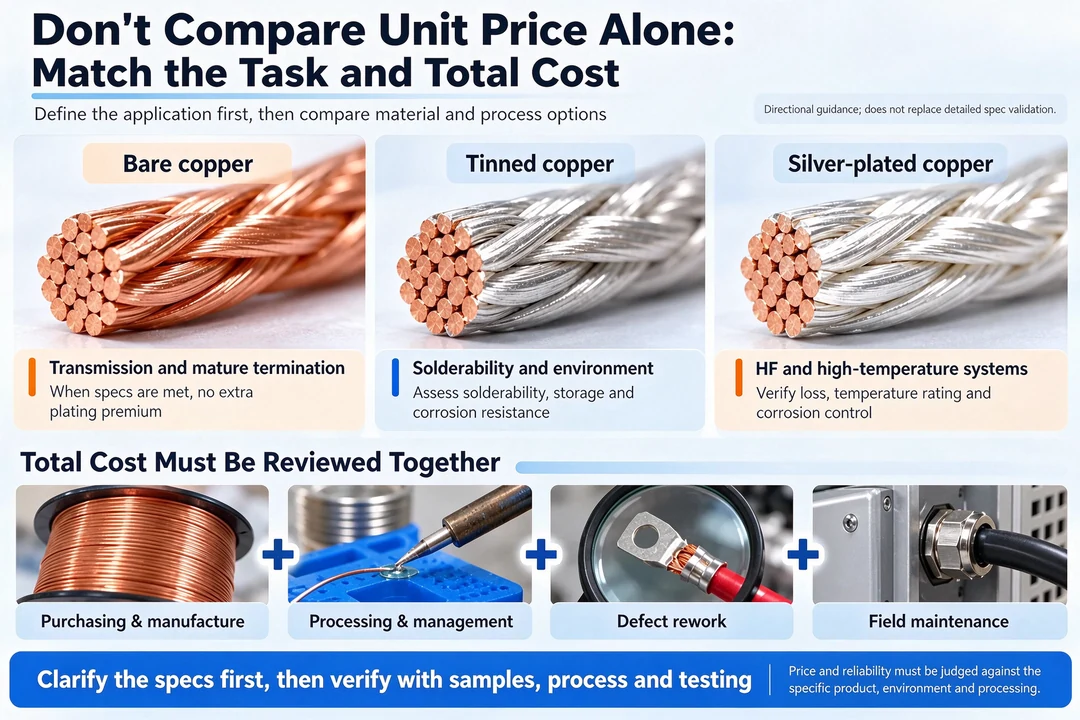
Figure 8 Selection task and total-cost comparison.
This is why a more expensive material may ultimately be the more economical choice in some cases, while sticking with bare copper remains the sound design in others. The key is what actual problem the extra cost solves.
VII. Conclusion: Bare Copper Is Not “Low-Config” and Silver Is Not “Top-Config”
The original question—Is bare copper better than tinned copper?—can hardly be answered with a simple yes or no. Why do ordinary Ethernet cables largely choose bare copper? Because it meets transmission requirements, the termination method does not necessarily need soldering, and the benefit of extra tinning may be limited. Why do industrial harnesses often use tinned copper? Because in soldering, long-term storage, or certain corrosion-risk scenarios, tinning brings processing and environmental-adaptation advantages. Silver-plated copper has value in high-frequency and high-temperature applications, but its higher material cost does not remove the need to control plating quality, processing damage, and corrosion risk. Nickel-plated copper may suit even higher-temperature applications, with its own trade-offs in processing and performance.
There is no simple grade ladder among bare, tinned, and silver-plated copper. Adding a layer of metal over the same copper conductor changes more than appearance: it may change high-frequency current distribution near the surface, affect soldering and processing ease, and alter long-term behavior in humid, hot, or corrosive environments. Sometimes a plating added to protect copper can, under specific conditions, introduce a new corrosion risk. Engineering design does not seek a single best material among all options; it seeks the most suitable combination against specific product requirements, operating environment, processing method, and cost constraints. For a cable, bare copper is not necessarily the low-end option, and silver plating is not automatically the top-end option. Materials have no absolute good or bad outside their application scenario—only suitability for the task the wire must carry.
References and Standards
[1] SAE AS22759, Fluoropolymer-insulated copper electric wire, with tinned, silver-plated, and nickel-plated conductor options.
[2] NASA GSFC-STD-8011, Control of cuprous oxide (red plague) corrosion in silver-plated copper wire, cable, and harness assemblies, NASA Goddard Space Flight Center.
[3] Belden 7971A, Industrial Cat 6 cable: bare copper 22 AWG signal conductors, tinned copper braid shield.
[4] Belden 2143A, Indoor/outdoor Cat 6 cable: 23 AWG solid bare copper, water-blocking gel, UV-resistant jacket.
[5] Skin effect: current density decays with depth according to skin depth δ; DC and low-frequency distribution differ from high-frequency distribution.
-
Tel:
-
E-mail:
-
Address:
No.1 Chengxi West Road, Cicheng, Ningbo, China
-

Ms.Yu
-

Ms.Sun